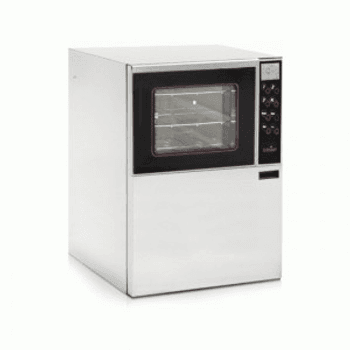
Tuttnauer TIVA 2
Tuttnauer · Model TIVA 2
Washing chamber made of high quality AISI 316L Long lasting 65 liter chamber with manual glass door Touch control Touch panel with color graphic display with a total of 40 programs (preset and programmable) Effective drying Air drying prefilter + HEPA H14 filter ensures that your equipment is thoroughly dried Reduced cycle time Preheated tank for cycle time reduction (only for HS model) Detergent dosing 2 Dosing pumps with flow meters for alkaline detergents and neutralizer. Additional pump optional for TIVA2-H TD. ETS Provides complete & total evacuation of previous water.
Key tips
- ·A failed biological indicator means the entire load is not sterile - no exceptions, regardless of how the cycle printout looks.
- ·Door gasket wear is the most common real cause of a failed vacuum/pressure test - check it before deeper diagnostics.
- ·Water quality directly affects steam-cycle validity - don't ignore scale or mineral buildup.
Typical Failure Modes
Compiled for this model from its own documentation and established engineering knowledge for this equipment class - not from a verified service record. Confirm against the manufacturer's service manual.
Cycle fault / abort
HighSymptoms: Cycle stops with a fault code, load not processed, door locked.
Root cause: Water fill / drain fault, temperature not reached, a dosing-pump fault, or a spray-arm blockage.
Poor cleaning / spray-arm blockage
MediumSymptoms: Instruments come out soiled, spray arms not rotating.
Root cause: Clogged spray-arm nozzles, a blocked filter / strainer, or low water pressure.
Chemistry dosing fault
MediumSymptoms: Detergent / neutraliser / lubricant not dosed, dosing-pump alarm.
Root cause: Empty chemistry container, an air-locked or worn dosing pump, or a level sensor.
Thermal-disinfection temperature not reached
HighSymptoms: A0 / disinfection temperature not achieved.
Root cause: Heater element, temperature sensor, or steam supply.
Door / seal fault
MediumSymptoms: Leaks during the cycle, door will not lock / unlock.
Root cause: Worn door gasket or a door-lock solenoid.
Serviceable Parts & Consumables
Serviceable items for this model, compiled from its documentation and engineering knowledge for this equipment class. Service class and relative cost are estimates, not manufacturer figures; no part numbers are given. Confirm intervals and pricing against the manufacturer.
Spray-arm nozzles / bearings
Class Periodic replacementRel. cost $$R&R Fairly easy
Chamber filter / strainer
Class Frequent wear itemRel. cost $R&R Easy
Peristaltic dosing pump / tubing
Class Periodic replacementRel. cost $$R&R Moderate
Heater element / temperature sensor
Class Major service partRel. cost $$R&R Moderate
Door gasket
Class Periodic replacementRel. cost $$R&R Fairly easy
Fill / drain solenoid valve
Class Periodic replacementRel. cost $$R&R Moderate
| Part | Service class | Relative cost | R&R difficulty |
|---|---|---|---|
| Spray-arm nozzles / bearings | Periodic replacement | $$ | Fairly easy |
| Chamber filter / strainer | Frequent wear item | $ | Easy |
| Peristaltic dosing pump / tubing | Periodic replacement | $$ | Moderate |
| Heater element / temperature sensor | Major service part | $$ | Moderate |
| Door gasket | Periodic replacement | $$ | Fairly easy |
| Fill / drain solenoid valve | Periodic replacement | $$ | Moderate |
Relative cost: $ lowest · $$$$ highest service-part cost for this equipment class. Not a price.
PM Checklist
Preventive-maintenance tasks typical of this equipment class. Perform to the manufacturer's procedure and your facility's policy - this is general reference, not a schedule for this specific unit.
- ·Daily biological and chemical indicator test loads
- ·Door gasket / seal inspection
- ·Steam trap and drain strainer cleaning
- ·Annual full PM and pressure-vessel certification
Error Codes
Extracted directly from this unit's own service manual.
E01BLACKOUT Power failure during the cycle
Press RESET and the program blocked.
E02DOOR OPEN The door
Troubleshooting Approach
A starting sequence for this model, compiled from its documentation and engineering knowledge for this equipment class. Follow the manufacturer's service documentation for the actual procedure.
Symptom: Cycle fault / abort
- Note the fault code and the phase it aborted in.
- Check the water fill and drain and clean the chamber filter / strainer.
- Confirm the spray arms rotate freely and the nozzles are clear.
- Verify the heater reaches the disinfection temperature and the sensor agrees with a reference.
- Follow the service manual for the specific code; replace the failed valve / heater / sensor.
Symptom: Instruments come out soiled / spray arms not turning
- Clear the spray-arm nozzles and confirm each arm spins freely.
- Clean the chamber filter / strainer and the drain.
- Confirm detergent and neutraliser are dosing (prime the pumps).
- Check the wash-water pressure and temperature.
- Run a soil / protein-residue test on the next cycle.
Symptom: Chemistry not dosed / dosing-pump alarm
- Confirm the chemistry containers are not empty and the pick-up tubes reach the fluid.
- Prime the dosing pumps and clear any air lock.
- Check the dosing-pump tubing for wear and the level sensors.
- Verify the dosed volume per the service procedure.
- Replace worn peristaltic tubing or the dosing pump.
Symptom: Disinfection temperature (A0) not reached / door-seal leak
- Compare the chamber temperature to an independent reference during the hold.
- Check the heater element draws current and the steam supply (if steam-heated).
- Inspect the door gasket for a leak and the door-lock solenoid.
- Replace the temperature sensor if it disagrees with the reference.
- Re-run and confirm the A0 / hold is met.
Typical Location
Where this class of equipment is typically deployed - general reference, not this unit's own placement record.
- Central Sterile Supply Department (CSSD)
- OR sterile core
- Satellite reprocessing areas
Documents & Manuals
Troubleshoot this device with Bio
Describe a symptom or error code. Bio answers from this device's own documented error codes, failure modes, parts, and guides.
Ask Bio