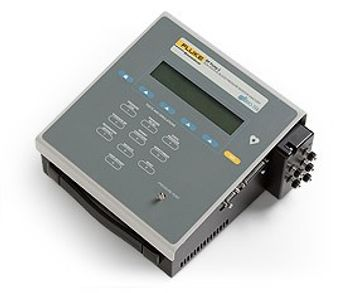
Fluke Biomedical BP Pump 2
 Fluke Biomedical · Model BP Pump 2
Dynamic simulations for arm- and wrist-cuff monitors. Physiological waveform. Internal pump for use in high- and low-pressure release verification, leak testing and pressure sourcing. Preset mode for simulation of most patient conditions. User-definable systolic and diastolic values, along with heart rate and pulse volume and user-defined autosequences. Internal cuff volume for basic device testing. Respiratory artifacts, including spontaneous breathing and controlled ventilation. Arrhythmia simulations, including premature atrial contractions #1 and #2, atrial fibrillation, and PVCs. PC based ansur test automation system to standardize testing protocol and documentation (optional). High-accuracy pressure transducer (BP Pump2M only). Dynamic pressure repeatability within 2 mmHg at maximal pulse size independent of device under test.
Key tips
- ·When no category-specific guidance fits, default to the manufacturer's own service manual and the general troubleshooting method in the Engineer's Guide.
- ·Run an incoming and annual electrical safety test regardless of how niche the device is.
Typical Failure Modes
Compiled for this model from its own documentation and established engineering knowledge for this equipment class - not from a verified service record. Confirm against the manufacturer's service manual.
Out of calibration / accuracy suspect
HighSymptoms: Readings disagree with a reference standard, verification check outside tolerance.
Root cause: Normal drift - the instrument needs its scheduled factory / accredited calibration (at least every 12 months).
Will not power on / battery fault
MediumSymptoms: Dead unit, short battery life, will not charge.
Root cause: Depleted or aged battery, or a power / charger fault.
Test lead / probe / adapter fault
MediumSymptoms: Open or intermittent readings, connection errors, a specific function fails.
Root cause: Worn or broken test leads, mains adapters, patient-lead adapters, or a sensor cable.
A measurement / simulation function fails
MediumSymptoms: One parameter (leakage, insulation, ECG / SpO2 / IBP simulation, defib / pacer energy, ventilator flow / pressure, light / dose) errors or is out of range while others work.
Root cause: An internal source / measurement circuit fault on that channel.
PC / software communication fault
LowSymptoms: The automation / logging software will not connect.
Root cause: USB cable / port or driver.
Serviceable Parts & Consumables
Serviceable items for this model, compiled from its documentation and engineering knowledge for this equipment class. Service class and relative cost are estimates, not manufacturer figures; no part numbers are given. Confirm intervals and pricing against the manufacturer.
Test-lead / adapter set
Class Periodic replacementRel. cost $$R&R Easy
Battery
Class Periodic replacementRel. cost $$R&R Easy
Calibration (factory / accredited)
At least every 12 months per the manufacturer.
Class Frequent wear itemRel. cost $$R&R Easy
Communication cable
Class Periodic replacementRel. cost $R&R Easy
| Part | Service class | Relative cost | R&R difficulty |
|---|---|---|---|
| Test-lead / adapter set | Periodic replacement | $$ | Easy |
| Battery | Periodic replacement | $$ | Easy |
| Calibration (factory / accredited) At least every 12 months per the manufacturer. | Frequent wear item | $$ | Easy |
| Communication cable | Periodic replacement | $ | Easy |
Relative cost: $ lowest · $$$$ highest service-part cost for this equipment class. Not a price.
PM Checklist
Preventive-maintenance tasks typical of this equipment class. Perform to the manufacturer's procedure and your facility's policy - this is general reference, not a schedule for this specific unit.
- ·Follow the manufacturer's PM schedule
- ·Perform incoming and annual electrical safety testing per facility biomedical program
Troubleshooting Approach
A starting sequence for this model, compiled from its documentation and engineering knowledge for this equipment class. Follow the manufacturer's service documentation for the actual procedure.
Symptom: Accuracy suspect / verification check outside tolerance
- Confirm the instrument's calibration certificate is within date (at least every 12 months).
- Verify against a known reference - a decade box, a reference meter, or a second analyser.
- Check the test leads, mains adapters and patient-lead adapters for damage and reseat them.
- If a single function is out (leakage, insulation, a simulation channel, energy, flow / pressure, light / dose), note it for the calibration lab.
- Send the unit for its scheduled factory / accredited calibration if it is due or fails verification.
Symptom: A measurement or simulation function fails while others work
- Repeat the failing function into a known load / source / reference.
- Swap the associated lead / adapter / sensor cable.
- Update the firmware if an update addresses it.
- Check the internal battery / supply is healthy.
- Return the unit for repair of that channel.
Symptom: Will not power on / short battery life
- Fit fresh batteries or confirm the AC adapter output.
- Check the fuse and power switch.
- Try a different outlet / adapter.
- Replace the battery pack.
- Refer the power supply if it will not run on a known-good adapter.
Symptom: PC / logging software will not connect
- Reseat the USB / serial cable and try another port.
- Confirm the driver and the COM-port / baud settings.
- Restart the software and the instrument.
- Try a known-good cable.
- Update the software / firmware to compatible versions.
Technical Specs
- Height
- 5 in
- Length
- 10 in
- Weight
- 7.5 lbs
- Analyzer/Simulator Type
- NIBP
- Width
- 10 in
Typical Location
Where this class of equipment is typically deployed - general reference, not this unit's own placement record.
- Varies by device - check the unit's own manual for facility placement guidance
Documents & Manuals
Related calculators
From BioLab, for work done with this kind of equipment.
Troubleshoot this device with Bio
Describe a symptom or error code. Bio answers from this device's own documented error codes, failure modes, parts, and guides.
Ask Bio