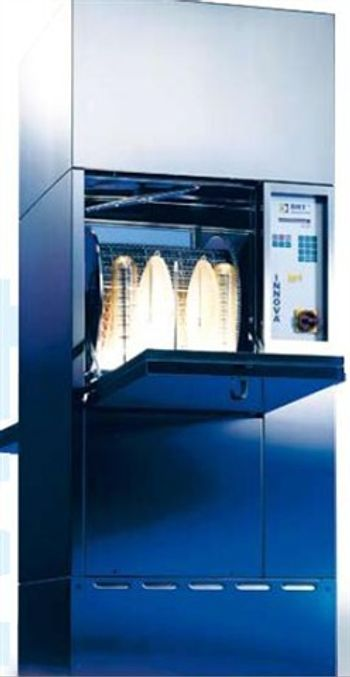
BHT INNOVA M4
 BHT · Model INNOVA M4
Freely programmable microprocessor control with optional interface for the connection to a documentation system. Key panel with alphanumeric display. 2 fully automatic dosage pumps for liquid additives. 2 dosage controls and 2 level controls. Level control device regulates the filling and draining of the machine. 2 independent circulation pumps for the supply of the rotating arms and the racks. High capacity air drying via the wash system for the drying from inside and outside. Supervision of the pump pressure. Complete drainage of the pumps avoids cross contamination. CE-certification. Validatable according to prEN ISO 15883 and HTM 2030.
Key tips
- ·A failed biological indicator means the entire load is not sterile - no exceptions, regardless of how the cycle printout looks.
- ·Door gasket wear is the most common real cause of a failed vacuum/pressure test - check it before deeper diagnostics.
- ·Water quality directly affects steam-cycle validity - don't ignore scale or mineral buildup.
Typical Failure Modes
Compiled for this model from its own documentation and established engineering knowledge for this equipment class - not from a verified service record. Confirm against the manufacturer's service manual.
Cycle fault / abort
HighSymptoms: Cycle stops with a fault code, load not processed, door locked.
Root cause: Water fill / drain fault, temperature not reached, a dosing-pump fault, or a spray-arm blockage.
Poor cleaning / spray-arm blockage
MediumSymptoms: Instruments come out soiled, spray arms not rotating.
Root cause: Clogged spray-arm nozzles, a blocked filter / strainer, or low water pressure.
Chemistry dosing fault
MediumSymptoms: Detergent / neutraliser / lubricant not dosed, dosing-pump alarm.
Root cause: Empty chemistry container, an air-locked or worn dosing pump, or a level sensor.
Thermal-disinfection temperature not reached
HighSymptoms: A0 / disinfection temperature not achieved.
Root cause: Heater element, temperature sensor, or steam supply.
Door / seal fault
MediumSymptoms: Leaks during the cycle, door will not lock / unlock.
Root cause: Worn door gasket or a door-lock solenoid.
Serviceable Parts & Consumables
Serviceable items for this model, compiled from its documentation and engineering knowledge for this equipment class. Service class and relative cost are estimates, not manufacturer figures; no part numbers are given. Confirm intervals and pricing against the manufacturer.
Spray-arm nozzles / bearings
Class Periodic replacementRel. cost $$R&R Fairly easy
Chamber filter / strainer
Class Frequent wear itemRel. cost $R&R Easy
Peristaltic dosing pump / tubing
Class Periodic replacementRel. cost $$R&R Moderate
Heater element / temperature sensor
Class Major service partRel. cost $$R&R Moderate
Door gasket
Class Periodic replacementRel. cost $$R&R Fairly easy
Fill / drain solenoid valve
Class Periodic replacementRel. cost $$R&R Moderate
| Part | Service class | Relative cost | R&R difficulty |
|---|---|---|---|
| Spray-arm nozzles / bearings | Periodic replacement | $$ | Fairly easy |
| Chamber filter / strainer | Frequent wear item | $ | Easy |
| Peristaltic dosing pump / tubing | Periodic replacement | $$ | Moderate |
| Heater element / temperature sensor | Major service part | $$ | Moderate |
| Door gasket | Periodic replacement | $$ | Fairly easy |
| Fill / drain solenoid valve | Periodic replacement | $$ | Moderate |
Relative cost: $ lowest · $$$$ highest service-part cost for this equipment class. Not a price.
PM Checklist
Preventive-maintenance tasks typical of this equipment class. Perform to the manufacturer's procedure and your facility's policy - this is general reference, not a schedule for this specific unit.
- ·Daily biological and chemical indicator test loads
- ·Door gasket / seal inspection
- ·Steam trap and drain strainer cleaning
- ·Annual full PM and pressure-vessel certification
Troubleshooting Approach
A starting sequence for this model, compiled from its documentation and engineering knowledge for this equipment class. Follow the manufacturer's service documentation for the actual procedure.
Symptom: Cycle fault / abort
- Note the fault code and the phase it aborted in.
- Check the water fill and drain, and the chamber filter / strainer.
- Confirm the spray arms rotate freely and the nozzles are clear.
- Verify the heater reaches temperature and the sensor agrees with a reference.
- Follow the service manual for the specific code.
Symptom: Instruments still soiled
- Clear the spray-arm nozzles and check the arms spin.
- Clean the chamber filter / strainer.
- Confirm detergent is dosing.
- Check the water pressure and temperature.
- Run a soil / protein test on the next cycle.
Typical Location
Where this class of equipment is typically deployed - general reference, not this unit's own placement record.
- Central Sterile Supply Department (CSSD)
- OR sterile core
- Satellite reprocessing areas
Documents & Manuals
No documents available for this device yet.
Troubleshoot this device with Bio
Describe a symptom or error code. Bio answers from this device's own documented error codes, failure modes, parts, and guides.
Ask Bio