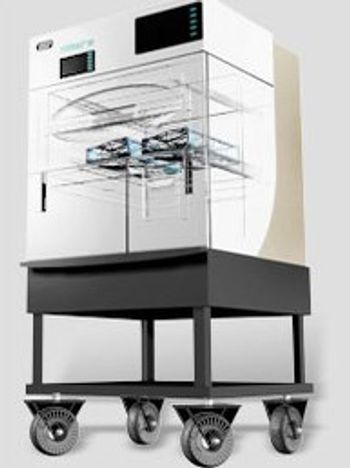
ASP Sterrad 50
 ASP · Model Sterrad 50
Increased speed and capacity. Rapid 45-minute cycle time. 1.55 cubic foot rectangular chamber holds multiple trays. Dry, low-temperature process means instruments are available for immediate use or storage. Reduces expensive instrument inventories. Unsurpassed material compatibility. Compatible with most medical devices. Tested by 250 device manufacturers on over 1,500 devices. Reduced instrument damage and repairs. Gentler than steam and peracetic acid processes. No corrosion due to humidity. Reduced damage due to heat, shock, and handling. Easy to install and move. No water source, heat booster, or ventilation required. Runs on standard 110-VAC to 120-VAC, 60-Hz electrical. Compact and portable.
Key tips
- ·A failed biological indicator means the entire load is not sterile - no exceptions, regardless of how the cycle printout looks.
- ·Door gasket wear is the most common real cause of a failed vacuum/pressure test - check it before deeper diagnostics.
- ·Water quality directly affects steam-cycle validity - don't ignore scale or mineral buildup.
Typical Failure Modes
Compiled for this model from its own documentation and established engineering knowledge for this equipment class - not from a verified service record. Confirm against the manufacturer's service manual.
Cycle cancels / cancellation message
HighSymptoms: Cycle aborts with a system message; load not sterile and must be repackaged and re-run.
Root cause: Load-related issues are the most frequent cause (wet items, overloading, absorbent materials); otherwise a cassette / cartridge fault, a vacuum / leak fault, or a component failure needing service.
Vacuum / leak-rate fault
MediumSymptoms: Chamber will not pull or hold vacuum, leak-test fails.
Root cause: Door seal, a chamber / valve leak, or a vacuum-pump fault.
Sterilant cassette / cartridge / concentration fault
MediumSymptoms: Cassette error, low-concentration or injection fault, cassette collection problems.
Root cause: Expired or faulty cassette / cartridge, or the injection / vaporiser system.
Door / seal fault
MediumSymptoms: Door will not seal, lock or unlock; leak at the door.
Root cause: Worn door gasket or a door-lock / interlock fault.
Printer / display / control fault
LowSymptoms: No cycle printout, blank or frozen display, control errors.
Root cause: Printer, display, or control-board fault.
Serviceable Parts & Consumables
Serviceable items for this model, compiled from its documentation and engineering knowledge for this equipment class. Service class and relative cost are estimates, not manufacturer figures; no part numbers are given. Confirm intervals and pricing against the manufacturer.
Door gasket / seal
Class Periodic replacementRel. cost $$R&R Fairly easy
Vacuum pump / oil (as applicable)
Class Periodic replacementRel. cost $$$R&R Difficult
Chamber / injection valves
Class Major service partRel. cost $$R&R Moderate
Temperature / pressure sensors
Class Major service partRel. cost $$R&R Moderate
Printer / paper
Class Periodic replacementRel. cost $R&R Fairly easy
| Part | Service class | Relative cost | R&R difficulty |
|---|---|---|---|
| Door gasket / seal | Periodic replacement | $$ | Fairly easy |
| Vacuum pump / oil (as applicable) | Periodic replacement | $$$ | Difficult |
| Chamber / injection valves | Major service part | $$ | Moderate |
| Temperature / pressure sensors | Major service part | $$ | Moderate |
| Printer / paper | Periodic replacement | $ | Fairly easy |
Relative cost: $ lowest · $$$$ highest service-part cost for this equipment class. Not a price.
PM Checklist
Preventive-maintenance tasks typical of this equipment class. Perform to the manufacturer's procedure and your facility's policy - this is general reference, not a schedule for this specific unit.
- ·Daily biological and chemical indicator test loads
- ·Door gasket / seal inspection
- ·Steam trap and drain strainer cleaning
- ·Annual full PM and pressure-vessel certification
Troubleshooting Approach
A starting sequence for this model, compiled from its documentation and engineering knowledge for this equipment class. Follow the manufacturer's service documentation for the actual procedure.
Symptom: Cycle cancels
- Note the system message.
- Repackage the load - remove moisture, reduce the load, avoid cellulosics / absorbents where prohibited - and restart with fresh indicators.
- If it cancels again, check the door seal and run a leak / vacuum test.
- Confirm the cassette / cartridge is in date and correctly loaded.
- Refer a persistent component fault to the OEM service representative.
Symptom: Vacuum or leak fault
- Inspect and replace the door gasket.
- Run the automated leak-rate test.
- Check chamber valves and fittings for leaks.
- Service or replace the vacuum pump.
- Re-run a biological indicator to confirm sterilisation after repair.
Technical Specs
- Orientation
- Floor Standing
Typical Location
Where this class of equipment is typically deployed - general reference, not this unit's own placement record.
- Central Sterile Supply Department (CSSD)
- OR sterile core
- Satellite reprocessing areas
Documents & Manuals
No documents available for this device yet.
Troubleshoot this device with Bio
Describe a symptom or error code. Bio answers from this device's own documented error codes, failure modes, parts, and guides.
Ask Bio