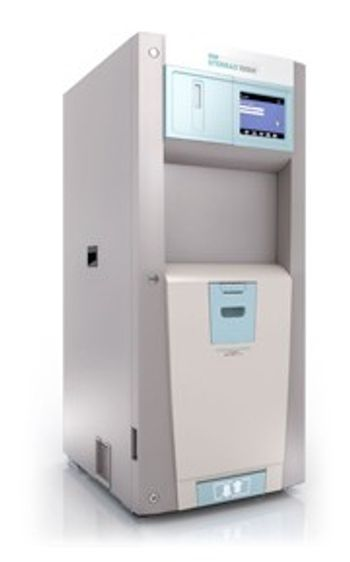
ASP Sterrad 100NX
 ASP · Model Sterrad 100NX
Large chamber capacity. 24-minute EXPRESS Cycle for da Vinci® 3-D endoscopes, rigid telescopes and rechargeable batteries. 42-minute Flex Cycle for many single-channel flexible endoscopes. 47-minute Standard Cycle for most surgical instruments. Can process a wide range of instruments including multiple single-channel flexible endoscopes, cameras, rigid scopes, light cords, batteries, and power drills.
Key tips
- ·A failed biological indicator means the entire load is not sterile - no exceptions, regardless of how the cycle printout looks.
- ·Door gasket wear is the most common real cause of a failed vacuum/pressure test - check it before deeper diagnostics.
- ·Water quality directly affects steam-cycle validity - don't ignore scale or mineral buildup.
Typical Failure Modes
Compiled for this model from its own documentation and established engineering knowledge for this equipment class - not from a verified service record. Confirm against the manufacturer's service manual.
Cycle cancels / cancellation message
HighSymptoms: Cycle aborts with a system message; load not sterile and must be repackaged and re-run.
Root cause: Load-related issues are the most frequent cause (wet items, overloading, absorbent materials); otherwise a cassette / cartridge fault, a vacuum / leak fault, or a component failure needing service.
Vacuum / leak-rate fault
MediumSymptoms: Chamber will not pull or hold vacuum, leak-test fails.
Root cause: Door seal, a chamber / valve leak, or a vacuum-pump fault.
Sterilant cassette / cartridge / concentration fault
MediumSymptoms: Cassette error, low-concentration or injection fault, cassette collection problems.
Root cause: Expired or faulty cassette / cartridge, or the injection / vaporiser system.
Door / seal fault
MediumSymptoms: Door will not seal, lock or unlock; leak at the door.
Root cause: Worn door gasket or a door-lock / interlock fault.
Printer / display / control fault
LowSymptoms: No cycle printout, blank or frozen display, control errors.
Root cause: Printer, display, or control-board fault.
Serviceable Parts & Consumables
Serviceable items for this model, compiled from its documentation and engineering knowledge for this equipment class. Service class and relative cost are estimates, not manufacturer figures; no part numbers are given. Confirm intervals and pricing against the manufacturer.
Door gasket / seal
Class Periodic replacementRel. cost $$R&R Fairly easy
Vacuum pump / oil (as applicable)
Class Periodic replacementRel. cost $$$R&R Difficult
Chamber / injection valves
Class Major service partRel. cost $$R&R Moderate
Temperature / pressure sensors
Class Major service partRel. cost $$R&R Moderate
Printer / paper
Class Periodic replacementRel. cost $R&R Fairly easy
| Part | Service class | Relative cost | R&R difficulty |
|---|---|---|---|
| Door gasket / seal | Periodic replacement | $$ | Fairly easy |
| Vacuum pump / oil (as applicable) | Periodic replacement | $$$ | Difficult |
| Chamber / injection valves | Major service part | $$ | Moderate |
| Temperature / pressure sensors | Major service part | $$ | Moderate |
| Printer / paper | Periodic replacement | $ | Fairly easy |
Relative cost: $ lowest · $$$$ highest service-part cost for this equipment class. Not a price.
PM Checklist
Preventive-maintenance tasks typical of this equipment class. Perform to the manufacturer's procedure and your facility's policy - this is general reference, not a schedule for this specific unit.
- ·Daily biological and chemical indicator test loads
- ·Door gasket / seal inspection
- ·Steam trap and drain strainer cleaning
- ·Annual full PM and pressure-vessel certification
Troubleshooting Approach
A starting sequence for this model, compiled from its documentation and engineering knowledge for this equipment class. Follow the manufacturer's service documentation for the actual procedure.
Symptom: Cycle cancels / cancellation message
- Read the system message - it identifies the source of the problem.
- Because load-related issues (moisture, absorbent materials, overloading, wet items) are the most frequent cause, repackage the load with fresh biological and chemical indicators and restart.
- Confirm the sterilant cassette / cartridge is in date, correctly loaded and not expended; clear any cassette-collection fault.
- If it cancels again, run the leak / vacuum test and inspect the door seal.
- Some faults must be cleared by a manufacturer service technician with a service PIN - escalate a repeatable component fault.
Symptom: Vacuum / leak-rate fault
- Inspect and replace the door gasket / seal.
- Run the automated leak-rate test.
- Check chamber valves, fittings and the injection / vaporiser path for leaks.
- Service or replace the vacuum pump (oil / vanes as applicable).
- Re-run a biological indicator to confirm sterilisation after repair.
Symptom: Sterilant cassette / cartridge / concentration fault
- Confirm the cassette / cartridge is the correct type, in date and correctly inserted.
- Run the cassette test / adjustment routine if the unit provides one.
- Check the cassette-collection bin and the eject mechanism.
- Inspect the injection valve / vaporiser and the concentration monitor.
- Replace a faulty cassette; escalate an injection-system fault to service.
Technical Specs
- Orientation
- Floor Standing
Typical Location
Where this class of equipment is typically deployed - general reference, not this unit's own placement record.
- Central Sterile Supply Department (CSSD)
- OR sterile core
- Satellite reprocessing areas
Documents & Manuals
Troubleshoot this device with Bio
Describe a symptom or error code. Bio answers from this device's own documented error codes, failure modes, parts, and guides.
Ask Bio