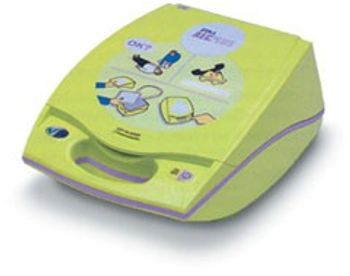
Zoll AED Plus

Real CPR Help for rate and depth of compressions. Support for the complete Chain of Survival. Help to all victims of SCA, even those for which no shock is advised. A one-piece pad for fast and accurate placement. Consumer lithium camera batteries available from retail stores. Intelligent Pediatric Capability. ZOLL’s Rectilinear Biphasic™ Waveform. Total AED Program Management with En-Pro. Guidelines 2005 Ready.
Key tips
- ·Never skip the daily/shift ready-check - a defibrillator found dead during a code is a real, repeated root-cause finding.
- ·Pads and batteries have real expiration dates - check them on every PM, not just at annual service.
- ·Verify energy-delivery accuracy with a real defibrillator analyzer, not just a self-test pass.
Typical Failure Modes
Compiled for this model from its own documentation and established engineering knowledge for this equipment class - not from a verified service record. Confirm against the manufacturer's service manual.
Fails the self-test / status indicator shows service
HighSymptoms: The visible readiness indicator shows a red X / "O-" / "CALL SERVICE", or the unit chirps.
Root cause: Battery low / expired, expired electrode pads, or an internal electronics / capacitor fault flagged by the periodic self-test.
Battery depleted / expired
HighSymptoms: Low-battery indication, will not complete a self-test, will not deliver.
Root cause: Installed batteries at end of life / past the install-by date.
Electrode pads expired or open
MediumSymptoms: Pad / connector fault message, or pads past the expiry date.
Root cause: Expired or dried single-use pads, or a pads-cartridge / connector fault.
Defibrillation energy delivery fault
HighSymptoms: Will not charge or deliver, delivered energy fails the AED analyser test.
Root cause: HV charging circuit or capacitor fault.
Voice / display prompt fault
MediumSymptoms: No or garbled voice prompts, blank display.
Root cause: Speaker / audio or display fault.
Serviceable Parts & Consumables
Serviceable items for this model, compiled from its documentation and engineering knowledge for this equipment class. Service class and relative cost are estimates, not manufacturer figures; no part numbers are given. Confirm intervals and pricing against the manufacturer.
Battery (pack / type per model)
Track the install-by date.
Class Periodic replacementRel. cost $$R&R Easy
Electrode pads (adult / paediatric)
Single-use; track expiry.
Class Periodic replacementRel. cost $$R&R Easy
Pads cartridge / connector
Class Periodic replacementRel. cost $R&R Easy
| Part | Service class | Relative cost | R&R difficulty |
|---|---|---|---|
| Battery (pack / type per model) Track the install-by date. | Periodic replacement | $$ | Easy |
| Electrode pads (adult / paediatric) Single-use; track expiry. | Periodic replacement | $$ | Easy |
| Pads cartridge / connector | Periodic replacement | $ | Easy |
Relative cost: $ lowest · $$$$ highest service-part cost for this equipment class. Not a price.
PM Checklist
Preventive-maintenance tasks typical of this equipment class. Perform to the manufacturer's procedure and your facility's policy - this is general reference, not a schedule for this specific unit.
- ·Daily/shift visual and self-test check (AAMI EQ56 daily-ready standard)
- ·Battery and pad expiration-date tracking
- ·Energy-delivery accuracy test against a defibrillator analyzer
- ·Paddle/cable continuity check
- ·Annual full PM
Troubleshooting Approach
A starting sequence for this model, compiled from its documentation and engineering knowledge for this equipment class. Follow the manufacturer's service documentation for the actual procedure.
Symptom: Self-test fails / service indicator
- Check the readiness indicator and any error tone / code.
- Install a fresh, in-date battery and run a manual self-test.
- Fit fresh, in-date electrode pads.
- Verify defib energy delivery with an AED analyser if the self-test passes but delivery is doubted.
- If the self-test still fails with good battery and pads, remove from service and refer to the manufacturer.
Symptom: Battery / pad expiry
- Replace batteries at or before the install-by date.
- Replace pads at or before the expiry date.
- Run a manual self-test after replacement.
- Log the new expiry dates.
- Return the unit to its cabinet / kit ready for use.
Technical Specs
- Defibrillator Type
- External, Automated (AED)
Typical Location
Where this class of equipment is typically deployed - general reference, not this unit's own placement record.
- Crash carts (every unit)
- Emergency Department
- ICU
- OR
- Code-blue response areas
Documents & Manuals
Troubleshoot this device with Bio
Describe a symptom or error code. Bio answers from this device's own documented error codes, failure modes, parts, and guides.
Ask Bio