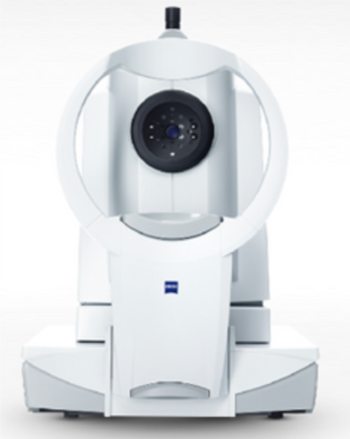
ZEISS IOLMaster 700
 ZEISS · Model IOLMaster 700
Detect unusual eye geometries - Provides a full-length OCT image showing anatomical details on a longitudinal cut through the entire eye Detecto poor fixation - The unique Fixation Check provides you with more confidence in optical biometry. Visually verify your measurement - All measurement calipers are shown on the full-length OCT image. Outstanding repeatability - Thanks to its unique SWEPT Source Biometry with 2,000 scans per second, the repeatability of the ZEISS IOLMaster 700 is absolutely outstanding. >99% cataract penetration rate - Achieves a cataract penetration rate of more than 99%.
Key tips
- ·Verify laser output with a real power meter, not the unit's own display - the display can drift independently of true output.
- ·Take "the image looks a little off" reports seriously - optical alignment drift is usually gradual, not sudden.
Typical Failure Modes
Compiled for this model from its own documentation and established engineering knowledge for this equipment class - not from a verified service record. Confirm against the manufacturer's service manual.
Poor phaco / vacuum performance
HighSymptoms: Weak ultrasonic power, poor followability, vacuum will not build or holds poorly, surge.
Root cause: Worn phaco handpiece / tip, a cracked or worn tubing / cassette, or a pump / vacuum-sensor fault.
Handpiece fault (phaco / I-A / vit)
MediumSymptoms: Handpiece will not tune, overheats, no irrigation / aspiration, cutter not cutting (vit).
Root cause: Worn or damaged handpiece, or its connector / cable.
Fluidics / cassette-detection fault
MediumSymptoms: Cassette not recognised, priming / tuning fails, fluid leaks at the cassette.
Root cause: Cassette-detection switch, the peristaltic / Venturi pump, or fluidics seals.
Footpedal fault
MediumSymptoms: Pedal positions not registering, wireless pedal not pairing.
Root cause: Worn footpedal or its cable / wireless module.
Pneumatics fault (vitrectomy cutter)
LowSymptoms: Cut rate low or erratic, cutter will not drive.
Root cause: Internal pneumatic valve or a supply-pressure fault.
Serviceable Parts & Consumables
Serviceable items for this model, compiled from its documentation and engineering knowledge for this equipment class. Service class and relative cost are estimates, not manufacturer figures; no part numbers are given. Confirm intervals and pricing against the manufacturer.
Phaco / I-A / vitrectomy handpiece
Class Periodic replacementRel. cost $$$R&R Fairly easy
Peristaltic / Venturi pump components
Class Periodic replacementRel. cost $$$R&R Difficult
Cassette-detection switch / fluidics seals
Class Periodic replacementRel. cost $$R&R Moderate
Footpedal / wireless module
Class Periodic replacementRel. cost $$R&R Fairly easy
Pneumatic valve (vitrectomy)
Class Major service partRel. cost $$R&R Moderate
| Part | Service class | Relative cost | R&R difficulty |
|---|---|---|---|
| Phaco / I-A / vitrectomy handpiece | Periodic replacement | $$$ | Fairly easy |
| Peristaltic / Venturi pump components | Periodic replacement | $$$ | Difficult |
| Cassette-detection switch / fluidics seals | Periodic replacement | $$ | Moderate |
| Footpedal / wireless module | Periodic replacement | $$ | Fairly easy |
| Pneumatic valve (vitrectomy) | Major service part | $$ | Moderate |
Relative cost: $ lowest · $$$$ highest service-part cost for this equipment class. Not a price.
PM Checklist
Preventive-maintenance tasks typical of this equipment class. Perform to the manufacturer's procedure and your facility's policy - this is general reference, not a schedule for this specific unit.
- ·Optical alignment / calibration check
- ·Lamp or laser output verification
- ·Annual full PM
Troubleshooting Approach
A starting sequence for this model, compiled from its documentation and engineering knowledge for this equipment class. Follow the manufacturer's service documentation for the actual procedure.
Symptom: Poor phaco or vacuum performance
- Fit a fresh tip and test-tune the handpiece in a beaker.
- Fit a new cassette / tubing and re-prime.
- Run the fluidics / vacuum self-test and check for leaks.
- Verify vacuum and rise time against the service spec.
- Send the handpiece for service or exchange if it will not tune.
Symptom: Cassette not recognised or priming fails
- Reseat the cassette and confirm it clicks home.
- Check the cassette-detection switch.
- Inspect the pump rollers / Venturi and the fluidics seals.
- Re-run prime and tune.
- Replace the detection switch or pump components as isolated.
Typical Location
Where this class of equipment is typically deployed - general reference, not this unit's own placement record.
- Eye clinic / ophthalmology suite
- Operating Room (ophthalmic surgery)
Documents & Manuals
Troubleshoot this device with Bio
Describe a symptom or error code. Bio answers from this device's own documented error codes, failure modes, parts, and guides.
Ask Bio