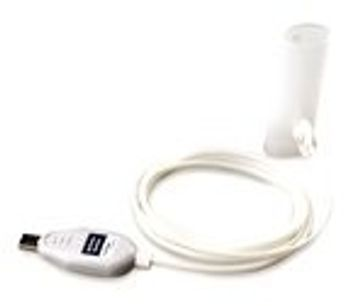
Welch Allyn PC Based Spiro Perfect Spirometer
 Welch Allyn · Model PC Based Spiro Perfect Spirometer
Fast, reliable pre-/postbronchodilator FVC, SVC, and MVV testing with automatic interpretation and reversibility analysis. Instantly verify quality and variability of test performance and compare previous tests using the trending tool. Motivate children with incentive graphic. Reduce risk of cross contamination with single-use disposable transducers. Easily monitor, review, store and print on your computer with Welch Allyn CardioPerfect™ Workstation Software. Interface with EMR or patient management systems for onsite or offsite review of key data.
Key tips
- ·Don't extend filter/tubing replacement intervals to save cost - this is an infection-control issue, not just a performance one.
- ·Flow accuracy drift is often the earliest sign of a failing sensor, well before an outright alarm.
Typical Failure Modes
Compiled for this model from its own documentation and established engineering knowledge for this equipment class - not from a verified service record. Confirm against the manufacturer's service manual.
Fails calibration / calibration-syringe check
HighSymptoms: 3 L syringe check outside tolerance, volume / flow drift over the day, biological control out of range.
Root cause: Flow-sensor contamination or wear (pneumotach / turbine / ultrasonic), a leak, or ambient (BTPS) correction not set.
Flow-sensor fault / leak
MediumSymptoms: Erratic traces, poor repeatability, back-extrapolated volume errors.
Root cause: Worn or wet flow sensor, a damaged filter seat, or a leak in the tubing / mouthpiece connection.
Gas-analyser fault (DLCO / lung volumes)
MediumSymptoms: DLCO or FRC results implausible, gas-analyser calibration fails, drift.
Root cause: CO / CH4 / He / tracer analyser drift or an analyser fault, or a demand-valve / gas-supply issue.
Plethysmograph door / pressure-transducer fault (body box)
MediumSymptoms: Box pressure will not stabilise, thermal drift, door-seal leak.
Root cause: Door seal, the box pressure transducer, or thermal equilibration.
PC / software / printer fault
LowSymptoms: Test hangs, results will not save, print or export.
Root cause: Workstation PC, software, or the printer.
Serviceable Parts & Consumables
Serviceable items for this model, compiled from its documentation and engineering knowledge for this equipment class. Service class and relative cost are estimates, not manufacturer figures; no part numbers are given. Confirm intervals and pricing against the manufacturer.
Flow sensor (pneumotach / turbine / ultrasonic)
Class Periodic replacementRel. cost $$R&R Fairly easy
Calibration syringe (3 L)
Calibrate / verify the syringe periodically.
Class Major service partRel. cost $$R&R Easy
Gas analyser cell (DLCO / lung-volume systems)
Class Periodic replacementRel. cost $$$R&R Moderate
Plethysmograph door seal / pressure transducer
Class Periodic replacementRel. cost $$R&R Moderate
Sample lines / demand valve
Class Frequent wear itemRel. cost $R&R Fairly easy
| Part | Service class | Relative cost | R&R difficulty |
|---|---|---|---|
| Flow sensor (pneumotach / turbine / ultrasonic) | Periodic replacement | $$ | Fairly easy |
| Calibration syringe (3 L) Calibrate / verify the syringe periodically. | Major service part | $$ | Easy |
| Gas analyser cell (DLCO / lung-volume systems) | Periodic replacement | $$$ | Moderate |
| Plethysmograph door seal / pressure transducer | Periodic replacement | $$ | Moderate |
| Sample lines / demand valve | Frequent wear item | $ | Fairly easy |
Relative cost: $ lowest · $$$$ highest service-part cost for this equipment class. Not a price.
PM Checklist
Preventive-maintenance tasks typical of this equipment class. Perform to the manufacturer's procedure and your facility's policy - this is general reference, not a schedule for this specific unit.
- ·Filter and tubing replacement
- ·Flow accuracy check
- ·Annual full PM
Error Codes
Extracted directly from this unit's own service manual.
No valid stroke recordedWhen the calibration attempt was not valid or if the volume read back by the sensor is not within 35% of the selected syringe volume, the calibration fails. This message also appears if the calibration attempt was performed in the wrong order, first emptying the syringe instead of filling it before starting the calibration.
Wait with pushing the plunger in until the blue calibration bar starts moving. Pull the plunger completely out before pressing the OK button on the start calibration window.
Troubleshooting Approach
A starting sequence for this model, compiled from its documentation and engineering knowledge for this equipment class. Follow the manufacturer's service documentation for the actual procedure.
Symptom: No or weak therapy output / delivery-device fault
- Fit a fresh probe / applicator / tip and confirm it is recognised and seated.
- Check the gas / coolant supply pressure and the connecting hose (cryo).
- Substitute a known-good delivery device.
- Test the output into the manufacturer's test setup.
- Escalate a confirmed generator / console fault to the OEM.
Symptom: Leak / frost at fittings / poor freeze (cryosurgical)
- Check the gas cylinder level and the regulator.
- Inspect the hose and fittings for a leak (soapy water).
- Replace worn O-rings / seals.
- Confirm the probe reaches temperature in a test.
- Replace the probe or hose as isolated.
Symptom: Control / display / footswitch fault
- Power-cycle the unit.
- Test the footswitch and its cable.
- Check the control board / keypad.
- Replace the footswitch or keypad as isolated.
- Confirm all modes and safety interlocks.
Typical Location
Where this class of equipment is typically deployed - general reference, not this unit's own placement record.
- Respiratory Therapy department
- Patient floors
- Emergency Department
- Home care (portable units)
Documents & Manuals
Troubleshoot this device with Bio
Describe a symptom or error code. Bio answers from this device's own documented error codes, failure modes, parts, and guides.
Ask Bio