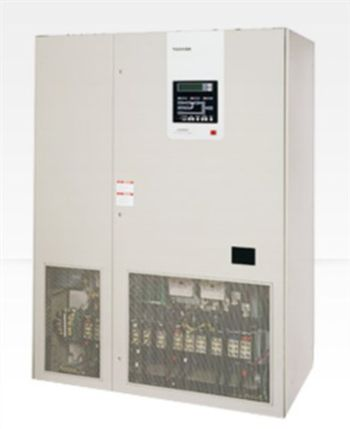
Toshiba G8000 Series UPS
 Toshiba · Model G8000 Series UPS
Internal Isolation Transformer. True Online, Double-Conversion UPS. 100% Unbalanced Load Capability. Electronic Battery Isolation for Battery Longevity. Complete Front-Access for Installation, Operation, and Service. XT Series Designed for Extreme Applications (Harsh Environments). External Battery Options for Customized Battery Backup Time. IGBT DC Converter/Inverter Design. Generator-Friendly Design and Compatibility. SNMP/Web-Based Monitoring. Flywheel Compatible.
Key tips
- ·A no-signal/flatline alarm gets checked on the patient first, not the monitor - rule out a real clinical event before troubleshooting.
- ·Recalibrate NIBP against a reference manometer, not just a self-test pass.
- ·Reused patient cables (SpO2, ECG leads) are a common source of intermittent-fault complaints - swap the cable before the module.
Typical Failure Modes
Compiled for this model from its own documentation and established engineering knowledge for this equipment class - not from a verified service record. Confirm against the manufacturer's service manual.
Will not power on or unexpected shutdown
HighSymptoms: The patient monitoring is dead, reboots, or shuts down mid-use.
Root cause: Mains lead / fuse, an aged battery, or a power-supply board fault.
Battery will not hold charge
MediumSymptoms: Short run time on battery; low-battery alarm soon after a full charge.
Root cause: Aged rechargeable battery pack or a charger fault.
Display / control-panel fault
MediumSymptoms: Blank, dim or distorted display; unresponsive keys or touchscreen.
Root cause: Display, backlight, or control-board fault.
Fails self-test or calibration
MediumSymptoms: Power-on self-test or the scheduled performance check fails or is out of tolerance.
Root cause: Sensor drift or an internal board fault; recalibration or repair needed.
Serviceable Parts & Consumables
Serviceable items for this model, compiled from its documentation and engineering knowledge for this equipment class. Service class and relative cost are estimates, not manufacturer figures; no part numbers are given. Confirm intervals and pricing against the manufacturer.
Rechargeable battery pack
Class Periodic replacementRel. cost $$R&R Fairly easy
Power supply / mains board
Class Major service partRel. cost $$$R&R Difficult
Display / control-panel assembly
Class Major service partRel. cost $$$R&R Moderate
Cooling fan
Class Major service partRel. cost $R&R Moderate
| Part | Service class | Relative cost | R&R difficulty |
|---|---|---|---|
| Rechargeable battery pack | Periodic replacement | $$ | Fairly easy |
| Power supply / mains board | Major service part | $$$ | Difficult |
| Display / control-panel assembly | Major service part | $$$ | Moderate |
| Cooling fan | Major service part | $ | Moderate |
Relative cost: $ lowest · $$$$ highest service-part cost for this equipment class. Not a price.
PM Checklist
Preventive-maintenance tasks typical of this equipment class. Perform to the manufacturer's procedure and your facility's policy - this is general reference, not a schedule for this specific unit.
- ·Routine cable and lead-wire inspection for fraying/wear
- ·Battery conditioning cycle
- ·NIBP calibration check against a reference manometer
- ·ECG / SpO2 accuracy verification against a patient simulator
- ·Annual electrical safety test
Error Codes
Extracted directly from this unit's own service manual.
26OVER HEAT HIGH TEMP IN THE CABINET.
30STAN ERROR OCCURRED IN THE MAIN CONTROL MICROPROCESSOR (CPU).
48STARTUP ERR STARTUP WAS NOT COMPLETED WITHIN THE NORMAL TIME FRAME.
5EEMG.STOP AN EMERGENCY STOP WAS ACTIVATED VIA THE EXTERNAL CONTACT.
71FFUSE BLOWN RECTIFIER, DC, OR INVERTER MAIN CIRCUIT FUSE BLOWN.
76DC OC DC OVER-CURRENT - EXCESSIVE CURRENT IN DC CIRCUIT.
80B2BATT. UV BATTERY VOLTAGE IS BELOW CUTOFF VOLTAGE.
80PSCONT. PS. ERR THE CONTROL POWER SUPPLY VOLTAGE FAILED.
27SAC I/P UV AC INPUT UNDERVOLTAGE - AC INPUT VOLTAGE IS TOO LOW.
47SAC PHASE ERR AC INPUT PHASE ROTATION ERROR.
59SAC I/P OV AC INPUT OVERVOLTAGE - AC INPUT VOLTAGE IS TOO HIGH.
95SI/P FREQ. ERR AC INPUT FREQUENCY ERROR.
27IAC o/p UV AC output voltage is low.
30UUNIT FAUlT IGbT Stack Failure.
45DC oV over-voltage in DC circuit.
49AC o/p ol output overload
51IInV. oC Inverter over-current.
59IAC o/p oV AC output voltage is high.
76CbATT. oC over-current in battery section.
27CbypASS UV bypass input voltage is low.
47CbypASS err. bypass input phase rotation error.
59CbypASS oV bypass input voltage is high.
95CbypASS ASy. bypass input frequency error.
26bbATT. oVer HeAT battery temperature is too high.
80b1bATT. UV (Alm) battery voltage is near cutoff voltage.
Troubleshooting Approach
A starting sequence for this model, compiled from its documentation and engineering knowledge for this equipment class. Follow the manufacturer's service documentation for the actual procedure.
Symptom: A parameter drops out or reads wrong (ECG / IBP / SpO2 / temp / CO2 / CO)
- Reseat the patient cable at the module and at the monitor.
- Swap in a known-good cable / sensor for that parameter and re-test.
- Move the module to another host or slot to tell module from host.
- Inspect the module docking connector for bent or recessed pins.
- Verify against a patient simulator; replace the cable, or refer the parameter module / input board if the fault stays with it.
Symptom: NIBP will not measure or is inaccurate
- Leak-test the cuff and hose (occlude and watch for pressure decay).
- Run the monitor's NIBP calibration-verification against a calibrated manometer.
- Confirm correct cuff size and placement and check for a kinked hose.
- Verify against a NIBP simulator at several pressures.
- Refer the monitor for internal pump / valve service if it still fails.
Symptom: Blank / dim / frozen display or unresponsive touchscreen
- Power-cycle the monitor fully (mains removed, battery out where possible).
- Check the display backlight and the display / touchscreen cable.
- Note any boot or self-test error code.
- Re-calibrate the touchscreen if the touch offset is the issue.
- Replace the display / touchscreen assembly or refer the main board.
Symptom: Not shown at the central station / network dropout
- Confirm the wired drop or Wi-Fi settings and that other monitors on that segment are online.
- Check the monitor's network address / unit-bed assignment and re-admit.
- Reseat the network card / cable.
- Restart the monitor's network interface.
- Escalate a whole-unit outage to the central-station server / IT.
Typical Location
Where this class of equipment is typically deployed - general reference, not this unit's own placement record.
- ICU / CCU
- Emergency Department
- OR / PACU
- General med-surg floors
- Step-down units
- Telemetry units
Documents & Manuals
Safety & Recalls
Synced live from the FDA openFDA API.
- RECALL
The table base rotational brake that holds the table top may not always be engaged when any force or side impact is applied to the table top.
- RECALL
The recall was initiated because Toshiba has confirmed that during patient transfer from a gurney to the catherization table, the tabletop may rotate unexpectedly when sufficient force is applied to the tabletop. The result of the tabletop rotating unexpectedly is the patient being tranferred may fall from the tabletop.
- RECALL
It was found during a study, arcing might occur in the transformer of the high voltage generator, XTP-8100G and XTBP-8100G displaying an error message and interrupting fluoroscopy.
- RECALL
Pinhole collimator defective.
Troubleshoot this device with Bio
Describe a symptom or error code. Bio answers from this device's own documented error codes, failure modes, parts, and guides.
Ask Bio