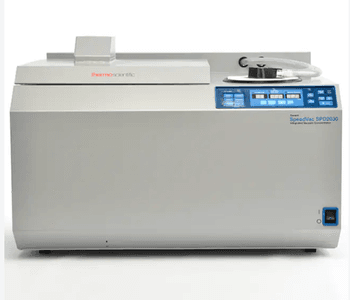
Thermo Scientific Savant SPD1030-115 SpeedVac Integrated Vacuum Concentrator
 Thermo Scientific · Model Savant SPD1030-115 SpeedVac Integrated Vacuum Concentrator
Integrated vacuum concentrator for streamlined laboratory sample preparation Designed for drying and concentrating aqueous and non-aggressive samples Medium-capacity design for efficient sample processing Accommodates up to 120 x 1.5 mL tubes Supports up to 10 x 15 mL tubes Supports up to 6 x 50 mL tubes Accommodates up to 2 microwell plates Compatible with additional rotor options for various tubes, vials, and plates Suitable for DNA/RNA precipitates, PCR samples, proteins, enzymes, and HPLC fractions Supports samples containing water, ethanol, isopropanol, and other organic solvents Temperature range from ambient conditions up to 80°C PTFE-coated aluminum chamber for laboratory use Maximum vacuum of <10 Torr (13 mbar, 1.3 kPa) 115 V, 60 Hz, 8 A electrical configuration UL Listed for U.S. and Canadian requirements CE marked (Generated by AI)
Key tips
- ·Run QC controls before trusting any repair - an analyzer that passes self-test can still report clinically wrong results.
- ·Rule out a reagent lot change before opening the instrument - it can look exactly like a hardware fault.
- ·Centrifuge rotors have a hard retirement age/cycle limit regardless of visible condition - don't eyeball it.
Typical Failure Modes
Compiled for this model from its own documentation and established engineering knowledge for this equipment class - not from a verified service record. Confirm against the manufacturer's service manual.
Vacuum Failure / Insufficient Pressure Decay
HighSymptoms: Vacuum gauge reads above 10 Torr; samples fail to concentrate within standard time; display shows 'Vacuum Error' or pump cycles continuously without building pressure.
Root cause: Permeation of organic solvent vapors (ethanol, isopropanol) into the pump intake causing seal degradation and oil contamination; PTFE chamber coating flaking introduces particulate interference into the vacuum stage.
Heater / Temperature Regulation Failure
MediumSymptoms: Samples over-dry or scorch; temperature readout deviates >5°C from setpoint; unit trips thermal cutoff.
Root cause: Drift of the PT1000 temperature sensor embedded in the aluminum block; thermal fuse activation due to prolonged operation above 80°C setpoint; relay contact pitting on the heater board.
Rotors / Tray Misalignment / Mechanical Jamming
LowSymptoms: Tubes or plates seat unevenly; audible grinding during ramp; rotor fails to lock; error code prevents start.
Root cause: Accumulation of dried sample residue on the rotor hub threads; corrosion of the aluminum rotor interface from solvent exposure; wear of the cam-lock mechanism from frequent rotor changes.
Serviceable Parts & Consumables
Serviceable items for this model, compiled from its documentation and engineering knowledge for this equipment class. Service class and relative cost are estimates, not manufacturer figures; no part numbers are given. Confirm intervals and pricing against the manufacturer.
Vacuum Pump Oil (PTFE-compatible formula)
Must be changed every 90 days or after exposure to aggressive organic solvents to prevent pump seizure.
Class ConsumableRel. cost $R&R Easy
Rotor Hub Cam-Lock Mechanism
Precision-machined aluminum; wear threads cause misalignment. Requires rotor removal and partial disassembly to replace.
Class Periodic replacementRel. cost $$R&R Difficult
Heater Cartridge Assembly (80°C rated)
Quartz-sheathed element; prone to carbon buildup from organic solvents reducing efficiency.
Class Major service partRel. cost $$$R&R Moderate
| Part | Service class | Relative cost | R&R difficulty |
|---|---|---|---|
| Vacuum Pump Oil (PTFE-compatible formula) Must be changed every 90 days or after exposure to aggressive organic solvents to prevent pump seizure. | Consumable | $ | Easy |
| Rotor Hub Cam-Lock Mechanism Precision-machined aluminum; wear threads cause misalignment. Requires rotor removal and partial disassembly to replace. | Periodic replacement | $$ | Difficult |
| Heater Cartridge Assembly (80°C rated) Quartz-sheathed element; prone to carbon buildup from organic solvents reducing efficiency. | Major service part | $$$ | Moderate |
Relative cost: $ lowest · $$$$ highest service-part cost for this equipment class. Not a price.
PM Checklist
Preventive-maintenance tasks typical of this equipment class. Perform to the manufacturer's procedure and your facility's policy - this is general reference, not a schedule for this specific unit.
- ·Daily QC controls run and reviewed
- ·Calibration verification per assay
- ·Routine cleaning and decontamination
- ·Scheduled reagent-path and pump-tubing maintenance
Troubleshooting Approach
A starting sequence for this model, compiled from its documentation and engineering knowledge for this equipment class. Follow the manufacturer's service documentation for the actual procedure.
Symptom: Vacuum will not build; pump runs but gauge stays above 10 Torr
- 1. Isolate the chamber: Run the unit with the door open and the PTFE chamber removed to verify pump-down speed independent of the chamber seal.
- 2. Inspect the vacuum intake filter: Remove and examine for solvent-induced oil emulsification or particulate blockage; replace if milky or discolored.
- 3. Verify pump oil condition and level: Drain a sample into a clear vial; look for solvent separation or foaming. Replace oil with PTFE-compatible formula if contaminated.
Symptom: Temperature readout unstable or exceeds setpoint
- 1. Access the block sensor well: Remove the top cover and disconnect the PT1000 probe. Measure resistance at 25°C (approx 100 Ω) to verify sensor integrity.
- 2. Perform a thermal soak test: Set unit to 80°C no-load; log temperature every 2 minutes for 20 minutes. Note any drift beyond ±3°C before replacing the sensor.
- 3. Check heater relay contacts: With power removed, inspect the solid-state relay for carbon tracking or pitting; replace if resistance across contacts is uneven.
Typical Location
Where this class of equipment is typically deployed - general reference, not this unit's own placement record.
- Central / core laboratory
- Point-of-care testing stations
- Blood bank
- Microbiology lab
Documents & Manuals
No documents available for this device yet.
Related calculators
From BioLab, for work done with this kind of equipment.
Troubleshoot this device with Bio
Describe a symptom or error code. Bio answers from this device's own documented error codes, failure modes, parts, and guides.
Ask Bio