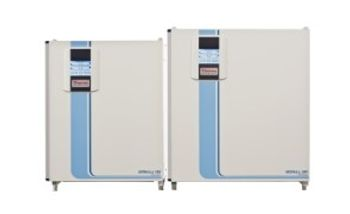
Thermo Scientific 150i and 240i CO2
 Thermo Scientific · Model 150i and 240i CO2
CAN™ Touchscreen Control Door-mounted for easy accessibility and viewing Convenient on-screen user prompts for simplified measurement and control navigation Choice of languages Changes in culture environment visible on screen logs and usage recording Visual monitor alarm TC or IR CO2 Sensor Standard thermal conductivity (TC) sensor features accurate gas sensor technology Infrared (IR) sensor features exclusive split-beam technology for precise CO2 control in fluctuating temperature and humidity conditions Rapid Humidity Recovery Large, directly heated water reservoir Recovery times are up to five times faster than conventional water pans Water level alarm with audible and visual alerts O2 Control with Auto-Cal Two O2 control ranges precisely control oxygen concentration Ideal for applications requiring decreased or increased O2 conditions.
Key tips
- ·Run QC controls before trusting any repair - an analyzer that passes self-test can still report clinically wrong results.
- ·Rule out a reagent lot change before opening the instrument - it can look exactly like a hardware fault.
- ·Centrifuge rotors have a hard retirement age/cycle limit regardless of visible condition - don't eyeball it.
Typical Failure Modes
Compiled for this model from its own documentation and established engineering knowledge for this equipment class - not from a verified service record. Confirm against the manufacturer's service manual.
Will not hold set temperature
HighSymptoms: Chamber above or below setpoint, temperature alarm, slow recovery after the door opens.
Root cause: Heater element, a temperature-sensor / controller fault, a door / gasket leak, or a circulation-fan fault.
CO2 concentration fault (CO2 incubator)
HighSymptoms: CO2 above or below setpoint, CO2 alarm, pH drift in cultures.
Root cause: CO2 sensor (TC or IR) drift, an empty / low CO2 supply, or a solenoid / regulator fault.
Humidity fault (CO2 incubator)
MediumSymptoms: Low humidity, plates drying out, condensation problems.
Root cause: Empty water pan, or an evaporation / airflow issue.
Over-temperature safety trip
MediumSymptoms: Chamber stops heating, over-temp alarm, will not restart.
Root cause: Controller / sensor fault driving the heater high, or an independent over-temp thermostat.
Door / gasket fault
LowSymptoms: Door will not seal, temperature swings, condensation at the door.
Root cause: Worn door gasket or a sagging hinge.
Serviceable Parts & Consumables
Serviceable items for this model, compiled from its documentation and engineering knowledge for this equipment class. Service class and relative cost are estimates, not manufacturer figures; no part numbers are given. Confirm intervals and pricing against the manufacturer.
Heater element
Class Major service partRel. cost $$R&R Moderate
Temperature sensor / controller
Class Major service partRel. cost $$R&R Moderate
CO2 sensor (CO2 incubator)
Class Periodic replacementRel. cost $$$R&R Moderate
CO2 solenoid / regulator (CO2 incubator)
Class Major service partRel. cost $$R&R Moderate
Door gasket
Class Periodic replacementRel. cost $R&R Fairly easy
| Part | Service class | Relative cost | R&R difficulty |
|---|---|---|---|
| Heater element | Major service part | $$ | Moderate |
| Temperature sensor / controller | Major service part | $$ | Moderate |
| CO2 sensor (CO2 incubator) | Periodic replacement | $$$ | Moderate |
| CO2 solenoid / regulator (CO2 incubator) | Major service part | $$ | Moderate |
| Door gasket | Periodic replacement | $ | Fairly easy |
Relative cost: $ lowest · $$$$ highest service-part cost for this equipment class. Not a price.
PM Checklist
Preventive-maintenance tasks typical of this equipment class. Perform to the manufacturer's procedure and your facility's policy - this is general reference, not a schedule for this specific unit.
- ·Daily QC controls run and reviewed
- ·Calibration verification per assay
- ·Routine cleaning and decontamination
- ·Scheduled reagent-path and pump-tubing maintenance
Troubleshooting Approach
A starting sequence for this model, compiled from its documentation and engineering knowledge for this equipment class. Follow the manufacturer's service documentation for the actual procedure.
Symptom: Chamber temperature out of range / will not hold the setpoint
- Compare the chamber to an independent calibrated reference at several points.
- Confirm the door seals and that airflow / vents are not blocked by product.
- Check the circulation fan and the condenser fan / condenser (cooled units).
- Verify the heater or the refrigeration draws current / runs.
- Calibrate the temperature sensor / setpoint; escalate a sealed-system refrigeration fault to a certified tech.
Symptom: CO2 concentration out of range (CO2 incubator)
- Verify CO2 with an independent calibrated analyser (Fyrite or electronic).
- Confirm the CO2 supply pressure and that the cylinder is not empty.
- Check / calibrate the CO2 sensor (TC sensors drift with humidity and door openings).
- Inspect the inlet filter and the solenoid / regulator.
- Recalibrate and re-verify against the reference.
Symptom: Over-temperature safety trip / monitoring or alarm fault
- Let the unit cool and compare the display to an independent reference.
- Replace the temperature sensor if it disagrees.
- Check the independent over-temp thermostat.
- Test the local and remote alarm relays.
- Confirm stable control and working alarms before returning to use.
Typical Location
Where this class of equipment is typically deployed - general reference, not this unit's own placement record.
- Central / core laboratory
- Point-of-care testing stations
- Blood bank
- Microbiology lab
Documents & Manuals
Related calculators
From BioLab, for work done with this kind of equipment.
Troubleshoot this device with Bio
Describe a symptom or error code. Bio answers from this device's own documented error codes, failure modes, parts, and guides.
Ask Bio