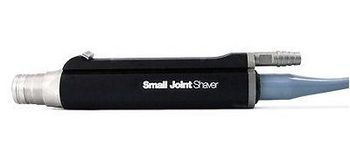
Stryker Small Joint CORE Shaver
 Stryker · Model Small Joint CORE Shaver
Stryker Small Joint CORE Shaver Handpiece.
Key tips
- ·Never defeat or bypass a return-electrode monitoring (REM) alarm to finish a case - it's a direct burn risk.
- ·Verify OR table battery backup - a table that loses power mid-procedure is a real, documented incident type.
- ·Track surgical light lamp-hours rather than waiting for failure - a sudden failure mid-case is avoidable.
Typical Failure Modes
Compiled for this model from its own documentation and established engineering knowledge for this equipment class - not from a verified service record. Confirm against the manufacturer's service manual.
Weak or no power / stalls under load
HighSymptoms: Handpiece runs slow, stalls when drilling / cutting, or does not run at all.
Root cause: Worn motor / turbine, worn gears / bearings, a low or aged battery, or (pneumatic) low supply pressure / a worn hose.
Overheats in use
MediumSymptoms: Handpiece or attachment gets hot quickly, burn / thermal-necrosis risk.
Root cause: Worn bearings / gears, a dry / seized attachment, or over-duty use.
Battery will not hold charge (battery tools)
HighSymptoms: Few cases per charge, will not reach full charge, sudden shutdown.
Root cause: Aged battery pack or a charger fault.
Chuck / coupling / attachment fault
MediumSymptoms: Bur / blade / pin slips or will not lock, attachment wobbles, quick-coupler worn.
Root cause: Worn chuck / collet or coupling.
Trigger / control fault
MediumSymptoms: Speed will not vary, forward/reverse or oscillate will not select, trigger sticks.
Root cause: Worn trigger / control mechanism or its seals.
Serviceable Parts & Consumables
Serviceable items for this model, compiled from its documentation and engineering knowledge for this equipment class. Service class and relative cost are estimates, not manufacturer figures; no part numbers are given. Confirm intervals and pricing against the manufacturer.
Motor / turbine assembly
Class Periodic replacementRel. cost $$$R&R Difficult
Gear / bearing service kit
Class Periodic replacementRel. cost $$R&R Difficult
Battery pack (battery tools)
Class Periodic replacementRel. cost $$$R&R Fairly easy
Chuck / collet / quick-coupler
Class Periodic replacementRel. cost $$R&R Moderate
Trigger / seal kit
Class Periodic replacementRel. cost $$R&R Moderate
| Part | Service class | Relative cost | R&R difficulty |
|---|---|---|---|
| Motor / turbine assembly | Periodic replacement | $$$ | Difficult |
| Gear / bearing service kit | Periodic replacement | $$ | Difficult |
| Battery pack (battery tools) | Periodic replacement | $$$ | Fairly easy |
| Chuck / collet / quick-coupler | Periodic replacement | $$ | Moderate |
| Trigger / seal kit | Periodic replacement | $$ | Moderate |
Relative cost: $ lowest · $$$$ highest service-part cost for this equipment class. Not a price.
PM Checklist
Preventive-maintenance tasks typical of this equipment class. Perform to the manufacturer's procedure and your facility's policy - this is general reference, not a schedule for this specific unit.
- ·Pre-case functional check
- ·Electrosurgical return-electrode cable inspection
- ·Table hydraulic / mechanical inspection
- ·Annual electrical safety test and full PM
Troubleshooting Approach
A starting sequence for this model, compiled from its documentation and engineering knowledge for this equipment class. Follow the manufacturer's service documentation for the actual procedure.
Symptom: Weak, stalling or no power
- Fit a fully charged battery (battery tools) or confirm the pneumatic supply pressure and hose.
- Fit a fresh, sharp attachment and confirm it seats and locks.
- Run the handpiece off the patient and listen / feel for bearing or gear roughness.
- Service the handpiece (bearings / gears / seals) or replace the motor.
- Confirm rated speed and torque and normal running temperature after service.
Symptom: Overheats
- Use sharp attachments and observe the duty cycle.
- Check the attachment / coupling is not dragging or dry.
- Feel for bearing roughness.
- Service the bearings / gears.
- Confirm the handpiece runs cool under a normal load.
Technical Specs
- Function
- Shaver
Typical Location
Where this class of equipment is typically deployed - general reference, not this unit's own placement record.
- Operating rooms
- Procedure rooms
- Interventional suites
Documents & Manuals
No documents available for this device yet.
Safety & Recalls
Synced live from the FDA openFDA API.
- RECALL
Expired product distributed
- RECALL
Product was distributed without receiving regulatory clearance.
- RECALL
The press fit connection of the Angular Sleeve and pin of the U-Joint and Click Lock did not meet specification. A dimensional discrepancy of the bore hole of the Angular Sleeve may cause a reduced press fit of the pin. This can result in partial of full displacement or loss of the pin and, accordingly, stability of the strut of the frame cannot be ensured.
- RECALL
Stryker Sustainability Solutions has received an increase in reports indicating that the affected Reprocessed HARH36 devices may display an error code (No Instrument Uses Remaining) upon initial connection to the generator. When this error code is present, the device is not able to be used.
- RECALL
The wrong parts were picked for packaging. The connecting Nuts were packed in the packaging labeled with Hinge coupling
- RECALL
The recalled products were shipped without the required temperature control packaging, therefore could potentially have been exposed to elevated temperatures during transit.
- RECALL
Stryker is recalling Hoffmann LRF (Limb Reconstruction Frame) System Safety Clip - Bone Transport Strut because there is a potential for loosening of the safety clips from the intended position on the Quick Release mechanism of the Transport Struts.
- RECALL
Stryker discovered that a Tibial Nail and femoral Nail were incorrectly labeled and distributed to the field.
- RECALL
Six (6) PCA 10 Degree Hooded Acetabular Insert-Duration 22 mm (ID) have been distributed in the US, although the 22 mm size was inadvertently omitted from 510(k) #K963612.
- RECALL
Stryker is recalling rHead, uHead, Sigmoid Notch, Remotion, Radio Capitellum because packaging integrity (sterile barrier) of the packaging type KIT I may potentially be compromised by transportation.
- RECALL
Potential for the device cannula to overthrow past the intended length.
- RECALL
The peel strength of the inner blister may have been below internal validated requirements. The strength of the seal is directly related to long term shelf life of the sterile barrier.
- RECALL
STERRAD 100S parameters provided in the Shaver Handpiece reprocessing guide (P10299 Revision A) did not fully consider all worst-case scenarios during validation testing.
- RECALL
Stryker received a report that the length of the cannulated screw asnis III, article # 604640 Lot R11482, was incorrect.
- RECALL
Stryker has received reports from customers indicating post-operative fracture of the pin that connects the tulip head to the plate body.
- RECALL
Stryker Endoscopy determined that there may not have been adequate determination of required routine checks to ensure accuracy and fitness for use of specific serial numbers of Formula and 180 Shaver Hand Control.
- RECALL
Stryker Orthopaedics received a report indicating that a Tibial Keel Punch could not be inserted into the slot of the Tibial Punch Tower. The slot that guides the stem of the keel punch into the channel of the tower was later determined to be undersized.
- RECALL
Stryker Orthopaedics became aware that there is the potential for the Scorpio T72 tibial Insert Trials to be oversized by a maximum of .024" (0.6mm).
- RECALL
Leak: Leak-resistant barrier may not properly seal and leak when an instrument is inserted, and keep leaking after instrument is removed.
- RECALL
Label mix-up: Stryker Orthopaedics became aware of a lot for lot mix up between Triathlon PKR Insert X3 #1 LM/RL 8mm, 5630-G-108 lot code NXDMEE and Triathlon PKR Insert X3 #1 RM/LL- 12 mm 5630-G-122 lot code M8JMEE.
- RECALL
Lack of assurance of sterility.
- RECALL
Reports were received of the ball ring ejecting from the connector's body when other connectors have already been locked down.
- RECALL
Potential electrical shock hazard, in that the potential exists for the patient to be exposed to an earth-referenced electrical current.
Troubleshoot this device with Bio
Describe a symptom or error code. Bio answers from this device's own documented error codes, failure modes, parts, and guides.
Ask Bio