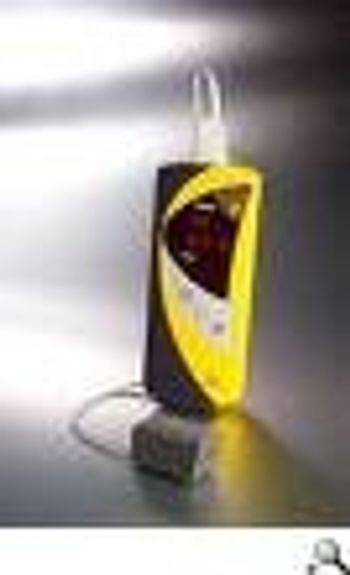
Smiths Medical BCI FingerPrint
 Smiths Medical · Model BCI FingerPrint
Integrated printer provides immediate hard-copy documentation of Desaturation Summary Report. Easy-to-use, 2-key operation. 3-mode versatility: spot checking, data collection, and data transfer. Display disappears during data collection, conserving power and reducing patient distractions. Download an entire 8-hour study to a PC using commercially available software in a matter of minutes. View desaturation and heart rate data via optional PC data management software. Economically download and print 2 full overnight sleep screens on one set of 4 “AA” alkaline batteries. Genuine BCI® reusable and disposable sensors available.
Key tips
- ·A no-signal/flatline alarm gets checked on the patient first, not the monitor - rule out a real clinical event before troubleshooting.
- ·Recalibrate NIBP against a reference manometer, not just a self-test pass.
- ·Reused patient cables (SpO2, ECG leads) are a common source of intermittent-fault complaints - swap the cable before the module.
Typical Failure Modes
Compiled for this model from its own documentation and established engineering knowledge for this equipment class - not from a verified service record. Confirm against the manufacturer's service manual.
No SpO2 / pulse reading or poor signal
HighSymptoms: No saturation / pulse value, "pulse search", low signal quality, implausible values.
Root cause: Worn or wrong SpO2 sensor, a damaged cable, poor site / perfusion, or motion.
Sensor / cable connector fault
MediumSymptoms: Reading drops when the cable is moved, sensor not recognised.
Root cause: Broken conductors in the sensor / extension cable, or a worn connector.
Inaccurate SpO2 vs a co-oximeter
MediumSymptoms: SpO2 consistently biased vs an arterial reference.
Root cause: Sensor degradation, or a monitor calibration / module fault.
Alarm / audio fault
MediumSymptoms: No or quiet audible alarm.
Root cause: Speaker or audio-board fault - a safety-critical failure.
Battery / power fault
MediumSymptoms: Short battery run time, will not power on.
Root cause: Aged battery.
Serviceable Parts & Consumables
Serviceable items for this model, compiled from its documentation and engineering knowledge for this equipment class. Service class and relative cost are estimates, not manufacturer figures; no part numbers are given. Confirm intervals and pricing against the manufacturer.
SpO2 sensor (reusable / disposable)
Class Frequent wear itemRel. cost $$R&R Easy
Pulse-oximetry extension cable
Class Frequent wear itemRel. cost $$R&R Easy
Battery
Class Periodic replacementRel. cost $$R&R Fairly easy
SpO2 module / board
Class Major service partRel. cost $$$R&R Moderate
Alarm speaker / audio board
Class Major service partRel. cost $$R&R Moderate
| Part | Service class | Relative cost | R&R difficulty |
|---|---|---|---|
| SpO2 sensor (reusable / disposable) | Frequent wear item | $$ | Easy |
| Pulse-oximetry extension cable | Frequent wear item | $$ | Easy |
| Battery | Periodic replacement | $$ | Fairly easy |
| SpO2 module / board | Major service part | $$$ | Moderate |
| Alarm speaker / audio board | Major service part | $$ | Moderate |
Relative cost: $ lowest · $$$$ highest service-part cost for this equipment class. Not a price.
PM Checklist
Preventive-maintenance tasks typical of this equipment class. Perform to the manufacturer's procedure and your facility's policy - this is general reference, not a schedule for this specific unit.
- ·Routine cable and lead-wire inspection for fraying/wear
- ·Battery conditioning cycle
- ·NIBP calibration check against a reference manometer
- ·ECG / SpO2 accuracy verification against a patient simulator
- ·Annual electrical safety test
Troubleshooting Approach
A starting sequence for this model, compiled from its documentation and engineering knowledge for this equipment class. Follow the manufacturer's service documentation for the actual procedure.
Symptom: No SpO2 or poor signal
- Fit a fresh, correct-size sensor on a well-perfused, still site.
- Swap the extension cable.
- Confirm the signal-quality / pleth indicator improves.
- Test the monitor with an SpO2 simulator.
- Replace the sensor / cable, or refer the monitor if the simulator also fails.
Symptom: Accuracy or alarm concern
- Compare SpO2 to a co-oximeter blood gas where clinically indicated.
- Try a known-good sensor.
- Verify against an SpO2 simulator at several saturations.
- Test the audible alarm at the set volume.
- Refer for module / audio service if it fails the simulator or alarm test.
Technical Specs
- Height
- 6.6 in
- Length
- 1.43 in
- Pulse Rate Range
- 30-254 BPM
- Weight
- 13 oz
- Operating Life
- 24 sec no printing
- SpO2 Range
- 0-100%
- Width
- 2.75 in
Typical Location
Where this class of equipment is typically deployed - general reference, not this unit's own placement record.
- ICU / CCU
- Emergency Department
- OR / PACU
- General med-surg floors
- Step-down units
- Telemetry units
Documents & Manuals
Safety & Recalls
Synced live from the FDA openFDA API.
- RECALL
Airway adapter does not meet specification and may break off when attaching a valve or tube. Device failure may result in inaccurate readings, a break in airway circuit, and loss of ventilation. A break in the airway circuit could result in inability to ventilate, hypoxia, cardiopulmonary collapse, or death.
- RECALL
Some printing modes on the devices may not function properly (tabular data printing, real-time continuous printouts, and automatic interrupt print feature).
- RECALL
The Auxiliary Serial Input/ Output Modes on the Advisor do not function as expected, resulting in data formatting issues or incorrect data being transmitted in or out of the serial port into a data collection system.
- RECALL
In rare instances, the BCI Remote Alarm Cables (BCI Cable) are not transferring alarms when used with some remote nurse alarm systems.
- RECALL
Recent improvements were made to the Advisor case plastic resulting in the inserts being deeply embedded into the plastic. This affects the ability of the monitor to be adequately secured on the wall mount bracket or roll stand bracket, resulting in the monitor falling off. There have been no adverse events or injuries reported.
- RECALL
Due to a component that may be installed backwards, the device may turn off or may immediately reset.
- RECALL
The Smith Medical PM, Inc. BCI 3180 Pulse Oximeter tantalum capacitors C38, C72, C74, and C98 were installed backwards during assembly at the board manufacturer. This exposes the components to reverse polarity voltages that may lead to their pre-mature failure. As a result, the identified monitors may exhibit failure modes such as the monitor may shut down and not produce alarms or signals to
- RECALL
Turn off unexpectedly/ Not turn on : monitors turned off unexpectedly sounding the critical failure alarm. Advisor Vital Signs monitors that were off, would not turn back on.
Troubleshoot this device with Bio
Describe a symptom or error code. Bio answers from this device's own documented error codes, failure modes, parts, and guides.
Ask Bio