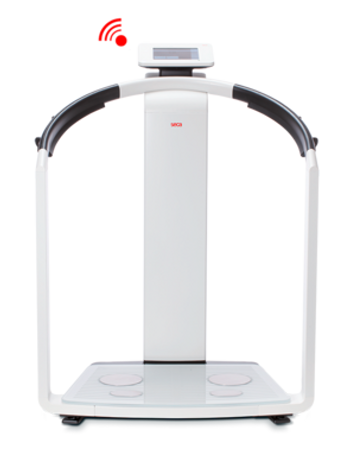
Seca mBCA 515
 Seca · Model mBCA 515
Unique accuracy through whole body MRI validation (skeletal muscle mass) and 4C model (fat mass) Handrail with fixed handle positions: Measurements are reproducible and reliable Validation studies are bundled and published in the European Journal of Clinical Nutrition 2013/2017, among others Comprehensive, personalized normal ranges based on over 3,000 multiethnic subjects Possible to evaluate the measurement directly on the monitor Extra-large platform: Enough space even for extremely tall people or people affected by severe obesity Measuring time is only 17 seconds.
Key tips
- ·Mounting and securement hardware takes real fatigue from vibration and road shock - inspect it as carefully as the device itself.
- ·Post-call battery and function checks catch transport-induced faults that a scheduled PM would miss for months.
Typical Failure Modes
Compiled for this model from its own documentation and established engineering knowledge for this equipment class - not from a verified service record. Confirm against the manufacturer's service manual.
Inaccurate weight / will not calibrate
HighSymptoms: Reading disagrees with certified test weights, drifts, or fails calibration.
Root cause: Load-cell drift or damage, a binding platform / linkage, or a calibration fault.
Will not zero / unstable reading
MediumSymptoms: Reading will not settle or return to zero, jumps around.
Root cause: Something fouling the platform, a damaged load cell, or electrical noise / a loose connector.
Display / keypad fault
MediumSymptoms: Missing segments, unresponsive keys, error code on power-up.
Root cause: Display or keypad membrane fault, or a main-board fault.
Battery / power fault
MediumSymptoms: Will not power on, short battery life, only works on mains.
Root cause: Aged battery or a power / adapter fault.
Mechanical / handrail / seat fault (chair & bed scales)
LowSymptoms: Wobble, worn castors, loose seat or handrail, folding mechanism stiff.
Root cause: Worn castors, hardware, or the folding mechanism.
Serviceable Parts & Consumables
Serviceable items for this model, compiled from its documentation and engineering knowledge for this equipment class. Service class and relative cost are estimates, not manufacturer figures; no part numbers are given. Confirm intervals and pricing against the manufacturer.
Load cell(s)
Recalibrate with certified weights after replacement.
Class Major service partRel. cost $$R&R Moderate
Display / main board
Class Major service partRel. cost $$R&R Moderate
Keypad membrane
Class Periodic replacementRel. cost $R&R Fairly easy
Battery / power adapter
Class Periodic replacementRel. cost $R&R Easy
Castors / seat / handrail hardware
Class Periodic replacementRel. cost $R&R Fairly easy
| Part | Service class | Relative cost | R&R difficulty |
|---|---|---|---|
| Load cell(s) Recalibrate with certified weights after replacement. | Major service part | $$ | Moderate |
| Display / main board | Major service part | $$ | Moderate |
| Keypad membrane | Periodic replacement | $ | Fairly easy |
| Battery / power adapter | Periodic replacement | $ | Easy |
| Castors / seat / handrail hardware | Periodic replacement | $ | Fairly easy |
Relative cost: $ lowest · $$$$ highest service-part cost for this equipment class. Not a price.
PM Checklist
Preventive-maintenance tasks typical of this equipment class. Perform to the manufacturer's procedure and your facility's policy - this is general reference, not a schedule for this specific unit.
- ·Post-call function and battery check
- ·Mounting / securement inspection
- ·Annual full PM and vibration-tolerance check
Troubleshooting Approach
A starting sequence for this model, compiled from its documentation and engineering knowledge for this equipment class. Follow the manufacturer's service documentation for the actual procedure.
Symptom: Inaccurate weight / will not calibrate
- Place the scale on a firm, level surface with nothing touching the platform or frame.
- Check against certified test weights across the range.
- Inspect the load-cell mounts and linkage for binding, debris or a pinched cable.
- Run the calibration procedure per the service manual.
- Replace the load cell(s) if it will not hold calibration, then recalibrate with certified weights.
Symptom: Will not zero / unstable reading
- Clear anything bridging or fouling the platform.
- Reseat the load-cell connector at the indicator.
- Move the scale away from strong RF, draughts or vibration.
- Re-zero / tare.
- Replace a damaged load cell.
Symptom: Display / keypad fault or error on power-up
- Note the power-up error code.
- Power-cycle and check the keypad membrane and display cable.
- Check the battery / power adapter output.
- Replace the keypad or display as isolated.
- Confirm a full self-test after repair.
Symptom: Chair / bed scale wobble, worn castors or stiff folding mechanism
- Inspect and replace worn castors and hardware.
- Lubricate and adjust the folding / seat mechanism.
- Confirm the handrail / seat is secure.
- Re-check weighing accuracy after any mechanical work.
- Verify the load cells are not stressed by the frame.
Typical Location
Where this class of equipment is typically deployed - general reference, not this unit's own placement record.
- Ambulance / transport vehicles
- Emergency Department
- Inter-facility transport teams
Documents & Manuals
Troubleshoot this device with Bio
Describe a symptom or error code. Bio answers from this device's own documented error codes, failure modes, parts, and guides.
Ask Bio