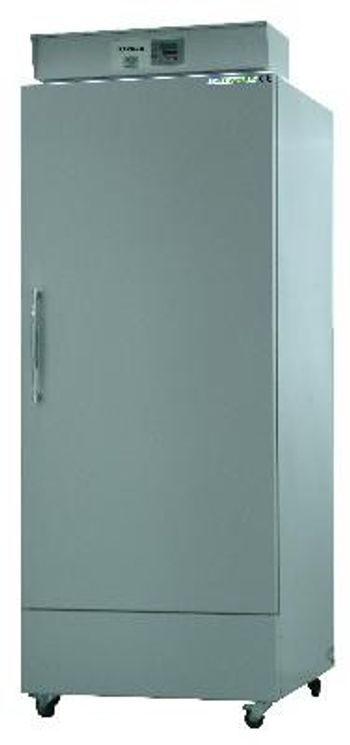
REXMED RIT-350
 REXMED · Model RIT-350
Incubator MOD. RIT-350, AC 110/230V, Plug type: , Low temperature incubator, HS CODE: 993199, UNCCS CODE: 484326, UMDNS CODE: 18013, GMDN CODE: 35482, Main construction: powder coated steel and SS304, Controller: Microprocessor based PID controller, water proof keypad with timer, °C/PV and °C/SV display and setting, Timer: 9999/min, 9999/hr, Timer has DELAY_ON and DELAY_OFF function at the end of operation audio and visual warning, Working range: +5°C~60°C, Stability at 37°C: ±0.1°C, Uniformity: ±0.5°C, Sensor: PT 100Ω, Temperature audio and visual warning for AL-H and AL-L and OFS correction setting, Heater: 700W, Cooling compressor: 1/10HP, Compressor has delay on and overload protection, auto defrost setting, Cooling capacity: 95 Watts, 325 BTU/hr, 82 Kcal/hr, Chamber: L66 X W60 X H142cm, Capacity: 562L, inner glass viewing window, 4 castors, W/S: shelf X 4pcs.
Key tips
- ·Run QC controls before trusting any repair - an analyzer that passes self-test can still report clinically wrong results.
- ·Rule out a reagent lot change before opening the instrument - it can look exactly like a hardware fault.
- ·Centrifuge rotors have a hard retirement age/cycle limit regardless of visible condition - don't eyeball it.
Typical Failure Modes
Compiled for this model from its own documentation and established engineering knowledge for this equipment class - not from a verified service record. Confirm against the manufacturer's service manual.
Will not hold set temperature
HighSymptoms: Chamber above or below setpoint, temperature alarm, slow recovery after the door opens.
Root cause: Heater element, a temperature-sensor / controller fault, a door / gasket leak, or a circulation-fan fault.
CO2 concentration fault (CO2 incubator)
HighSymptoms: CO2 above or below setpoint, CO2 alarm, pH drift in cultures.
Root cause: CO2 sensor (TC or IR) drift, an empty / low CO2 supply, or a solenoid / regulator fault.
Humidity fault (CO2 incubator)
MediumSymptoms: Low humidity, plates drying out, condensation problems.
Root cause: Empty water pan, or an evaporation / airflow issue.
Over-temperature safety trip
MediumSymptoms: Chamber stops heating, over-temp alarm, will not restart.
Root cause: Controller / sensor fault driving the heater high, or an independent over-temp thermostat.
Door / gasket fault
LowSymptoms: Door will not seal, temperature swings, condensation at the door.
Root cause: Worn door gasket or a sagging hinge.
Serviceable Parts & Consumables
Serviceable items for this model, compiled from its documentation and engineering knowledge for this equipment class. Service class and relative cost are estimates, not manufacturer figures; no part numbers are given. Confirm intervals and pricing against the manufacturer.
Heater element
Class Major service partRel. cost $$R&R Moderate
Temperature sensor / controller
Class Major service partRel. cost $$R&R Moderate
CO2 sensor (CO2 incubator)
Class Periodic replacementRel. cost $$$R&R Moderate
CO2 solenoid / regulator (CO2 incubator)
Class Major service partRel. cost $$R&R Moderate
Door gasket
Class Periodic replacementRel. cost $R&R Fairly easy
| Part | Service class | Relative cost | R&R difficulty |
|---|---|---|---|
| Heater element | Major service part | $$ | Moderate |
| Temperature sensor / controller | Major service part | $$ | Moderate |
| CO2 sensor (CO2 incubator) | Periodic replacement | $$$ | Moderate |
| CO2 solenoid / regulator (CO2 incubator) | Major service part | $$ | Moderate |
| Door gasket | Periodic replacement | $ | Fairly easy |
Relative cost: $ lowest · $$$$ highest service-part cost for this equipment class. Not a price.
PM Checklist
Preventive-maintenance tasks typical of this equipment class. Perform to the manufacturer's procedure and your facility's policy - this is general reference, not a schedule for this specific unit.
- ·Daily QC controls run and reviewed
- ·Calibration verification per assay
- ·Routine cleaning and decontamination
- ·Scheduled reagent-path and pump-tubing maintenance
Troubleshooting Approach
A starting sequence for this model, compiled from its documentation and engineering knowledge for this equipment class. Follow the manufacturer's service documentation for the actual procedure.
Symptom: Will not hold set temperature
- Compare the chamber to an independent calibrated thermometer at several points.
- Confirm the door seals and the gasket is intact.
- Check the circulation fan runs.
- Verify the heater draws current.
- Replace the sensor, controller or heater as isolated, then verify stability over several hours.
Symptom: CO2 out of range (CO2 incubator)
- Verify CO2 with an independent calibrated analyser (Fyrite or electronic).
- Confirm the CO2 supply pressure and that the cylinder is not empty.
- Check / calibrate the CO2 sensor per the manual (TC sensors drift with humidity and door openings).
- Inspect the inlet filter and solenoid.
- Recalibrate and re-verify against the reference.
Typical Location
Where this class of equipment is typically deployed - general reference, not this unit's own placement record.
- Central / core laboratory
- Point-of-care testing stations
- Blood bank
- Microbiology lab
Documents & Manuals
No documents available for this device yet.
Related calculators
From BioLab, for work done with this kind of equipment.
Troubleshoot this device with Bio
Describe a symptom or error code. Bio answers from this device's own documented error codes, failure modes, parts, and guides.
Ask Bio