Class IIGMDN 37727
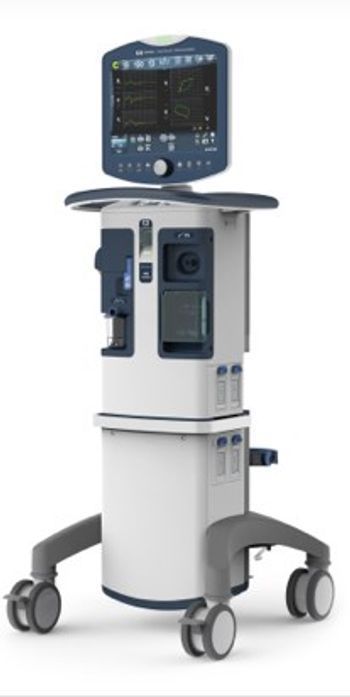
Puritan Bennett 980 Ventilator
 Medtronic · Model PB980 · 2010
Critical care ventilator with adaptive flow sensing, integrated proximal pressure/flow sensors, and an intuitive dual-view touchscreen GUI.
Intended use: Continuous mechanical ventilation for adult, pediatric, and neonatal patients in ICU settings.
Key tips
- ·Never disable a low-pressure/circuit-disconnect alarm while troubleshooting - silence it, don't disable it.
- ·Verify the O2 supply source and pressure before assuming an internal fault.
- ·Circuit type must match the patient population (adult/pediatric/neonatal) - a mismatched circuit invalidates delivered volumes.
Typical Failure Modes
Compiled for this model from its own documentation and established engineering knowledge for this equipment class - not from a verified service record. Confirm against the manufacturer's service manual.
Fails the pre-use self-test / circuit check
HighSymptoms: Self-test fault, circuit-leak or compliance-check failure, will not be released for use.
Root cause: Patient-circuit / expiratory-valve leak, a flow-sensor fault, an O2-cell fault, or an internal pneumatic fault.
Flow / volume delivery inaccurate
HighSymptoms: Delivered tidal volume or flow does not match the setting, or fails the annual verification.
Root cause: Flow-sensor drift / contamination, an inspiratory / expiratory valve fault, or a blender / proportioning-valve fault.
O2 / air supply or blender fault
MediumSymptoms: Low-supply alarm, FiO2 not matching the setting, O2-cell reads wrong.
Root cause: Wall / cylinder supply issue, an inlet filter / regulator fault, the blender, or an aged O2 cell.
PEEP not held / high circuit pressure
MediumSymptoms: PEEP drifts, auto-PEEP, high-pressure alarms, poor exhalation.
Root cause: Worn or wet expiratory valve / diaphragm, or a blocked exhalation path.
Battery / power fault
MediumSymptoms: Short internal-battery run time, will not charge, transfers to battery unexpectedly.
Root cause: Aged internal battery or a power-supply fault.
Turbine / compressor fault (turbine units)
MediumSymptoms: Noisy operation, cannot meet flow demand, turbine / compressor alarm.
Root cause: Worn turbine / compressor.
Serviceable Parts & Consumables
Serviceable items for this model, compiled from its documentation and engineering knowledge for this equipment class. Service class and relative cost are estimates, not manufacturer figures; no part numbers are given. Confirm intervals and pricing against the manufacturer.
Flow sensor(s)
Class Frequent wear itemRel. cost $$R&R Fairly easy
Expiratory valve / diaphragm
Class Frequent wear itemRel. cost $$R&R Fairly easy
O2 cell / sensor
Class Frequent wear itemRel. cost $$R&R Easy
Internal battery
Class Periodic replacementRel. cost $$R&R Fairly easy
Inlet filters / water traps
Class Frequent wear itemRel. cost $R&R Easy
Turbine / compressor (turbine units)
Class Major service partRel. cost $$$$R&R Difficult
| Part | Service class | Relative cost | R&R difficulty |
|---|---|---|---|
| Flow sensor(s) | Frequent wear item | $$ | Fairly easy |
| Expiratory valve / diaphragm | Frequent wear item | $$ | Fairly easy |
| O2 cell / sensor | Frequent wear item | $$ | Easy |
| Internal battery | Periodic replacement | $$ | Fairly easy |
| Inlet filters / water traps | Frequent wear item | $ | Easy |
| Turbine / compressor (turbine units) | Major service part | $$$$ | Difficult |
Relative cost: $ lowest · $$$$ highest service-part cost for this equipment class. Not a price.
PM Checklist
Preventive-maintenance tasks typical of this equipment class. Perform to the manufacturer's procedure and your facility's policy - this is general reference, not a schedule for this specific unit.
- ·Daily pre-use check: self-test, circuit integrity, alarm function
- ·Scheduled circuit and inspiratory filter replacement per manufacturer interval
- ·Flow and pressure sensor calibration verification
- ·Battery load test and runtime check
- ·Annual full PM and electrical safety test
Error Codes
Extracted directly from this unit's own service manual.
DEVICE ALERTVarious. Technical alarm category is described. See Table 6-3. .on page 6-17. More information for the particular technical alarm can be found in the System diagnostic log, a link to which is provided on the expanded alarm banner. Follow remedy message displayed on GUI. Table 6-5. Non-technical Alarm Summary Base message Priority Analysis message Remedy message Comments
AC POWER LOSSLow Operating on vent main battery.
LOSS OF POWERImmediate N/A N/A The ventilator power switch is on and there is insufficient power from AC and the bat- tery. There may not be a visual indicator for this alarm, but an independent audio alarm sounds for at least 120 seconds. Alarm annunciation can be reset by turning power switch to off position.
LOW BATTERYMedium Vent main battery operational time < 10 minutes. Replace or allow recharge vent main battery. Resets when battery has ≥ ten minutes of operational time remaining or when AC power is restored.
NO AIR SUPPLYLow Compressor inop- erative. Ventila- tion continues as set. Only O 2 avail- able. Check air source. Ventilator delivers 100% O 2 . Air supply pressure ≤ 17 psig. Resets if air supply pressure ≥ 35 psig is connected.
CIRCUIT DISCONNECTThe patient circuit has become dis- connected or there is a large leak in the patient circuit. Re-connect the patient circuit, or eliminate the leak. Compliance limited VT (patient data alarm) Compliance volume required to compensate delivery of a VC, VC+, or VS breath exceeds the maximum allowed for three of the last four breaths. Check patient and circuit type. Inspired volume may be less than set.
COMPRESSOR INOPERATIVEAir pressure not detected in the compressor’s accumulator. Status display indicates the compressor is inoperative. Service or replace compressor. 1PPEAK (patient data alarm) The measured airway pressure is ≥ set limit. Reduced tidal volume likely. Check the patient. Check the patient circuit. Check the endotracheal tube. 3PPEAK (patient data alarm) The peak inspiratory pressure in the patient circuit ≤ alarm set- ting.This alarm is only available when NIV is the selected ventila- tion type or when VC+ is the selected mandatory type during invasive ventilation.* Check for leaks in the p
INOPERATIVE BATTERYThe battery charge is inadequate after 6 hours of attempted charge time or the battery system is non- functional. Replace the battery or install an extended battery. INSPIRATION TOO LONG (patient data alarm) The PBW-based inspiratory time for the last two spontaneous breath exceeds the ventilator-set limit. Active only when ventilation type is invasive. Check the patient. Check the patient circuit for leaks. Check rise time % and ESENS set- tings. Table 6-6. Non-Technical Alarms and Suggested Responses (Continued) Alarm message Meaning Response Alarms Operator's Manual 6-31
PROCEDURE ERRORThe patient is attached before ven- tilator startup is complete. Safety ventilation is active. Provide alternate ventilation, if necessary. Complete ventilator startup pro- cedure.
SEVERE OCCLUSIONThe patient circuit is severely occluded. The ventilator enters occlusion status cycling. The elapsed time without ventilatory support appears. Check the patient. Obtain alternate ventilation, if necessary. Check patient circuit for bulk liquid, crimps, blocked filter. If problem persists, remove venti- lator from use and obtain service. 1VTI (patient data alarm) Delivered inspiratory volume ≥ high inspiratory volume limit Check patient and ventilator set- tings. Check for leaks, tube type/ID, and % Supp settings, and patient agitation. Ventilator transitions to exhala- tion. VO
PROX INOPERATIVEA malfunction occurred with the proximal flow sensor or the pneu- matic lines are occluded. Replace the proximal flow sensor or purge its pneumatic lines. Does not affect data from theventilator’s delivery or exhalation flow sensors. Table 6-6. Non-Technical Alarms and Suggested Responses (Continued) Alarm message Meaning Response Performance 6-34 Operator's Manual 6.5.11 CIRCUIT DISCONNECT Alarm The CIRCUIT DISCONNECT alarm indicates the patient circuit is disconnected at the ventilator or the patient side of the patient wye, or a large leak is present. The methods by which circuit disc
1P COMPHigh compensation pressure
1O 2%High delivered oxygen percentage
1VE TOTHigh exhaled minute volume
2VE TOTHigh exhaled minute volume setting
1VTEHigh exhaled tidal volume
2V TEHigh exhaled tidal volume setting
2VTIHigh inspired tidal volume limit
1PVENTHigh internal ventilator pressure
1f TOTHigh respiratory rate
2f TOTHigh respiratory rate setting
1T I SPONTHigh spontaneous inspiratory time
2T I SPONTHigh spontaneous inspiratory time limit
1PPEAKHigh circuit pressure
2PPEAKHigh circuit pressure limit
3PPEAKLow circuit pressure
4PPEAKLow circuit pressure setting
3VTE MANDLow exhaled mandatory tidal volume
4V TE MANDLow exhaled mandatory tidal volume setting
3VE TOTLow exhaled minute volume
4VE TOTLow exhaled minute volume setting
3VTE SPONTLow exhaled spontaneous tidal volume
4V TE SPONTLow exhaled spontaneous tidal volume setting
3O 2 %Low delivered oxygen percentage
Troubleshooting Approach
A structured starting point derived from the failure modes above. Follow the manufacturer's service documentation for the actual procedure.
Symptom: Low minute ventilation alarm during volume AC
- Check circuit for disconnects, tracing from Y-piece back to ventilator.
- Review patient effort/sedation changes with clinical staff.
- Inspect cuff pressure of ETT (should be 20–30 cmH2O).
- Run a full leak test via SST; note measured compliance/leak values.
- If leak > threshold, swap exhalation diaphragm and retest.
Symptom: Fails the pre-use self-test / circuit check
- Run the self-test with the exact circuit, filter and humidifier that will be used.
- Leak-test the circuit and the expiratory valve; fit fresh flow sensors and an O2 cell if due.
- Repeat the self-test and note which check fails.
- Calibrate the flow sensors and O2 cell per the manual.
- Remove from service and refer an internal pneumatic fault to the OEM / biomed.
Symptom: Delivered tidal volume / flow or FiO2 inaccurate
- Verify tidal volume and flow with a calibrated gas-flow analyser and FiO2 at the wye with an O2 analyser.
- Calibrate the flow sensors and the O2 cell.
- Inspect the inspiratory and expiratory valves / diaphragms.
- Check the air and O2 supply pressures and the inlet filters / water traps.
- Refer the blender / proportioning valve if the mix is still wrong.
Symptom: PEEP not held / high circuit-pressure or auto-PEEP
- Inspect the expiratory valve / diaphragm for wear or moisture and replace it.
- Check the exhalation path and the expiratory flow sensor.
- Confirm the circuit and water trap are not obstructed.
- Run the valve / compliance calibration.
- Re-verify PEEP against the analyser.
Symptom: Low-supply / O2 alarm or turbine / compressor fault
- Confirm wall / cylinder supply pressure and the inlet hose and filter.
- Check the internal blender / regulator.
- For a turbine unit, listen for turbine noise and check it can meet flow demand.
- Replace the O2 cell if the FiO2 reading is the issue.
- Refer the turbine / compressor for replacement if it cannot meet demand.
Technical Specs
- Tidal volume range
- 20–2500 mL
- Breath rate
- 1–100 bpm
- PEEP
- 0–45 cmH2O
- Inspiratory pressure
- 5–80 cmH2O
- O2 concentration
- 21–100%
- Display
- 17-inch color touchscreen + remote alarm display
- Battery backup
- Up to 4 hours (dual battery)
- Weight
- 36 kg
Typical Location
Where this class of equipment is typically deployed - general reference, not this unit's own placement record.
- ICU / CCU
- Emergency Department
- Operating Room (anesthesia-adjacent)
- NICU
- Respiratory Therapy department
- Patient transport
Documents & Manuals
Troubleshoot this device with Bio
Describe a symptom or error code. Bio answers from this device's own documented error codes, failure modes, parts, and guides.
Ask Bio