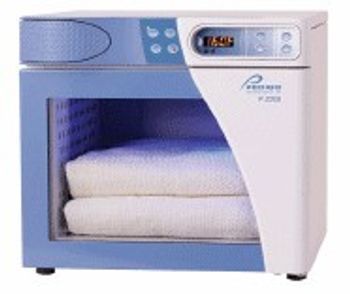
Pedigo Elite Series Warmers
 Pedigo · Model Elite Series Warmers
Electronic control. Efficient, balanced heating system allows for low energy consumption and minimal heat loss. Adjustable temperature range of 98 - 180°F (37 - 82°C). Operate in Fahrenheit or Celsius. Four digit L.E.D. display. On/Off key. Actual temperature key. Increase and decrease keys. Built-in speaker for audible feedback. Built-in control button lock-out feature. Additional features. L.E.D. interior lighting casts a comforting blue glow with two (2) different intensity settings and off mode. In the event of a power failure, the cabinet will remember its programming and begin to operate as before when power is restored. A warming shut-off system, separate from the electronic control, prevents overheating. Optional timer key allows the user to program the control to automatically turn on and off at a selected time.
Key tips
- ·Never skip temperature-accuracy verification to save time - it's the one check that directly prevents burns.
- ·Hose/blanket connector wear is the most common real fault and the easiest to miss on a quick visual check.
Typical Failure Modes
Compiled for this model from its own documentation and established engineering knowledge for this equipment class - not from a verified service record. Confirm against the manufacturer's service manual.
Cabinet not reaching / holding set temperature
HighSymptoms: Blanket / fluid cabinet below (or above) setpoint, temperature alarm.
Root cause: Heater element, a temperature sensor / controller fault, a door / gasket leak, or a circulation-fan fault.
Over-temperature safety trip
MediumSymptoms: Cabinet stops heating, over-temp alarm, will not restart.
Root cause: Controller / sensor fault driving the heater high, or a failed independent over-temp thermostat.
Door / gasket / hinge fault
MediumSymptoms: Door will not seal, heat loss, temperature swings when opened.
Root cause: Worn door gasket or a sagging hinge.
Circulation-fan fault
MediumSymptoms: Uneven temperature top to bottom, fan noise or stopped.
Root cause: Worn circulation fan.
Display / controller fault
LowSymptoms: Blank or frozen display, setpoint will not change.
Root cause: Controller or display fault.
Serviceable Parts & Consumables
Serviceable items for this model, compiled from its documentation and engineering knowledge for this equipment class. Service class and relative cost are estimates, not manufacturer figures; no part numbers are given. Confirm intervals and pricing against the manufacturer.
Heater element
Class Major service partRel. cost $$R&R Difficult
Temperature sensor / over-temp thermostat
Class Major service partRel. cost $$R&R Moderate
Door gasket
Class Periodic replacementRel. cost $$R&R Fairly easy
Circulation fan
Class Major service partRel. cost $$R&R Moderate
Controller / display
Class Major service partRel. cost $$R&R Moderate
| Part | Service class | Relative cost | R&R difficulty |
|---|---|---|---|
| Heater element | Major service part | $$ | Difficult |
| Temperature sensor / over-temp thermostat | Major service part | $$ | Moderate |
| Door gasket | Periodic replacement | $$ | Fairly easy |
| Circulation fan | Major service part | $$ | Moderate |
| Controller / display | Major service part | $$ | Moderate |
Relative cost: $ lowest · $$$$ highest service-part cost for this equipment class. Not a price.
PM Checklist
Preventive-maintenance tasks typical of this equipment class. Perform to the manufacturer's procedure and your facility's policy - this is general reference, not a schedule for this specific unit.
- ·Hose / blanket connector inspection
- ·Temperature-accuracy verification
- ·Annual electrical safety test
Troubleshooting Approach
A starting sequence for this model, compiled from its documentation and engineering knowledge for this equipment class. Follow the manufacturer's service documentation for the actual procedure.
Symptom: Not holding set temperature
- Compare the cabinet temperature to an independent calibrated thermometer at several shelf positions.
- Confirm the door seals and the gasket is intact.
- Check the circulation fan runs.
- Verify the heater draws current.
- Replace the sensor, controller or heater as isolated; confirm the max blanket / fluid temperature complies with policy.
Symptom: Over-temperature trip
- Let the cabinet cool.
- Compare the display to an independent reference.
- Replace the temperature sensor if it disagrees.
- Check the independent over-temp thermostat.
- Confirm stable control before returning to use.
Typical Location
Where this class of equipment is typically deployed - general reference, not this unit's own placement record.
- Operating Room
- PACU
- Emergency Department
- Labor & Delivery
- NICU
Documents & Manuals
No documents available for this device yet.
Troubleshoot this device with Bio
Describe a symptom or error code. Bio answers from this device's own documented error codes, failure modes, parts, and guides.
Ask Bio