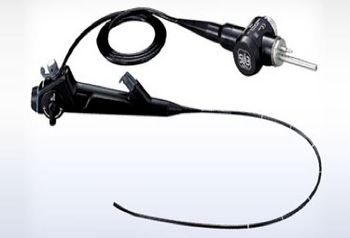
Olympus BF-3C160
 Olympus · Model BF-3C160
Ultra-narrow 3.8mm insertion tube diameter for deeper insertion into the bronchi. Features the world's smallest CCD for endoscopes. Miniature CCD produces crystal clear video images far superior to fiberoptic scopes. 1.2mm channel allows use of instruments for biopsy and provides excellent suction capability. Newly-designed control section and conveniently-located operator switches help reduce user fatigue. All reprocessing accessories are either disposable or autoclavable. Accessories are standardized so they can be used with Olympus' current and previous lines of bronchovideoscopes and bronchofiberscopes. Compatible with Olympus CV-160 and CV-180 Video Processors.
Key tips
- ·A failed leak test means the scope does not get reprocessed or used - send it for repair, full stop.
- ·A shortened reprocessing cycle is a real infection-control failure, not a minor deviation - follow AAMI ST91 exactly.
- ·Track light-source lamp-hours against the manufacturer's limit rather than running to failure.
Typical Failure Modes
Compiled for this model from its own documentation and established engineering knowledge for this equipment class - not from a verified service record. Confirm against the manufacturer's service manual.
Fails the leak test
HighSymptoms: The manual or automated leak test fails; bubbles from the bending section, insertion tube, or a channel port.
Root cause: A pinhole in the bending-rubber, a channel breach, or a damaged distal cap - fluid invasion risk.
Poor or lost image
HighSymptoms: Blurred, dark, spotty, half-image or no image; colour cast that will not white-balance.
Root cause: Fluid invasion into the CCD / fibre bundle, a broken image bundle, or lens-surface damage / adhesive fog.
Angulation / bending-section fault
MediumSymptoms: Up/down or left/right angulation is loose, will not hold, over-tight, or limited range.
Root cause: Stretched or broken angulation wires, a worn brake, or bending-section damage.
Channel blockage / air-water or suction fault
MediumSymptoms: Poor suction, no or weak air / water, will not pass a cleaning brush.
Root cause: Debris or a kink in the channel, a worn air/water or suction valve seat, or a crushed channel.
Light-guide / connector fault
MediumSymptoms: Dim or no illumination from the scope with a known-good light source.
Root cause: Broken light-guide fibres or a damaged light-guide connector.
Serviceable Parts & Consumables
Serviceable items for this model, compiled from its documentation and engineering knowledge for this equipment class. Service class and relative cost are estimates, not manufacturer figures; no part numbers are given. Confirm intervals and pricing against the manufacturer.
Bending-rubber / distal cap
Class Frequent wear itemRel. cost $$R&R Moderate
Angulation wires / brake assembly
Class Periodic replacementRel. cost $$$R&R Difficult
Air/water & suction valves / seats
Class Frequent wear itemRel. cost $R&R Easy
Image bundle / CCD repair (OEM/3rd-party)
Class Periodic replacementRel. cost $$$$R&R Expert-level
Light-guide bundle / connector
Class Periodic replacementRel. cost $$$R&R Difficult
| Part | Service class | Relative cost | R&R difficulty |
|---|---|---|---|
| Bending-rubber / distal cap | Frequent wear item | $$ | Moderate |
| Angulation wires / brake assembly | Periodic replacement | $$$ | Difficult |
| Air/water & suction valves / seats | Frequent wear item | $ | Easy |
| Image bundle / CCD repair (OEM/3rd-party) | Periodic replacement | $$$$ | Expert-level |
| Light-guide bundle / connector | Periodic replacement | $$$ | Difficult |
Relative cost: $ lowest · $$$$ highest service-part cost for this equipment class. Not a price.
PM Checklist
Preventive-maintenance tasks typical of this equipment class. Perform to the manufacturer's procedure and your facility's policy - this is general reference, not a schedule for this specific unit.
- ·Leak testing before each reprocessing cycle
- ·Scope reprocessing per AAMI ST91
- ·Light source lamp-hour tracking
- ·Annual full PM
Troubleshooting Approach
A starting sequence for this model, compiled from its documentation and engineering knowledge for this equipment class. Follow the manufacturer's service documentation for the actual procedure.
Symptom: Fails the leak test
- Repeat the leak test, watching where bubbles originate (bending section, insertion tube, channels).
- Confirm the leak tester / connector itself holds pressure.
- Quarantine the scope immediately - do not reprocess a leaking scope in fluid.
- Send for channel / bending-section repair.
- Re-leak-test and re-image after repair before returning to service.
Symptom: Poor or lost image
- Confirm the processor, light source and monitor with a known-good scope.
- Inspect the distal lens for scratches, chips or adhesive fog.
- Check for fluid droplets behind the lens (invasion).
- White-balance and check all channels.
- Send for image-bundle / CCD repair if the fault is in the scope.
Typical Location
Where this class of equipment is typically deployed - general reference, not this unit's own placement record.
- Endoscopy suite / GI lab
- Operating Room
- Bronchoscopy suite
Documents & Manuals
Troubleshoot this device with Bio
Describe a symptom or error code. Bio answers from this device's own documented error codes, failure modes, parts, and guides.
Ask Bio