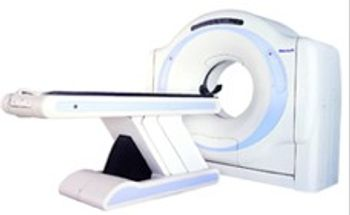
Neusoft NeuViz
 Neusoft · Model NeuViz
Bring new level of quality, simplicity and reliability to CT imaging. Fast scan speed with scan time up to 0.8s enables examinations like thorax study in one breath-hold, and greatly reduces motion artifact. New design of gantry with large 70 cm bore and ±30° tilting enables the examination of corpulent patients and complicated patient positioning. Compact size, low installation and lifecycle cost; Excellent image quality with thickness down to 0.8mm at low dose provides finest details for accurate diagnoses; Easy and user-friendly interface guides the operator and workflow automatically to higher patient throughput; Automatic Voice and Graphic Prompt Breathing are helpful to guide children & the elderly; DICOM Standard 3.0 interface.
Key tips
- ·Never bypass a radiation interlock to "just get the image" - this is one of the few true zero-tolerance rules in BMET work.
- ·Trend image-quality phantom results over time - drift shows up before an outright failure does.
- ·Portable/mobile units take real physical abuse from transport - check wheel locks and cable strain reliefs more often than fixed units.
Typical Failure Modes
Compiled for this model from its own documentation and established engineering knowledge for this equipment class - not from a verified service record. Confirm against the manufacturer's service manual.
Image artefacts (rings / streaks / noise)
HighSymptoms: Ring or band artefacts, excessive noise, HU non-uniformity, failed daily air/water calibration.
Root cause: Detector-channel drift or a bad detector module, a DAS fault, or air-cal / tube-output drift.
X-ray tube fault / end of life
HighSymptoms: Tube-arc errors, exposure aborts, kV/mA faults, spits, or noisy bearing; tube pulls high heat units.
Root cause: Anode / bearing wear or vacuum degradation - the CT tube is a wear item.
Gantry rotation / slip-ring fault
MediumSymptoms: Rotation faults, comms errors during rotation, brush dust, drive alarms.
Root cause: Worn slip-ring brushes, a drive-belt / bearing fault, or the data-transmission link.
Table / patient-positioning fault
MediumSymptoms: Table drifts, will not index to the correct position, height or cradle errors.
Root cause: Table drive, encoder, or brake fault.
Reconstruction / console / network fault
MediumSymptoms: Recon hangs or is slow, images will not send to PACS, console errors.
Root cause: Recon-hardware or console-PC fault, or the network / storage.
Chiller / cooling fault
MediumSymptoms: Over-temperature warnings, exposures inhibited after a series, coolant alarm.
Root cause: Chiller pump / fan, low coolant, or a blocked heat exchanger.
Serviceable Parts & Consumables
Serviceable items for this model, compiled from its documentation and engineering knowledge for this equipment class. Service class and relative cost are estimates, not manufacturer figures; no part numbers are given. Confirm intervals and pricing against the manufacturer.
CT X-ray tube assembly
Major planned replacement; track heat-unit history.
Class Periodic replacementRel. cost $$$$R&R Expert-level
Detector module / DAS board
Class Major service partRel. cost $$$$R&R Expert-level
Slip-ring brush set
Class Periodic replacementRel. cost $$R&R Moderate
Gantry drive belt / bearings
Class Major service partRel. cost $$$R&R Difficult
Table drive / encoder
Class Major service partRel. cost $$$R&R Difficult
Chiller pump / coolant
Class Periodic replacementRel. cost $$R&R Moderate
| Part | Service class | Relative cost | R&R difficulty |
|---|---|---|---|
| CT X-ray tube assembly Major planned replacement; track heat-unit history. | Periodic replacement | $$$$ | Expert-level |
| Detector module / DAS board | Major service part | $$$$ | Expert-level |
| Slip-ring brush set | Periodic replacement | $$ | Moderate |
| Gantry drive belt / bearings | Major service part | $$$ | Difficult |
| Table drive / encoder | Major service part | $$$ | Difficult |
| Chiller pump / coolant | Periodic replacement | $$ | Moderate |
Relative cost: $ lowest · $$$$ highest service-part cost for this equipment class. Not a price.
PM Checklist
Preventive-maintenance tasks typical of this equipment class. Perform to the manufacturer's procedure and your facility's policy - this is general reference, not a schedule for this specific unit.
- ·Daily QC per modality: image-quality phantom test
- ·Tube and detector inspection
- ·Annual state-required radiation safety survey
- ·Vendor-scheduled preventive maintenance
Troubleshooting Approach
A starting sequence for this model, compiled from its documentation and engineering knowledge for this equipment class. Follow the manufacturer's service documentation for the actual procedure.
Symptom: Ring or streak artefacts / failed calibration
- Run the daily air (fast) calibration; if it fails, run the full calibration set.
- Scan a uniform water phantom and review HU uniformity and noise.
- Check the tube warm-up and heat-unit status.
- Escalate a confirmed detector-channel or DAS fault to the OEM.
- Re-verify image quality with the phantom after any correction.
Symptom: Exposure aborts / tube-arc errors
- Note the exact error codes and the phase (warm-up vs scan).
- Run extended tube conditioning / seasoning.
- Review the arc-count and heat-unit trend.
- Confirm chiller operation and coolant level.
- Plan a tube replacement when arc counts climb or output drifts.
Technical Specs
- Type (configuration)
- Single slice
- Slices
- Single
Typical Location
Where this class of equipment is typically deployed - general reference, not this unit's own placement record.
- Radiology / Imaging department
- Emergency Department (portable units)
- Operating Room (C-arms)
- Cath lab
- Bedside ICU (portable X-ray)
Documents & Manuals
Safety & Recalls
Synced live from the FDA openFDA API.
- RECALL
For surview scan length more than 500mm,if the user aborts or skips the reconstructed surview, the image may have the wrong field of view (FOV). When user plans and performs subsequent clinical scan with the wrong FOV the actual start and end position may not be consistent with the planned positons.
- RECALL
Software defect: For Helical scan with ClearView function, when small arc (uninterrupted scan) occurs during scan, there will be some electromagnetic interference in the system which may affect the control signal of the flying focal spot, resulting in an incorrect flying focal spot sequence. If the system does not receive error, it would continue to complete the scan with the incorrect flying focal spot sequence, having an effect on the reconstruction of some images, resulting in image loss.
- RECALL
Software defect
- RECALL
The Firm discovered during contrast agent tracking scan, when the expected concentration of contrast agent is reached, later planned scan may be interrupted. The system must be powered down and restarted to clear the interruption error before scanning can resume.
- RECALL
It was found by R&D in April, 2014 that there was a defect in NeuViz 64 system software version 1.0.5+P09. The icons of side decubitus didn't meet the patient position description, when the scanner position was set to "Right" in the system setting - scanner options.
- RECALL
The A-plane compensator is made of Teflon which will become fragile due to X-ray exposure passing through it. The thinnest part of the compensator is subject to radiation degradation and as a result has been found to fail prematurely. Failure is indicated by pin or ring artifact in the image
Troubleshoot this device with Bio
Describe a symptom or error code. Bio answers from this device's own documented error codes, failure modes, parts, and guides.
Ask Bio