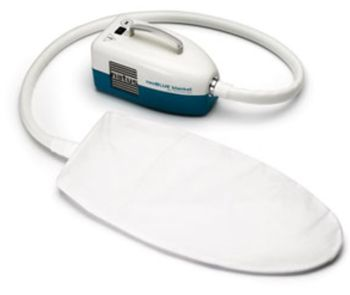
Natus neoBLUE
 Natus · Model neoBLUE
The neoBLUE LED does not emit light in the ultraviolet (UV) range - reducing the potential risk of skin damage. The neoBLUE LED does not emit light in the infrared radiation (IR) range - reducing the potential risk of fluid loss. Device automatically shuts off in the event of light box overheating. Flashing indicator light alerts user to check for blocked air vents. Streamlined, oval design conforms to the shape of the baby. Large and small blanket sizes available. Mattress provides comfortable cushioning underneath the infant. Disposable mattress covers ensure clean, soft surface for baby. Blanket rolls or bumpers can be used as desired for added positioning & cushioning around the baby. A blanket can be used in conjunction with the neoBLUE blanket for added warmth & comfort. Baby can be held or nursed without interrupting phototherapy, encouraging infant-parent bonding.
Key tips
- ·Never skip temperature-accuracy verification to save time - it's the one check that directly prevents burns.
- ·Hose/blanket connector wear is the most common real fault and the easiest to miss on a quick visual check.
Typical Failure Modes
Compiled for this model from its own documentation and established engineering knowledge for this equipment class - not from a verified service record. Confirm against the manufacturer's service manual.
Will not power on or unexpected shutdown
HighSymptoms: The patient warming is dead, reboots, or shuts down mid-use.
Root cause: Mains lead / fuse, an aged battery, or a power-supply board fault.
Battery will not hold charge
MediumSymptoms: Short run time on battery; low-battery alarm soon after a full charge.
Root cause: Aged rechargeable battery pack or a charger fault.
Display / control-panel fault
MediumSymptoms: Blank, dim or distorted display; unresponsive keys or touchscreen.
Root cause: Display, backlight, or control-board fault.
Fails self-test or calibration
MediumSymptoms: Power-on self-test or the scheduled performance check fails or is out of tolerance.
Root cause: Sensor drift or an internal board fault; recalibration or repair needed.
Serviceable Parts & Consumables
Serviceable items for this model, compiled from its documentation and engineering knowledge for this equipment class. Service class and relative cost are estimates, not manufacturer figures; no part numbers are given. Confirm intervals and pricing against the manufacturer.
Rechargeable battery pack
Class Periodic replacementRel. cost $$R&R Fairly easy
Power supply / mains board
Class Major service partRel. cost $$$R&R Difficult
Display / control-panel assembly
Class Major service partRel. cost $$$R&R Moderate
Cooling fan
Class Major service partRel. cost $R&R Moderate
| Part | Service class | Relative cost | R&R difficulty |
|---|---|---|---|
| Rechargeable battery pack | Periodic replacement | $$ | Fairly easy |
| Power supply / mains board | Major service part | $$$ | Difficult |
| Display / control-panel assembly | Major service part | $$$ | Moderate |
| Cooling fan | Major service part | $ | Moderate |
Relative cost: $ lowest · $$$$ highest service-part cost for this equipment class. Not a price.
PM Checklist
Preventive-maintenance tasks typical of this equipment class. Perform to the manufacturer's procedure and your facility's policy - this is general reference, not a schedule for this specific unit.
- ·Hose / blanket connector inspection
- ·Temperature-accuracy verification
- ·Annual electrical safety test
Troubleshooting Approach
A starting sequence for this model, compiled from its documentation and engineering knowledge for this equipment class. Follow the manufacturer's service documentation for the actual procedure.
Symptom: Cabinet not reaching / holding the set temperature
- Compare the cabinet temperature to an independent calibrated thermometer at several shelf positions.
- Confirm the door seals and the gasket is intact.
- Check the circulation fan runs.
- Verify the heater element draws current.
- Replace the sensor, controller or heater as isolated; confirm the maximum blanket / fluid temperature complies with policy.
Symptom: Over-temperature safety trip / will not restart
- Let the cabinet cool.
- Compare the display to an independent reference.
- Replace the temperature sensor if it disagrees.
- Check the independent over-temperature thermostat.
- Confirm stable control before returning to use.
Symptom: Door will not seal / temperature swings when opened
- Inspect the door gasket and hinge.
- Adjust the door / latch.
- Replace a worn gasket.
- Confirm recovery time after a door opening.
- Check the circulation fan distributes heat evenly.
Typical Location
Where this class of equipment is typically deployed - general reference, not this unit's own placement record.
- Operating Room
- PACU
- Emergency Department
- Labor & Delivery
- NICU
Documents & Manuals
Troubleshoot this device with Bio
Describe a symptom or error code. Bio answers from this device's own documented error codes, failure modes, parts, and guides.
Ask Bio