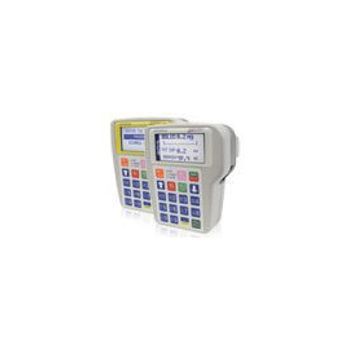
MOOG CURLIN 6000
 MOOG · Model CURLIN 6000
The CURLIN Ambulatory Infusion Pump by Moog features a simple and intuitive interface to increase ease of use and reinforce patient safety. IV Pumps for Home Infusion Therapy "Fingers" of the pump move up and down pushing fluid through the fluid path. IV Pump Technology Comparison for Infusion Therapy Compared to linear peristaltic IV pumps, curvilinear IV pumps are designed to rotate faster, delivering volume in smaller, more accurate and precisely timed increments- even at low flow rates. The highly efficient delivery is ideal for short half-life drugs at low flow rates, any drug delivered at a low infusion rate, and for sensitive patient populations.
Key tips
- ·Free-flow protection must be verified on every PM - a failed anti-free-flow clamp is a direct overdose risk.
- ·Test occlusion alarms in both directions - failing to alarm when it should is more dangerous than a false alarm.
- ·Battery run-time complaints are the most common real-world nuisance call - a full charge/discharge cycle test catches most of them.
Typical Failure Modes
Compiled for this model from its own documentation and established engineering knowledge for this equipment class - not from a verified service record. Confirm against the manufacturer's service manual.
Failure / error message stops delivery
HighSymptoms: The pump alarms and displays an error message / code and stops.
Root cause: A subsystem fault indexed in the service manual - motor / drive, a sensor, set-detection, or a board.
Occlusion alarm / pressure fault
MediumSymptoms: Repeated occlusion alarms, delivery stops, or an occlusion is missed.
Root cause: Kinked or clamped line, a closed roller clamp, a positional patient tube, pressure-sensor drift, or an improperly loaded set.
Air-in-line alarm
MediumSymptoms: Frequent air-in-line alarms, delivery stops.
Root cause: Air in the set, an improperly loaded set, or an ultrasonic air-detector fault.
Flow-rate accuracy drift
MediumSymptoms: Delivered volume outside tolerance on the annual test, especially at low rates.
Root cause: Worn pumping mechanism / plunger drive.
Battery will not hold charge
MediumSymptoms: Short run time, low-battery early after a full charge.
Root cause: Aged battery pack.
Door / plunger / sensor mechanical wear
LowSymptoms: Set will not load, door will not latch, plunger grip poor.
Root cause: Worn door latch, plunger jaws, or anti-free-flow mechanism.
Serviceable Parts & Consumables
Serviceable items for this model, compiled from its documentation and engineering knowledge for this equipment class. Service class and relative cost are estimates, not manufacturer figures; no part numbers are given. Confirm intervals and pricing against the manufacturer.
Battery pack
Class Periodic replacementRel. cost $$R&R Fairly easy
Pumping mechanism / rotor / plunger drive
Class Major service partRel. cost $$$R&R Difficult
Pressure / air-detector sensor assembly
Class Major service partRel. cost $$R&R Moderate
Door / latch / anti-free-flow assembly
Class Major service partRel. cost $$R&R Moderate
Drive motor / gearbox
Class Major service partRel. cost $$$R&R Difficult
| Part | Service class | Relative cost | R&R difficulty |
|---|---|---|---|
| Battery pack | Periodic replacement | $$ | Fairly easy |
| Pumping mechanism / rotor / plunger drive | Major service part | $$$ | Difficult |
| Pressure / air-detector sensor assembly | Major service part | $$ | Moderate |
| Door / latch / anti-free-flow assembly | Major service part | $$ | Moderate |
| Drive motor / gearbox | Major service part | $$$ | Difficult |
Relative cost: $ lowest · $$$$ highest service-part cost for this equipment class. Not a price.
PM Checklist
Preventive-maintenance tasks typical of this equipment class. Perform to the manufacturer's procedure and your facility's policy - this is general reference, not a schedule for this specific unit.
- ·Occlusion pressure and flow-rate accuracy verification
- ·Battery conditioning cycle
- ·Door latch and air-in-line sensor inspection
- ·Post-drop functional check before return to service
- ·Annual PM per manufacturer schedule
Troubleshooting Approach
A starting sequence for this model, compiled from its documentation and engineering knowledge for this equipment class. Follow the manufacturer's service documentation for the actual procedure.
Symptom: Alarm with an error message / code, delivery stopped
- Note the exact error message or code from the display.
- Look it up in the pump's technical service manual troubleshooting section.
- Run the biomed diagnostics / service utilities to exercise the named subsystem (motor / drive, a sensor, set-detection, a board).
- Follow the manual's parts-replacement procedure for that fault.
- Run the full scheduled-maintenance test set, including a flow-accuracy check, after any repair.
Symptom: Occlusion alarm / pressure fault (or a missed occlusion)
- Check the line for kinks, closed clamps and a closed roller clamp; check the patient site and cannula.
- Reload the administration set correctly, clearing all air.
- Confirm the set is an approved type for this pump.
- Run the pressure-sensor / force-sensor test in the service menu.
- Replace the set; refer the pump if the pressure sensor or pumping mechanism is indicated.
Symptom: Air-in-line alarm / free-flow or feed not delivering
- Prime the set fully and reload it; tap out micro-bubbles at the drip chamber.
- Confirm the set seats correctly against the air-in-line detector / rotor.
- Clean the ultrasonic air-detector window.
- Run the air-detector (or rotor / cassette) test in diagnostics.
- Replace a worn pumping mechanism / anti-free-flow assembly if flow accuracy or detection is out.
Symptom: Battery will not hold charge / short run time
- Fully charge, then run a battery run-down / capacity test in the service menu.
- Check the charging circuit and contacts.
- Replace the battery pack when capacity is below the service limit.
- Recalibrate the battery gauge if the pump supports it.
- Confirm run time meets spec after replacement.
Typical Location
Where this class of equipment is typically deployed - general reference, not this unit's own placement record.
- Patient care floors
- ICU
- OR
- Oncology / infusion centers
- Home health (portable pumps)
Documents & Manuals
Safety & Recalls
Synced live from the FDA openFDA API.
- RECALL
Moog is recalling Curlin 4000, 6000, and PainSmart Infusion Pumps manufactured or serviced by MMDG between March 18, 2015 and November 6, 2015 because the master pumps used to calibrate them were out of tolerance and may cause an over delivery of medications and solutions at a rate of 1.2 - 6.8% faster than programmed.
- RECALL
This recall is the same issue for the FDA processed recall initiated by Moog Medical Devices on 1/25/11 which was related to customers reporting unclearable Air-In-Line alarm with specific lot numbers of Curlin Administration Sets used with Curlin Ambulatory Infusion Pumps. The lots associated with this recall were inadvertently omitted from the original recall which has since been terminated by
- RECALL
Moog Medical Device Group became aware on March 23, 2012 via customer complaint, of a reversed pump segment on an Administration Set. This malfunction could reverse the flow of fluid or medication backwards from what was intended.
- RECALL
Ambulatory administration sets used with the Curlin Ambulatory Pumps including the 4000 CMS Ambulatory Pump, 6000 CMS Ambulatory Pump and the Pain Smart IOD Ambulatory Pump may leak during use.
Related calculators
From BioLab, for work done with this kind of equipment.
Troubleshoot this device with Bio
Describe a symptom or error code. Bio answers from this device's own documented error codes, failure modes, parts, and guides.
Ask Bio