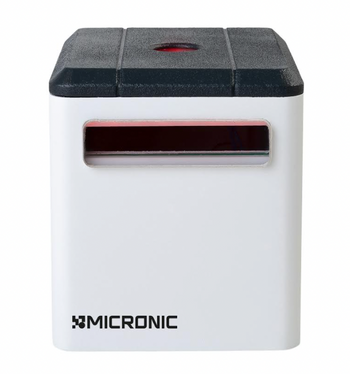
MICRONIC DT510
 MICRONIC · Model DT510
Reads 1D & 2D rack codes and 1D & 2D Data-Matrix coded tubes in less than a second Keyboard wedge functionality Compatible with 96-, 48- and 24-well rack and tube formats Sound indication when code is read No software installation.
Key tips
- ·When no category-specific guidance fits, default to the manufacturer's own service manual and the general troubleshooting method in the Engineer's Guide.
- ·Run an incoming and annual electrical safety test regardless of how niche the device is.
Typical Failure Modes
Compiled for this model from its own documentation and established engineering knowledge for this equipment class - not from a verified service record. Confirm against the manufacturer's service manual.
Absorbance readings drift / QC failure
HighSymptoms: Blank or standard absorbance off, poor plate-to-plate reproducibility, high CV.
Root cause: Lamp aging, a filter-wheel fault, or contamination on the optics / light path.
Plate transport jam or misregistration
MediumSymptoms: Plate not loading, jams, wells read at the wrong position.
Root cause: Worn transport belt / motor, a position-sensor fault, or an out-of-spec plate.
Shaking function fault
MediumSymptoms: Shake step does not run or is uneven.
Root cause: Shaker drive fault.
Communication / display fault
LowSymptoms: Software will not connect, or an unresponsive display.
Root cause: USB / serial link or the display board.
Serviceable Parts & Consumables
Serviceable items for this model, compiled from its documentation and engineering knowledge for this equipment class. Service class and relative cost are estimates, not manufacturer figures; no part numbers are given. Confirm intervals and pricing against the manufacturer.
Lamp
Class Periodic replacementRel. cost $$R&R Moderate
Filter wheel / interference filters
Class Major service partRel. cost $$R&R Moderate
Plate transport belt and motor
Class Periodic replacementRel. cost $$R&R Difficult
Plate position sensor
Class Periodic replacementRel. cost $R&R Moderate
Shaker drive
Class Major service partRel. cost $$R&R Difficult
| Part | Service class | Relative cost | R&R difficulty |
|---|---|---|---|
| Lamp | Periodic replacement | $$ | Moderate |
| Filter wheel / interference filters | Major service part | $$ | Moderate |
| Plate transport belt and motor | Periodic replacement | $$ | Difficult |
| Plate position sensor | Periodic replacement | $ | Moderate |
| Shaker drive | Major service part | $$ | Difficult |
Relative cost: $ lowest · $$$$ highest service-part cost for this equipment class. Not a price.
PM Checklist
Preventive-maintenance tasks typical of this equipment class. Perform to the manufacturer's procedure and your facility's policy - this is general reference, not a schedule for this specific unit.
- ·Follow the manufacturer's PM schedule
- ·Perform incoming and annual electrical safety testing per facility biomedical program
Troubleshooting Approach
A starting sequence for this model, compiled from its documentation and engineering knowledge for this equipment class. Follow the manufacturer's service documentation for the actual procedure.
Symptom: Absorbance drift / QC fail
- Run the self-diagnostics with a validated absorbance plate.
- Confirm a clear flat-bottom plate within the reader's size spec.
- Clean the optics and the plate carrier.
- Replace the lamp if intensity is low.
- Re-verify with the QC plate across the used wavelengths.
Symptom: Plate will not load / misreads
- Confirm the plate type and dimensions.
- Watch the load cycle for belt slip or a stall.
- Clean and check the position sensor.
- Replace the transport belt / motor or sensor.
- Confirm reliable load and correct well registration.
Typical Location
Where this class of equipment is typically deployed - general reference, not this unit's own placement record.
- Varies by device - check the unit's own manual for facility placement guidance
Documents & Manuals
Troubleshoot this device with Bio
Describe a symptom or error code. Bio answers from this device's own documented error codes, failure modes, parts, and guides.
Ask Bio