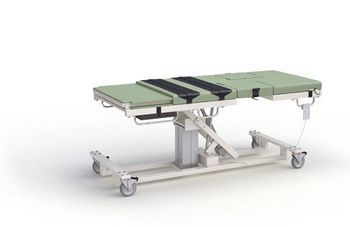
Medical Positioning Hut
 Medical Positioning · Model Hut
Battery back-up and manual down features for emergency situations. Moves tilt studies to lower overhead, non-invasive room. Bariatric capable folding foot platform. Tilt rate meets ACC guidelines for syncope testing.
Key tips
- ·Mounting and securement hardware takes real fatigue from vibration and road shock - inspect it as carefully as the device itself.
- ·Post-call battery and function checks catch transport-induced faults that a scheduled PM would miss for months.
Typical Failure Modes
Failure patterns typical of this equipment class - general BMET reference, not verified against this exact unit's own service history unless flagged. Severity is a category-level estimate.
Transport mount / cradle wear
LowSymptoms: Loose device, vibration damage.
Root cause: Docking latch wear.
Connector / cable fatigue
MediumSymptoms: Intermittent signal/power.
Root cause: Repeated flexing.
Battery / runtime fault
HighSymptoms: Short runtime, low-battery alarm.
Root cause: Aged battery.
Serviceable Parts & Consumables
The parts a BMET typically services on this class of equipment. Service class and relative cost are general engineering estimates for the category, not figures from this unit's documentation. Part numbers appear only when pulled from this unit's own service manual. Always confirm intervals and pricing against the manufacturer.
Docking cradle / latch
Class Periodic replacementRel. cost $$R&R Fairly easy
Patient cable set
Class Periodic replacementRel. cost $$R&R Easy
Rechargeable battery pack
Critical for transport; spares mandatory.
Class Frequent wear itemRel. cost $$$R&R Fairly easy
| Part | Service class | Relative cost | R&R difficulty |
|---|---|---|---|
| Docking cradle / latch | Periodic replacement | $$ | Fairly easy |
| Patient cable set | Periodic replacement | $$ | Easy |
| Rechargeable battery pack Critical for transport; spares mandatory. | Frequent wear item | $$$ | Fairly easy |
Relative cost: $ lowest · $$$$ highest service-part cost for this equipment class. Not a price.
PM Checklist
Preventive-maintenance tasks typical of this equipment class. Perform to the manufacturer's procedure and your facility's policy - this is general reference, not a schedule for this specific unit.
- ·Post-call function and battery check
- ·Mounting / securement inspection
- ·Annual full PM and vibration-tolerance check
Troubleshooting Approach
A structured starting point derived from the failure modes above. Follow the manufacturer's service documentation for the actual procedure.
Symptom: Battery / runtime fault
- Confirm the presentation - typically short runtime, low-battery alarm - and note the exact alarm or message and the conditions when it occurs.
- Check the most likely cause first: aged battery.
- Isolate the affected subsystem using the manufacturer's functional check or self-test, where one is provided.
- If the fault is confirmed and not a field adjustment, service or replace the rechargeable battery pack per the manufacturer's service documentation.
- Return the device to service only after the manufacturer's functional and applicable electrical-safety checks pass.
- Record the findings, any parts used, and the verification results in the maintenance history.
Symptom: Transport mount / cradle wear
- Confirm the presentation - typically loose device, vibration damage - and note the exact alarm or message and the conditions when it occurs.
- Check the most likely cause first: docking latch wear.
- Isolate the affected subsystem using the manufacturer's functional check or self-test, where one is provided.
- If the fault is confirmed and not a field adjustment, service or replace the docking cradle / latch per the manufacturer's service documentation.
- Return the device to service only after the manufacturer's functional and applicable electrical-safety checks pass.
- Record the findings, any parts used, and the verification results in the maintenance history.
Technical Specs
- Height
- 30 to 38 inches
- Patient Weight Capacity
- 350 lbs
Typical Location
Where this class of equipment is typically deployed - general reference, not this unit's own placement record.
- Ambulance / transport vehicles
- Emergency Department
- Inter-facility transport teams
Documents & Manuals
No documents available for this device yet.
Safety & Recalls
Synced live from the FDA openFDA API.
- RECALL
Excessive weight on the table will cause tables with the affected component to drop into the Trendelenburg position more rapidly than normal. The product was manufactured with a component that can cause the device to malfunction.
Troubleshoot this device with Bio
Describe a symptom or error code. Bio answers from this device's own documented error codes, failure modes, parts, and guides.
Ask Bio