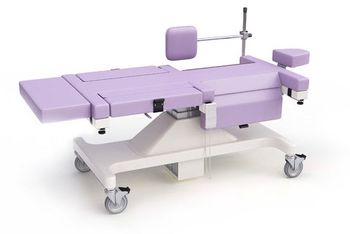
Medical Positioning DBI
 Medical Positioning · Model DBI
60o access to breast. Increases access to lesions in upper/outer quadrant. Compatible with any stereotactic add-on system. Drop sections provide closer access for image receptor. Decubitus positioning provides greater patient comfort. Enhances ergonomic posture, as technicians work upright in drop sections. Back support allows the patient to take deep breaths while keeping the chest wall in contact with the image receptor. Minimizes risks associated with fainting during an upright procedure. Bariatric capable.
Key tips
- ·When no category-specific guidance fits, default to the manufacturer's own service manual and the general troubleshooting method in the Engineer's Guide.
- ·Run an incoming and annual electrical safety test regardless of how niche the device is.
Typical Failure Modes
Compiled for this model from its own documentation and established engineering knowledge for this equipment class - not from a verified service record. Confirm against the manufacturer's service manual.
Backrest / section will not hold position
MediumSymptoms: Adjustable back or leg section drops or is heavy to raise.
Root cause: Worn gas spring or a failed ratchet / pneumatic assist.
Section adjustment binds or is noisy
MediumSymptoms: Squeak, grind or stiff movement at a hinge or pivot.
Root cause: Dry or worn hinge / pivot points.
Upholstery damage
LowSymptoms: Torn or cracked vinyl, exposed foam.
Root cause: Wear, sharps, or solvent contact.
Loose fasteners / base instability
LowSymptoms: Table rocks, hardware backing out.
Root cause: Fasteners loosening over time.
Serviceable Parts & Consumables
Serviceable items for this model, compiled from its documentation and engineering knowledge for this equipment class. Service class and relative cost are estimates, not manufacturer figures; no part numbers are given. Confirm intervals and pricing against the manufacturer.
Gas spring / ratchet / pneumatic assist
Class Major service partRel. cost $R&R Moderate
Hinge / pivot hardware
Class Major service partRel. cost $R&R Fairly easy
Upholstery set
Class Major service partRel. cost $$R&R Fairly easy
Caster / levelling foot set
Class Major service partRel. cost $R&R Fairly easy
| Part | Service class | Relative cost | R&R difficulty |
|---|---|---|---|
| Gas spring / ratchet / pneumatic assist | Major service part | $ | Moderate |
| Hinge / pivot hardware | Major service part | $ | Fairly easy |
| Upholstery set | Major service part | $$ | Fairly easy |
| Caster / levelling foot set | Major service part | $ | Fairly easy |
Relative cost: $ lowest · $$$$ highest service-part cost for this equipment class. Not a price.
PM Checklist
Preventive-maintenance tasks typical of this equipment class. Perform to the manufacturer's procedure and your facility's policy - this is general reference, not a schedule for this specific unit.
- ·Follow the manufacturer's PM schedule
- ·Perform incoming and annual electrical safety testing per facility biomedical program
Troubleshooting Approach
A starting sequence for this model, compiled from its documentation and engineering knowledge for this equipment class. Follow the manufacturer's service documentation for the actual procedure.
Symptom: Section will not hold
- Identify which section drifts.
- Inspect the gas spring / ratchet for wear.
- Replace the gas spring / ratchet.
- Oil the hinge and pivot points with light machine oil.
- Confirm the section holds through its range and all fasteners are tight.
Symptom: Binding or noise
- Locate the stiff or noisy pivot.
- Clean and oil the pivot points.
- Check for a bent or worn pivot pin.
- Replace worn hinge hardware.
- Confirm quiet, smooth movement.
Technical Specs
- Height
- 26 to 38 inches
- Weight
- 500 lbs
Typical Location
Where this class of equipment is typically deployed - general reference, not this unit's own placement record.
- Varies by device - check the unit's own manual for facility placement guidance
Documents & Manuals
No documents available for this device yet.
Troubleshoot this device with Bio
Describe a symptom or error code. Bio answers from this device's own documented error codes, failure modes, parts, and guides.
Ask Bio