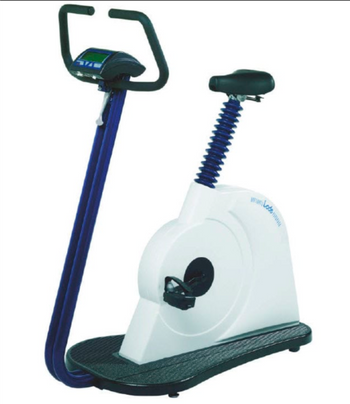
Lode Corival
 Lode · Model Corival
Lode's Corival Ergometer The low start-up load of 7 Watt is unique. The Corival can be controlled easily by all known stress ECG and pulmonary devices in the world. The Corival has an eddy current electro-magnetic braking mechanism. The biggest advantage of this system is the accuracy which is one of the most important Lode principles. With this ergometer, the stress tests performed are reliable and reproducible. The workload is adjustable in a range of 7 to 1000 watt. Moreover, the noise level is reduced to a minimum. Easy transportation of the device is possible by a simple retractable wheel.
Key tips
- ·A no-signal/flatline alarm gets checked on the patient first, not the monitor - rule out a real clinical event before troubleshooting.
- ·Recalibrate NIBP against a reference manometer, not just a self-test pass.
- ·Reused patient cables (SpO2, ECG leads) are a common source of intermittent-fault complaints - swap the cable before the module.
Typical Failure Modes
Compiled for this model from its own documentation and established engineering knowledge for this equipment class - not from a verified service record. Confirm against the manufacturer's service manual.
Resistance / brake fault
HighSymptoms: Resistance will not change, feels wrong, or is uneven through the stroke.
Root cause: Eddy-current brake / magnet assembly, a resistance-motor fault, or a control fault.
Console dead / no data
MediumSymptoms: Console will not power on, no speed / cadence / power / HR data.
Root cause: Console battery / power, a sensor-cable fault, or the console board.
Pedal / crank / drive fault
MediumSymptoms: Play or knocking in the cranks, freewheel slips, drive belt / chain noise.
Root cause: Worn bottom-bracket bearings, pedals, or drive belt / chain.
Speed / cadence sensor fault
MediumSymptoms: Cadence or speed reads zero or erratically.
Root cause: Reed / optical sensor or its cable / magnet.
Seat / adjustment mechanism fault
LowSymptoms: Seat post or backrest will not adjust or lock, wear in the slider.
Root cause: Worn adjustment latch / slider.
Serviceable Parts & Consumables
Serviceable items for this model, compiled from its documentation and engineering knowledge for this equipment class. Service class and relative cost are estimates, not manufacturer figures; no part numbers are given. Confirm intervals and pricing against the manufacturer.
Eddy-current brake / resistance motor
Class Major service partRel. cost $$$R&R Difficult
Console board / power
Class Major service partRel. cost $$R&R Moderate
Bottom-bracket bearings / pedals
Class Periodic replacementRel. cost $$R&R Moderate
Drive belt / chain
Class Periodic replacementRel. cost $R&R Moderate
Speed / cadence sensor
Class Periodic replacementRel. cost $R&R Fairly easy
| Part | Service class | Relative cost | R&R difficulty |
|---|---|---|---|
| Eddy-current brake / resistance motor | Major service part | $$$ | Difficult |
| Console board / power | Major service part | $$ | Moderate |
| Bottom-bracket bearings / pedals | Periodic replacement | $$ | Moderate |
| Drive belt / chain | Periodic replacement | $ | Moderate |
| Speed / cadence sensor | Periodic replacement | $ | Fairly easy |
Relative cost: $ lowest · $$$$ highest service-part cost for this equipment class. Not a price.
PM Checklist
Preventive-maintenance tasks typical of this equipment class. Perform to the manufacturer's procedure and your facility's policy - this is general reference, not a schedule for this specific unit.
- ·Routine cable and lead-wire inspection for fraying/wear
- ·Battery conditioning cycle
- ·NIBP calibration check against a reference manometer
- ·ECG / SpO2 accuracy verification against a patient simulator
- ·Annual electrical safety test
Troubleshooting Approach
A starting sequence for this model, compiled from its documentation and engineering knowledge for this equipment class. Follow the manufacturer's service documentation for the actual procedure.
Symptom: Resistance will not change
- Confirm the console powers the brake (battery / mains).
- Check the sensor / brake cable connections.
- Feel the resistance through a full range setting.
- Test or replace the resistance motor / brake assembly.
- Verify resistance against known power targets if the unit supports it.
Symptom: Console dead or no data
- Replace the console batteries / check the power feed.
- Reseat the sensor and generator cables.
- Confirm the cadence sensor and magnet alignment.
- Try the console on another base if possible.
- Replace the console board if it stays dead.
Technical Specs
- Height
- 49 in
- Length
- 43.5 in
- Weight
- 121
- Width
- 17 in
Typical Location
Where this class of equipment is typically deployed - general reference, not this unit's own placement record.
- ICU / CCU
- Emergency Department
- OR / PACU
- General med-surg floors
- Step-down units
- Telemetry units
Documents & Manuals
No documents available for this device yet.
Troubleshoot this device with Bio
Describe a symptom or error code. Bio answers from this device's own documented error codes, failure modes, parts, and guides.
Ask Bio