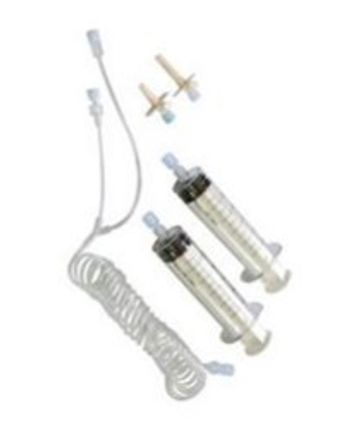
Liebel-Flarsheim Optistat
 Liebel-Flarsheim · Model Optistat
Progressive technology, reliability, and flexibility. The Optistat is used for angiography, CT /MRI /DSA scan and enhanced angiography in the body and uses high-quality medical grade Polypropylene material. It is perfectly fit to CT injectors such as Medrad 200/300 vistron and has standard pressure and high pressure for choosing.
Typical Failure Modes
Compiled for this model from its own documentation and established engineering knowledge for this equipment class - not from a verified service record. Confirm against the manufacturer's service manual.
Will not prime / inject / pressure fault
HighSymptoms: Injector will not advance the plunger, stalls, pressure-limit or motor-fault alarm.
Root cause: Drive-motor / lead-screw wear, a syringe-interface / plunger-ram fault, or a pressure-transducer fault.
Air-detection / air-column fault
MediumSymptoms: Air-detector alarms with no air, or fails to detect air, will not arm.
Root cause: Air-detector sensor or a dirty / damaged sensor window.
Head / control-room communication fault
MediumSymptoms: The console loses the injector head, hand-controller unresponsive, arm / pause not working.
Root cause: Head-to-console cable / wireless link or a board fault.
Heater / warmer fault
LowSymptoms: Contrast not warmed, warmer alarm.
Root cause: Syringe / bath heater or its sensor.
Battery / power fault (mobile heads)
MediumSymptoms: Short run time, will not hold charge.
Root cause: Aged battery pack.
Serviceable Parts & Consumables
Serviceable items for this model, compiled from its documentation and engineering knowledge for this equipment class. Service class and relative cost are estimates, not manufacturer figures; no part numbers are given. Confirm intervals and pricing against the manufacturer.
Drive motor / lead-screw assembly
Class Major service partRel. cost $$$R&R Difficult
Plunger ram / syringe-interface assembly
Class Major service partRel. cost $$R&R Moderate
Pressure transducer
Class Major service partRel. cost $$R&R Moderate
Air-detector sensor
Class Major service partRel. cost $$R&R Moderate
Battery pack (mobile heads)
Class Periodic replacementRel. cost $$R&R Fairly easy
| Part | Service class | Relative cost | R&R difficulty |
|---|---|---|---|
| Drive motor / lead-screw assembly | Major service part | $$$ | Difficult |
| Plunger ram / syringe-interface assembly | Major service part | $$ | Moderate |
| Pressure transducer | Major service part | $$ | Moderate |
| Air-detector sensor | Major service part | $$ | Moderate |
| Battery pack (mobile heads) | Periodic replacement | $$ | Fairly easy |
Relative cost: $ lowest · $$$$ highest service-part cost for this equipment class. Not a price.
Troubleshooting Approach
A starting sequence for this model, compiled from its documentation and engineering knowledge for this equipment class. Follow the manufacturer's service documentation for the actual procedure.
Symptom: Will not prime or inject
- Load a fresh syringe and confirm it seats and the ram engages.
- Run the prime / test-inject and note any pressure or motor alarm.
- Inspect the plunger ram and lead-screw for wear.
- Check the pressure-limit setting for the catheter / protocol.
- Replace the drive / ram assembly as isolated and re-verify flow / pressure.
Symptom: Air-detector or communication fault
- Clean the air-detector sensor window and reseat the tubing.
- Confirm the air column is purged.
- Reseat or swap the head-to-console cable.
- Reboot the console and head.
- Replace the air-detector sensor or refer the communication board.
Documents & Manuals
No documents available for this device yet.
Safety & Recalls
Synced live from the FDA openFDA API.
- RECALL
Software issue. The difference between the display and dosimeter readings In the Child/Pediatric automatic exposure mode is in the range of 52-65%. The display in all other modes deviated by less than 35% from the dosimeter readings.
Troubleshoot this device with Bio
Describe a symptom or error code. Bio answers from this device's own documented error codes, failure modes, parts, and guides.
Ask Bio