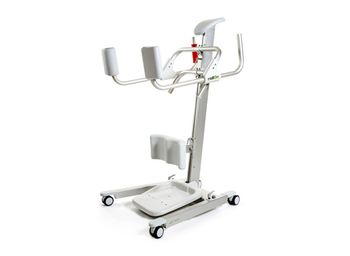
Hillrom RollOn Manual Transfer Aid
 Hillrom · Model RollOn Manual Transfer Aid
Safety and security The padded rear supports provide safety and security for both patient and caregiver and are easy to open and close. Easily adjustable Several position settings make RollOn easily adjustable for the individual patient. Material Made of aluminum, for environment, quality and economy. The choice of material makes RollOn easy to maneuver, corrosion-resistant and easy to keep clean. HandyBelt HandyBelt can be a good aid when raising a patient in RollOn. Read more on the product page for HandyBelt.
Key tips
- ·Mounting and securement hardware takes real fatigue from vibration and road shock - inspect it as carefully as the device itself.
- ·Post-call battery and function checks catch transport-induced faults that a scheduled PM would miss for months.
Typical Failure Modes
Compiled for this model from its own documentation and established engineering knowledge for this equipment class - not from a verified service record. Confirm against the manufacturer's service manual.
Hand control not responding / no powered movement
HighSymptoms: Lift / lower or traverse does not respond to the hand control.
Root cause: Discharged or mis-inserted battery, an active emergency stop, an obstruction or overload, or a faulty hand control / cable.
Lift actuator / strap / mast fault
MediumSymptoms: Will not raise or lower, runs one direction only, noisy or slow, strap frays.
Root cause: Worn lift actuator / motor, or a frayed / twisted lifting strap or chain.
Battery will not hold charge
MediumSymptoms: Short run time, frequent low-battery, unit dies mid-transfer.
Root cause: Aged battery pack or a charger / charging-contact fault.
Traverse / rail-carriage fault (ceiling)
MediumSymptoms: Carriage will not move along the rail, or binds.
Root cause: Worn carriage wheels, a rail obstruction, or the traverse motor.
Overload / slack-strap / emergency-lowering fault
HighSymptoms: Lift stops with an overload indication, slack-strap cut-off active, or emergency lowering does not work.
Root cause: Load over the rated limit, the slack-strap sensor, or the emergency-lowering mechanism.
Serviceable Parts & Consumables
Serviceable items for this model, compiled from its documentation and engineering knowledge for this equipment class. Service class and relative cost are estimates, not manufacturer figures; no part numbers are given. Confirm intervals and pricing against the manufacturer.
Rechargeable battery pack
Class Periodic replacementRel. cost $$R&R Easy
Hand control
Class Periodic replacementRel. cost $$R&R Easy
Lifting strap / chain
Inspect before every use; retire on any fraying.
Class Periodic replacementRel. cost $$R&R Fairly easy
Lift actuator / motor assembly
Class Major service partRel. cost $$$R&R Difficult
Rail-carriage wheel set (ceiling)
Class Major service partRel. cost $$R&R Moderate
| Part | Service class | Relative cost | R&R difficulty |
|---|---|---|---|
| Rechargeable battery pack | Periodic replacement | $$ | Easy |
| Hand control | Periodic replacement | $$ | Easy |
| Lifting strap / chain Inspect before every use; retire on any fraying. | Periodic replacement | $$ | Fairly easy |
| Lift actuator / motor assembly | Major service part | $$$ | Difficult |
| Rail-carriage wheel set (ceiling) | Major service part | $$ | Moderate |
Relative cost: $ lowest · $$$$ highest service-part cost for this equipment class. Not a price.
PM Checklist
Preventive-maintenance tasks typical of this equipment class. Perform to the manufacturer's procedure and your facility's policy - this is general reference, not a schedule for this specific unit.
- ·Post-call function and battery check
- ·Mounting / securement inspection
- ·Annual full PM and vibration-tolerance check
Troubleshooting Approach
A starting sequence for this model, compiled from its documentation and engineering knowledge for this equipment class. Follow the manufacturer's service documentation for the actual procedure.
Symptom: Hand control not responding
- Confirm a charged, correctly inserted battery.
- Clear any obstruction and check the load is within the rated limit.
- Confirm the emergency stop is inactivated.
- Reseat the hand-control plug; try the up/down buttons on the unit if fitted.
- If the unit buttons work, replace the hand control; if not, use the emergency lowering and call qualified personnel.
Symptom: Will not raise or lower
- Check the strap / chain is not twisted, frayed or fouled at the drum.
- Listen for the lift actuator / motor.
- Confirm the slack-strap cut-off is not active (strap under tension).
- Replace a damaged strap immediately.
- Replace the actuator / motor if it will not run under command, then load-test to the rated limit.
Typical Location
Where this class of equipment is typically deployed - general reference, not this unit's own placement record.
- Ambulance / transport vehicles
- Emergency Department
- Inter-facility transport teams
Documents & Manuals
Troubleshoot this device with Bio
Describe a symptom or error code. Bio answers from this device's own documented error codes, failure modes, parts, and guides.
Ask Bio