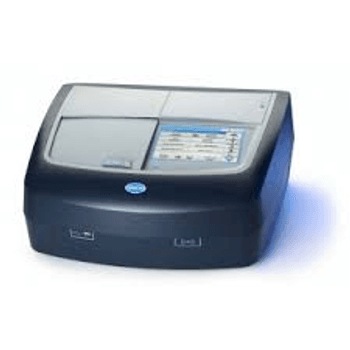
Hach Company DR3900 Lab VIS
 Hach Company · Model DR3900 Lab VIS
Guided Procedures The DR3900 simplifies water analysis by with step-by-step guides which take users through testing procedures. This helps ensure consistent and accurate results. RFID Technology Featuring state-of-the-art Radio Frequency Identification (RFID) technology* allows for hands-free calibration updates, as it automatically recognizes the lot, expiration and calibration curves associated with each Hach chemistry sample. It also allows for traceability for each measurement. Claros Enabled This instrument connects to Claros™, Hach’s innovative Water Intelligence System, enabling you to seamlessly connect and manage instruments, data, and process – anywhere, anytime. The result is greater confidence in your data and improved efficiency in your operations. Other Key Features Optimized for safe processes and accurate results. Large color touchscreen display allows easy setup and navigation. RFID technology eliminates sample mix-ups and provides better sample traceability. Built with 1 ethernet and 3 USB ports, so easily connects to your computer. Over 35 tests available including EPA compliant parameters such as ammonia, COD, chlorine and more.
Key tips
- ·When no category-specific guidance fits, default to the manufacturer's own service manual and the general troubleshooting method in the Engineer's Guide.
- ·Run an incoming and annual electrical safety test regardless of how niche the device is.
Typical Failure Modes
Compiled for this model from its own documentation and established engineering knowledge for this equipment class - not from a verified service record. Confirm against the manufacturer's service manual.
Absorbance readings drift / QC failure
HighSymptoms: Blank or standard absorbance off, poor reproducibility, method verification fails.
Root cause: Lamp aging (xenon flash / tungsten / deuterium), contaminated cell compartment optics, or a scratched cuvette.
Lamp / light-source failure
MediumSymptoms: Low-energy or lamp warning, will not read.
Root cause: Lamp at end of life.
Wavelength accuracy off / self-check fails
MediumSymptoms: Instrument self-check or a verification standard fails.
Root cause: Wavelength-drive calibration or a filter / grating fault.
Cell / cuvette recognition or RFID fault
LowSymptoms: Barcode / RFID vial not read, wrong method applied.
Root cause: Cell reader or barcode window.
Serviceable Parts & Consumables
Serviceable items for this model, compiled from its documentation and engineering knowledge for this equipment class. Service class and relative cost are estimates, not manufacturer figures; no part numbers are given. Confirm intervals and pricing against the manufacturer.
Xenon flash / source lamp
Class Periodic replacementRel. cost $$R&R Moderate
Cell compartment optics / lens
Class Major service partRel. cost $$R&R Moderate
Cuvettes
Class Periodic replacementRel. cost $R&R Easy
Cell / RFID reader
Class Major service partRel. cost $$R&R Moderate
| Part | Service class | Relative cost | R&R difficulty |
|---|---|---|---|
| Xenon flash / source lamp | Periodic replacement | $$ | Moderate |
| Cell compartment optics / lens | Major service part | $$ | Moderate |
| Cuvettes | Periodic replacement | $ | Easy |
| Cell / RFID reader | Major service part | $$ | Moderate |
Relative cost: $ lowest · $$$$ highest service-part cost for this equipment class. Not a price.
PM Checklist
Preventive-maintenance tasks typical of this equipment class. Perform to the manufacturer's procedure and your facility's policy - this is general reference, not a schedule for this specific unit.
- ·Follow the manufacturer's PM schedule
- ·Perform incoming and annual electrical safety testing per facility biomedical program
Troubleshooting Approach
A starting sequence for this model, compiled from its documentation and engineering knowledge for this equipment class. Follow the manufacturer's service documentation for the actual procedure.
Symptom: Absorbance drift / QC fail
- Run the instrument self-check / verification with the Hach verification set.
- Clean the cell compartment optics and use clean cuvettes.
- Replace the lamp if the energy is low.
- Re-run the verification standards.
- Refer for service if wavelength accuracy will not hold.
Symptom: Lamp warning
- Note the lamp-hours or warning.
- Replace the source lamp.
- Run the self-check.
- Verify with a standard.
- Reset any lamp counter.
Typical Location
Where this class of equipment is typically deployed - general reference, not this unit's own placement record.
- Varies by device - check the unit's own manual for facility placement guidance
Documents & Manuals
No documents available for this device yet.
Troubleshoot this device with Bio
Describe a symptom or error code. Bio answers from this device's own documented error codes, failure modes, parts, and guides.
Ask Bio