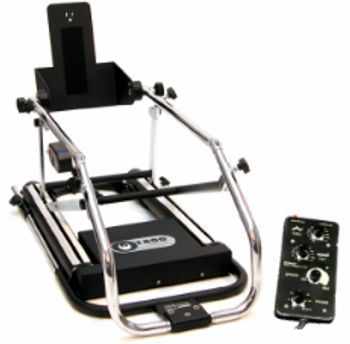
Furniss Corporation Phoenix 1800
 Furniss Corporation · Model Phoenix 1800
Proper anatomical therapy, accurate range of motion and ultimate comfort for all patient types. Accommodates pediatric, athletic and bariatric patients Unique lift and bend motion provides proper anatomical fit, accurate range of motion and ultimate comfort for CPM patients. Axis to axis motion, skid pad and bed stabilizing system prevents migration ensuring a precise fit. The hand-held control pendant features a classic analog (turn dial) design easily understood by hospital staff and patients. Unique tripod position reduces contamination and offers a convenient storage option. Universal left/right design. Quick conversion from adult to pediatric.
Key tips
- ·Most "no output" stim-unit complaints are cable-side - check electrode/lead continuity before assuming a unit fault.
- ·Frame and strap wear on mechanical rehab equipment is a real fall/injury risk - don't defer it as cosmetic.
Typical Failure Modes
Compiled for this model from its own documentation and established engineering knowledge for this equipment class - not from a verified service record. Confirm against the manufacturer's service manual.
Motor / actuator / drive will not run or is weak
HighSymptoms: Traction force not applied, CPM carriage will not move or stalls, drive assist weak, motion one direction only.
Root cause: Worn drive motor / leadscrew / actuator, a hand-control fault, or a control-board fault.
Force / range / position inaccuracy
MediumSymptoms: Set traction force or CPM angle not reached, load cell drifts, carriage overshoots or stalls short.
Root cause: Load-cell / position-sensor drift, a potentiometer fault, or a limit-switch fault.
Hand control / patient-control fault
MediumSymptoms: Hand control unresponsive, the patient stop / reverse button does not work.
Root cause: Worn hand control or a damaged cable.
Frame / bearing / cable wear
MediumSymptoms: Rough or noisy travel, play in the carriage, frayed traction cord or rope.
Root cause: Worn bearings / slides or a frayed cable / cord.
Power / battery fault
LowSymptoms: Will not power on, short battery run time.
Root cause: Power supply / fuse or an aged battery.
Serviceable Parts & Consumables
Serviceable items for this model, compiled from its documentation and engineering knowledge for this equipment class. Service class and relative cost are estimates, not manufacturer figures; no part numbers are given. Confirm intervals and pricing against the manufacturer.
Drive motor / leadscrew / actuator
Class Major service partRel. cost $$$R&R Difficult
Load cell / position sensor / potentiometer
Class Major service partRel. cost $$R&R Moderate
Hand control
Class Periodic replacementRel. cost $$R&R Fairly easy
Bearings / slides / traction cord
Class Periodic replacementRel. cost $$R&R Moderate
Power supply / fuse / battery
Class Major service partRel. cost $R&R Moderate
| Part | Service class | Relative cost | R&R difficulty |
|---|---|---|---|
| Drive motor / leadscrew / actuator | Major service part | $$$ | Difficult |
| Load cell / position sensor / potentiometer | Major service part | $$ | Moderate |
| Hand control | Periodic replacement | $$ | Fairly easy |
| Bearings / slides / traction cord | Periodic replacement | $$ | Moderate |
| Power supply / fuse / battery | Major service part | $ | Moderate |
Relative cost: $ lowest · $$$$ highest service-part cost for this equipment class. Not a price.
PM Checklist
Preventive-maintenance tasks typical of this equipment class. Perform to the manufacturer's procedure and your facility's policy - this is general reference, not a schedule for this specific unit.
- ·Frame and strap wear inspection
- ·Electrode lead continuity check
- ·Annual electrical safety test
Troubleshooting Approach
A starting sequence for this model, compiled from its documentation and engineering knowledge for this equipment class. Follow the manufacturer's service documentation for the actual procedure.
Symptom: Carriage will not move / stalls / moves one direction only
- Confirm mains / battery and that the patient stop / e-stop is released.
- Try the hand control and, if fitted, the unit buttons to isolate the control.
- Listen for the drive motor and check the leadscrew is not jammed or dry.
- Check the hand-control cable for damage.
- Replace the hand control, drive motor or control board as isolated.
Symptom: Set flexion / extension angle not reached / carriage overshoots or stalls short
- Run the calibration / homing routine.
- Check the position sensor / potentiometer and the limit switches.
- Verify the achieved angles with a goniometer.
- Replace the position sensor if it drifts.
- Re-verify the ROM range and the patient stop.
Symptom: Rough / noisy travel / play in the carriage
- Inspect the carriage bearings / slides for wear.
- Check the leadscrew and its nut for backlash.
- Re-lubricate per the manual.
- Replace worn bearings / slides.
- Confirm smooth quiet travel through the full range.
Typical Location
Where this class of equipment is typically deployed - general reference, not this unit's own placement record.
- Physical therapy / rehab gym
- Outpatient rehab clinic
- Sports medicine
Documents & Manuals
Troubleshoot this device with Bio
Describe a symptom or error code. Bio answers from this device's own documented error codes, failure modes, parts, and guides.
Ask Bio