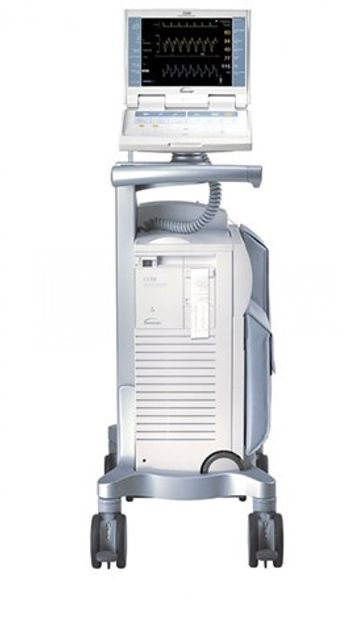
Datascope CS300
 Datascope · Model CS300
CS300 has true one-button start-up. Automatically calibrates the fiber-optic pressure sensor in the patient and recalibrates every 2 hours or sooner should patient or environmental conditions change. Automatically evaluates and selects the best lead and trigger source. Automatically sets optimal timing. Automatically adjusts to changes in patient conditions without clinician intervention.
Key tips
- ·When no category-specific guidance fits, default to the manufacturer's own service manual and the general troubleshooting method in the Engineer's Guide.
- ·Run an incoming and annual electrical safety test regardless of how niche the device is.
Typical Failure Modes
Compiled for this model from its own documentation and established engineering knowledge for this equipment class - not from a verified service record. Confirm against the manufacturer's service manual.
Loss of augmentation / balloon-pressure or gas-loss alarm
HighSymptoms: Poor or no diastolic augmentation, abnormal balloon-pressure waveform, gas-loss / leak alarm.
Root cause: Balloon-catheter leak or kink, a loose connection, or low helium.
Trigger / timing fault
HighSymptoms: Pump not triggering or mistimed, inflation / deflation off the cardiac cycle.
Root cause: Poor ECG or arterial-pressure trigger (electrodes, cable, lead selection), or a timing issue.
Helium / pneumatic drive fault
MediumSymptoms: Autofill fails, cannot maintain balloon volume, drive alarm.
Root cause: Helium cylinder low, a solenoid / compressor fault, or a pneumatic leak.
Battery / display fault
MediumSymptoms: Short transport battery run time, unresponsive touchscreen.
Root cause: Aged battery packs or a display / control fault.
Serviceable Parts & Consumables
Serviceable items for this model, compiled from its documentation and engineering knowledge for this equipment class. Service class and relative cost are estimates, not manufacturer figures; no part numbers are given. Confirm intervals and pricing against the manufacturer.
Helium cylinder
Class Frequent wear itemRel. cost $R&R Fairly easy
Battery packs
Class Periodic replacementRel. cost $$R&R Fairly easy
Safety chamber / disposable extension tubing
Class ConsumableRel. cost $R&R Easy
Solenoid valve / drive components
Class Major service partRel. cost $$$R&R Difficult
Touchscreen / control-panel assembly
Class Major service partRel. cost $$$R&R Difficult
| Part | Service class | Relative cost | R&R difficulty |
|---|---|---|---|
| Helium cylinder | Frequent wear item | $ | Fairly easy |
| Battery packs | Periodic replacement | $$ | Fairly easy |
| Safety chamber / disposable extension tubing | Consumable | $ | Easy |
| Solenoid valve / drive components | Major service part | $$$ | Difficult |
| Touchscreen / control-panel assembly | Major service part | $$$ | Difficult |
Relative cost: $ lowest · $$$$ highest service-part cost for this equipment class. Not a price.
PM Checklist
Preventive-maintenance tasks typical of this equipment class. Perform to the manufacturer's procedure and your facility's policy - this is general reference, not a schedule for this specific unit.
- ·Follow the manufacturer's PM schedule
- ·Perform incoming and annual electrical safety testing per facility biomedical program
Troubleshooting Approach
A starting sequence for this model, compiled from its documentation and engineering knowledge for this equipment class. Follow the manufacturer's service documentation for the actual procedure.
Symptom: Loss of augmentation
- Study the theory-of-operation section - most faults are identifiable from the device's own indicators.
- Check the balloon-pressure waveform for a leak or kink pattern.
- Inspect every connection from the console to the catheter.
- Confirm the helium level and run an autofill.
- If a balloon leak is suspected, follow the protocol to stop pumping and notify the care team immediately.
Symptom: Trigger / timing problem
- Select the ECG lead with the best R wave or use arterial-pressure trigger.
- Re-prep skin and fit fresh ECG electrodes; check the cable.
- Adjust inflation / deflation timing to the arterial waveform.
- Confirm the assist ratio.
- Refer the console if triggering fails with good inputs.
Typical Location
Where this class of equipment is typically deployed - general reference, not this unit's own placement record.
- Varies by device - check the unit's own manual for facility placement guidance
Documents & Manuals
Safety & Recalls
Synced live from the FDA openFDA API.
- RECALL
One lot of "Low Level Output Cable - Interface to Philips Monitor" was received from the supplier with an incorrect cable in the packaging.
Troubleshoot this device with Bio
Describe a symptom or error code. Bio answers from this device's own documented error codes, failure modes, parts, and guides.
Ask Bio