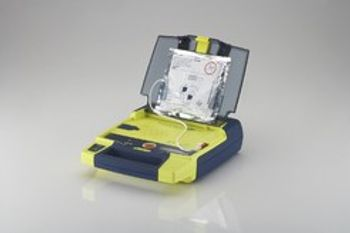
Cardiac Science Powerheart AED G3
 Cardiac Science · Model Powerheart AED G3
Rescue Ready defibrillator technology self-tests all main components (battery, hardware, software, and pads) daily. Powerheart Automatic and Semi-Automatic Defibrillators complete a partial charge of the high-voltage electronics weekly, and a full charge monthly Calculates electrical impedance and if subsequent shocks are necessary, our proprietary STAR biphasic technology escalates the energy to deliver therapy at an appropriate, higher level.
Key tips
- ·Never skip the daily/shift ready-check - a defibrillator found dead during a code is a real, repeated root-cause finding.
- ·Pads and batteries have real expiration dates - check them on every PM, not just at annual service.
- ·Verify energy-delivery accuracy with a real defibrillator analyzer, not just a self-test pass.
Typical Failure Modes
Compiled for this model from its own documentation and established engineering knowledge for this equipment class - not from a verified service record. Confirm against the manufacturer's service manual.
Fails the delivered-energy / discharge test
HighSymptoms: Delivered energy outside tolerance on the analyser, will not charge, or charges slowly.
Root cause: HV capacitor / charging-circuit ageing, or an output-relay fault.
Battery will not hold charge / fails readiness
HighSymptoms: Short standby, readiness indicator shows service, unit fails the self-test on battery.
Root cause: Aged battery pack or a charging fault.
Therapy cable / pads or paddles fault
MediumSymptoms: "Check pads", "connect electrodes", no ECG through pads, poor paceing capture.
Root cause: Worn therapy cable, expired pads, or a paddle / connector fault.
ECG / SpO2 / NIBP / CO2 parameter fault (defib-monitors)
MediumSymptoms: A monitoring parameter drops or is implausible.
Root cause: Patient cable / sensor or the parameter module.
Recorder / data fault
LowSymptoms: No printout, event data will not transfer.
Root cause: Thermal recorder or the data / Wi-Fi interface.
Serviceable Parts & Consumables
Serviceable items for this model, compiled from its documentation and engineering knowledge for this equipment class. Service class and relative cost are estimates, not manufacturer figures; no part numbers are given. Confirm intervals and pricing against the manufacturer.
Battery pack
Class Periodic replacementRel. cost $$R&R Easy
Therapy / defib cable
Class Periodic replacementRel. cost $$R&R Fairly easy
Multifunction pads
Class Frequent wear itemRel. cost $R&R Easy
HV / charging board
Class Major service partRel. cost $$$$R&R Difficult
Thermal recorder / print head
Class Periodic replacementRel. cost $$R&R Fairly easy
| Part | Service class | Relative cost | R&R difficulty |
|---|---|---|---|
| Battery pack | Periodic replacement | $$ | Easy |
| Therapy / defib cable | Periodic replacement | $$ | Fairly easy |
| Multifunction pads | Frequent wear item | $ | Easy |
| HV / charging board | Major service part | $$$$ | Difficult |
| Thermal recorder / print head | Periodic replacement | $$ | Fairly easy |
Relative cost: $ lowest · $$$$ highest service-part cost for this equipment class. Not a price.
PM Checklist
Preventive-maintenance tasks typical of this equipment class. Perform to the manufacturer's procedure and your facility's policy - this is general reference, not a schedule for this specific unit.
- ·Daily/shift visual and self-test check (AAMI EQ56 daily-ready standard)
- ·Battery and pad expiration-date tracking
- ·Energy-delivery accuracy test against a defibrillator analyzer
- ·Paddle/cable continuity check
- ·Annual full PM
Troubleshooting Approach
A starting sequence for this model, compiled from its documentation and engineering knowledge for this equipment class. Follow the manufacturer's service documentation for the actual procedure.
Symptom: Fails the delivered-energy / discharge test or charges slowly
- Run the full delivered-energy test at several settings into a defib analyser.
- Test synchronised cardioversion and, if fitted, pacing capture and output.
- Inspect the therapy cable and paddles / pads connector.
- If energy is out of tolerance or charge time is long, remove from service.
- Refer the HV / charging board and capacitor to the OEM.
Symptom: Fails readiness / self-test or dies on battery
- Fit a fully charged battery and repeat the self-test.
- Run a battery capacity / calibration cycle.
- Check the charger, the charging contacts and the auto-test log.
- Replace the battery pack when capacity is low.
- Record a passing readiness self-test before returning to service.
Symptom: "Check pads / connect electrodes" or no ECG through pads
- Fit fresh, in-date pads and confirm the connector seats fully.
- Swap the therapy cable.
- Check ECG through pads and through the 3/5-lead cable on a simulator.
- Inspect the pads port for damage.
- Replace the therapy cable; refer the front end if both paths fail.
Symptom: A monitoring parameter (ECG / SpO2 / NIBP / CO2) drops or is implausible
- Reseat and swap the patient cable / sensor for that parameter.
- Verify against a simulator.
- Check the parameter module connection.
- Update the device software if a known issue applies.
- Refer the parameter module as isolated.
Technical Specs
- Height
- 3.3 in
- Length
- 12.4 in
- Weight
- 6.6 lbs
- Defibrillator Type
- External, Automated (AED)
- Width
- 10.6 in
Typical Location
Where this class of equipment is typically deployed - general reference, not this unit's own placement record.
- Crash carts (every unit)
- Emergency Department
- ICU
- OR
- Code-blue response areas
Documents & Manuals
Safety & Recalls
Synced live from the FDA openFDA API.
- RECALL
Sub-supplier s documentation for specific Printed Circuit Boards (PCB) is insufficient to determine if the devices conform to specifications.
- RECALL
Defibrillation electrodes may increase electrical impedance over time. If impedance becomes too high, the AED will fail the electrode self-test and it will not be Rescue Ready, the AED STATUS INDICATOR will be RED and the AED will beep. This is normal behavior when the impedance limit is exceeded. The high impedance electrodes require replacement.
- RECALL
The affected Automated External Defibrillators (AEDs) contains a circuit board manufactured with a component that may fail unexpectedly due to a supplier manufacturing defect. If the component were to fail during a rescue attempt, the AED may not deliver defibrillation therapy.
- RECALL
Cardiac Science Corporation (CSC) has identified two errors, 0x48 and 0x99, that have repeatedly occurred during a device self-test in the G3 installed base over the last 6 years. These self test errors cause the device to enter into a service required state. CSC remind owners/operators of the Powerheart AED devices to verify the "Rescue Readiness" of their equipment and follow maintenance pro
- RECALL
Cardiac Science Corporation (CSC) intent to end service support and discontinue accessory sales of Powerheart G2 Automated External Defibrillators. Customers are recommended to choose a replacement AED prior to the current AED displaying any "Service Required" self test messages.
- RECALL
A component of the AED device may fail during a rescue attempt and the AED will not be able to deliver therapy.
- RECALL
The K302 relay switch of the G3 series AED product line may experience an early failure. If the K302 contacts are open at the time of rescue, there is a possible delay in therapy or failure to deliver therapy.
- RECALL
Potential for devices not to deliver therapy
- RECALL
Certain models of Powerheart G3 AEDs may not have received adequate electrical safety testing prior to being shipped from the factory. Affected models are: Powerheart 9300A, 9300C, 9300D, 9300E, 9300P, 9390A, 9390E, CardioVive 92532, 92533, NK 9200G, 9231, and Responder 2019198 and 2023440. The affected devices were manufactured between October 29, 2003 and February 10, 2009.
- RECALL
Potential for AED to not deliver defibrillation therapy.
- RECALL
Instructions For Use is not clear about how the AED voice and text prompts will differ when the adapter is used.
- RECALL
Some Powerheart AED Model 9300A may contain a suspect electronic component and there is a remote likelihood that the function of this device may be interrupted during the charge.
- RECALL
AEDs may contain an electronic component that does not meet its full operating specifications. The AEDs with this suspect electronic component may not functionn properly and may interfere with the AED's ability to delivery therapy. In the event that charge noise is presrent it will delay the first defibrillation shock in the 3 shock sequence.
- RECALL
Some of the high voltage capacitors in the recalled external defibrillators have had extended charge times resulting in self-test failures following which the defibrillator cannot be used/cannot be turn on.
- RECALL
Some of the recalled defibrillator batteries contain an incorrect fuse which could open resulting in a defibrillator which will not work.
Troubleshoot this device with Bio
Describe a symptom or error code. Bio answers from this device's own documented error codes, failure modes, parts, and guides.
Ask Bio