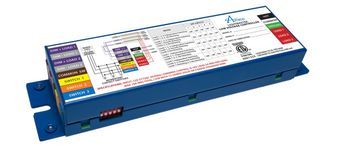
Amico Low Voltage Controller with Dimming
 Amico · Model Low Voltage Controller with Dimming
Controls up to three light functions in the room Compatible with nurse call systems used today Universal input voltage of 120–277VAC Color coded push in connectors for ease of connectivity Compact design Up to two loads have 0-10V dimming capability Can be used with florescent and LED light sources Five modes of operation.
Key tips
- ·When no category-specific guidance fits, default to the manufacturer's own service manual and the general troubleshooting method in the Engineer's Guide.
- ·Run an incoming and annual electrical safety test regardless of how niche the device is.
Typical Failure Modes
Compiled for this model from its own documentation and established engineering knowledge for this equipment class - not from a verified service record. Confirm against the manufacturer's service manual.
Light output not switching
MediumSymptoms: One of the three light functions will not turn on or off.
Root cause: Failed switching relay, control-input wiring fault, or PCB failure.
0-10 V dimming not working
MediumSymptoms: A dimmable load stays full-bright or off, does not track the dim command.
Root cause: 0-10 V dimming output fault on the controller or a wiring fault to the driver.
Nurse-call integration / mode fault
MediumSymptoms: Lights do not respond to nurse-call, wrong operating mode.
Root cause: Mis-wired interface or a mode-configuration fault (five modes).
Input-voltage tolerance fault
LowSymptoms: Erratic operation on a supply near the 120-277 VAC limits.
Root cause: Marginal supply or a controller input-stage fault.
Serviceable Parts & Consumables
Serviceable items for this model, compiled from its documentation and engineering knowledge for this equipment class. Service class and relative cost are estimates, not manufacturer figures; no part numbers are given. Confirm intervals and pricing against the manufacturer.
Switching relay
Class Major service partRel. cost $R&R Moderate
Controller PCB (with 0-10 V dimming)
Class Major service partRel. cost $$R&R Moderate
Push-in connector / wiring kit
Class Major service partRel. cost $R&R Fairly easy
| Part | Service class | Relative cost | R&R difficulty |
|---|---|---|---|
| Switching relay | Major service part | $ | Moderate |
| Controller PCB (with 0-10 V dimming) | Major service part | $$ | Moderate |
| Push-in connector / wiring kit | Major service part | $ | Fairly easy |
Relative cost: $ lowest · $$$$ highest service-part cost for this equipment class. Not a price.
PM Checklist
Preventive-maintenance tasks typical of this equipment class. Perform to the manufacturer's procedure and your facility's policy - this is general reference, not a schedule for this specific unit.
- ·Follow the manufacturer's PM schedule
- ·Perform incoming and annual electrical safety testing per facility biomedical program
Troubleshooting Approach
A starting sequence for this model, compiled from its documentation and engineering knowledge for this equipment class. Follow the manufacturer's service documentation for the actual procedure.
Symptom: A light function will not switch
- Confirm the supply is within 120-277 VAC and the fixture works when powered directly.
- Actuate the control and listen for the relay.
- Check the colour-coded push-in connections against the wiring diagram.
- Replace the relay if it will not switch.
- Replace the controller PCB if the relay is good but unresponsive.
Symptom: A dimmable load will not dim
- Verify the load and its driver are 0-10 V dimmable and correctly wired to the dimming output.
- Measure the 0-10 V output while changing the dim command.
- Check for a short or open on the dimming pair.
- Replace the controller PCB if the dimming output is dead.
- Confirm smooth dimming across the range.
Typical Location
Where this class of equipment is typically deployed - general reference, not this unit's own placement record.
- Varies by device - check the unit's own manual for facility placement guidance
Documents & Manuals
Troubleshoot this device with Bio
Describe a symptom or error code. Bio answers from this device's own documented error codes, failure modes, parts, and guides.
Ask Bio