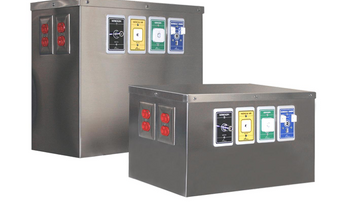
Amico 12" and 18" Floor Pedestal
 Amico · Model 12" and 18" Floor Pedestal
Amico floor pedestals are used in operating rooms where ceiling space for ceiling columns is limited. The compact design allows gas and electrical services to be placed in a convenient location that is accessible when required and isolated when not in use. The pedestal is constructed from stainless steel for ease of cleaning and for aesthetic appearance. An access panel is added to each pedestal so that outlets and electrical can be easily serviced.
Key tips
- ·Never defeat or bypass a return-electrode monitoring (REM) alarm to finish a case - it's a direct burn risk.
- ·Verify OR table battery backup - a table that loses power mid-procedure is a real, documented incident type.
- ·Track surgical light lamp-hours rather than waiting for failure - a sudden failure mid-case is avoidable.
Typical Failure Modes
Failure patterns typical of this equipment class - general BMET reference, not verified against this exact unit's own service history unless flagged. Severity is a category-level estimate.
OR light LED failure
LowSymptoms: Dim or dead panel, color shift.
Root cause: LED module aging.
Table hydraulic / actuator fault
MediumSymptoms: Slow or drifting positioning.
Root cause: Cylinder seal or actuator wear.
Electrosurgical electrode wear
MediumSymptoms: Poor cut/coag, sparking, low power.
Root cause: Burned/eroded blade or pencil.
Return electrode / pad fault
HighSymptoms: Pad alarm, no activation.
Root cause: Poor contact or expired pad.
Serviceable Parts & Consumables
The parts a BMET typically services on this class of equipment. Service class and relative cost are general engineering estimates for the category, not figures from this unit's documentation. Part numbers appear only when pulled from this unit's own service manual. Always confirm intervals and pricing against the manufacturer.
Return electrode (patient plate)
Single-use; expiry critical.
Class ConsumableRel. cost $R&R Easy
Foot switch assembly
Class Periodic replacementRel. cost $$R&R Fairly easy
OR light LED module
Class Major service partRel. cost $$$R&R Difficult
Table hydraulic actuator
Class Periodic replacementRel. cost $$$R&R Difficult
| Part | Service class | Relative cost | R&R difficulty |
|---|---|---|---|
| Return electrode (patient plate) Single-use; expiry critical. | Consumable | $ | Easy |
| Foot switch assembly | Periodic replacement | $$ | Fairly easy |
| OR light LED module | Major service part | $$$ | Difficult |
| Table hydraulic actuator | Periodic replacement | $$$ | Difficult |
Relative cost: $ lowest · $$$$ highest service-part cost for this equipment class. Not a price.
PM Checklist
Preventive-maintenance tasks typical of this equipment class. Perform to the manufacturer's procedure and your facility's policy - this is general reference, not a schedule for this specific unit.
- ·Pre-case functional check
- ·Electrosurgical return-electrode cable inspection
- ·Table hydraulic / mechanical inspection
- ·Annual electrical safety test and full PM
Troubleshooting Approach
A structured starting point derived from the failure modes above. Follow the manufacturer's service documentation for the actual procedure.
Symptom: Electrosurgical electrode wear
- Confirm the presentation - typically poor cut/coag, sparking, low power - and note the exact alarm or message and the conditions when it occurs.
- Check the most likely cause first: burned/eroded blade or pencil.
- Isolate the affected subsystem using the manufacturer's functional check or self-test, where one is provided.
- If the fault is confirmed and not a field adjustment, service or replace the electrosurgical pencil & electrode per the manufacturer's service documentation.
- Return the device to service only after the manufacturer's functional and applicable electrical-safety checks pass.
- Record the findings, any parts used, and the verification results in the maintenance history.
Symptom: Return electrode / pad fault
- Confirm the presentation - typically pad alarm, no activation - and note the exact alarm or message and the conditions when it occurs.
- Check the most likely cause first: poor contact or expired pad.
- Isolate the affected subsystem using the manufacturer's functional check or self-test, where one is provided.
- If the fault is confirmed and not a field adjustment, service or replace the return electrode (patient plate) per the manufacturer's service documentation.
- Return the device to service only after the manufacturer's functional and applicable electrical-safety checks pass.
- Record the findings, any parts used, and the verification results in the maintenance history.
Typical Location
Where this class of equipment is typically deployed - general reference, not this unit's own placement record.
- Operating rooms
- Procedure rooms
- Interventional suites
Documents & Manuals
Troubleshoot this device with Bio
Describe a symptom or error code. Bio answers from this device's own documented error codes, failure modes, parts, and guides.
Ask Bio