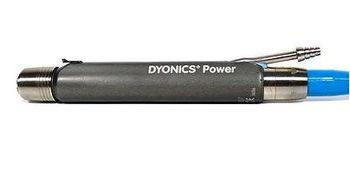
Smith and Nephew Dyonics POWER Small Joint Shaver
Smith and Nephew · Model Dyonics POWER Small Joint Shaver
Dyonics POWER Small Joint Shaver Handpiece.
Key tips
- ·Never defeat or bypass a return-electrode monitoring (REM) alarm to finish a case - it's a direct burn risk.
- ·Verify OR table battery backup - a table that loses power mid-procedure is a real, documented incident type.
- ·Track surgical light lamp-hours rather than waiting for failure - a sudden failure mid-case is avoidable.
Typical Failure Modes
Compiled for this model from its own documentation and established engineering knowledge for this equipment class - not from a verified service record. Confirm against the manufacturer's service manual.
Weak or no power / stalls under load
HighSymptoms: Handpiece runs slow, stalls when drilling / cutting, or does not run at all.
Root cause: Worn motor / turbine, worn gears / bearings, a low or aged battery, or (pneumatic) low supply pressure / a worn hose.
Overheats in use
MediumSymptoms: Handpiece or attachment gets hot quickly, burn / thermal-necrosis risk.
Root cause: Worn bearings / gears, a dry / seized attachment, or over-duty use.
Battery will not hold charge (battery tools)
HighSymptoms: Few cases per charge, will not reach full charge, sudden shutdown.
Root cause: Aged battery pack or a charger fault.
Chuck / coupling / attachment fault
MediumSymptoms: Bur / blade / pin slips or will not lock, attachment wobbles, quick-coupler worn.
Root cause: Worn chuck / collet or coupling.
Trigger / control fault
MediumSymptoms: Speed will not vary, forward/reverse or oscillate will not select, trigger sticks.
Root cause: Worn trigger / control mechanism or its seals.
Serviceable Parts & Consumables
Serviceable items for this model, compiled from its documentation and engineering knowledge for this equipment class. Service class and relative cost are estimates, not manufacturer figures; no part numbers are given. Confirm intervals and pricing against the manufacturer.
Motor / turbine assembly
Class Periodic replacementRel. cost $$$R&R Difficult
Gear / bearing service kit
Class Periodic replacementRel. cost $$R&R Difficult
Battery pack (battery tools)
Class Periodic replacementRel. cost $$$R&R Fairly easy
Chuck / collet / quick-coupler
Class Periodic replacementRel. cost $$R&R Moderate
Trigger / seal kit
Class Periodic replacementRel. cost $$R&R Moderate
| Part | Service class | Relative cost | R&R difficulty |
|---|---|---|---|
| Motor / turbine assembly | Periodic replacement | $$$ | Difficult |
| Gear / bearing service kit | Periodic replacement | $$ | Difficult |
| Battery pack (battery tools) | Periodic replacement | $$$ | Fairly easy |
| Chuck / collet / quick-coupler | Periodic replacement | $$ | Moderate |
| Trigger / seal kit | Periodic replacement | $$ | Moderate |
Relative cost: $ lowest · $$$$ highest service-part cost for this equipment class. Not a price.
PM Checklist
Preventive-maintenance tasks typical of this equipment class. Perform to the manufacturer's procedure and your facility's policy - this is general reference, not a schedule for this specific unit.
- ·Pre-case functional check
- ·Electrosurgical return-electrode cable inspection
- ·Table hydraulic / mechanical inspection
- ·Annual electrical safety test and full PM
Troubleshooting Approach
A starting sequence for this model, compiled from its documentation and engineering knowledge for this equipment class. Follow the manufacturer's service documentation for the actual procedure.
Symptom: Weak, stalling or no power
- Fit a fully charged battery (battery tools) or confirm the pneumatic supply pressure and hose.
- Fit a fresh, sharp attachment and confirm it seats and locks.
- Run the handpiece off the patient and listen / feel for bearing or gear roughness.
- Service the handpiece (bearings / gears / seals) or replace the motor.
- Confirm rated speed and torque and normal running temperature after service.
Symptom: Overheats
- Use sharp attachments and observe the duty cycle.
- Check the attachment / coupling is not dragging or dry.
- Feel for bearing roughness.
- Service the bearings / gears.
- Confirm the handpiece runs cool under a normal load.
Typical Location
Where this class of equipment is typically deployed - general reference, not this unit's own placement record.
- Operating rooms
- Procedure rooms
- Interventional suites
Documents & Manuals
No documents available for this device yet.
Safety & Recalls
Synced live from the FDA openFDA API.
- RECALL
Multiple or incorrect expiration dates were provided on the affected designation labels.
- RECALL
The 4.5MM PeriLoc Targeter right hand part was anodized green and was marked as a left-hand part.
- RECALL
The spike rail was manufactured with an oversized thru-hole which could potentially cause the dowel pin to fall out and the device to disassemble.
- RECALL
In rare circumstances, when surgeons use the software to plan the strut adjustment, an inverted image of the frame is generated by the software. The frame will appear inverted in the preview images on the Strut Settings tab.
- RECALL
Devices, incorrectly labeled as a VLP MINI-MOD 2.0MM STRAIGHT PLATE 8 HOLE, contained a VLP MINI-MOD 2.0MM STOUT PLATE 8 HOLE and vice versa
- RECALL
One lot of EVOS 2.4MM Flex Plate 6 Hole packaging contained templates.
- RECALL
All lots of modular neck hip prostheses are being recalled due to a higher than anticipated complaint and adverse event trend.
- RECALL
The labels correctly state that the product should be a 25mm screw, but the box contained a longer, 35mm screw.
- RECALL
The firm observed that the BIRMINGHAM HIP(TM) Resurfacing (BHR) System had revision rates which were higher than established benchmarks.
- RECALL
The R3 Constrained outer liner locking groove diameter is 0.030 inches oversized and may not allow the locking ring to engage into the R3 shell.
- RECALL
Devices labeled with an expiry period of 48 months instead of 36 months; an additional 12 months for which product and package reliability has not been validated.
- RECALL
Product has insufficient weld between the shaft tube and tip, could result in the tip separating from the shaft tube during use.
- RECALL
Smith & Nephew, Inc., St. Petersburg, FL is recalling multiple lot numbers of the following products: REMOVE Universal Adhesive Remover Wipes, UNI-SOLVE Adhesive Remover Wipes, SKIN-PREP Protective Wipes, PERI-PREP Protective Wipes, and NO-STING SKIN-PREP Protective Wipes. These products were manufactured by H&P Industries dba The Triad Group who has initiated a recall of products manufactured i
- RECALL
During the manufacturing process for several batches of R3 Ceramic Liners, the titanium rings were pressed onto the ceramic component with a higher force than allowed by manufacturing specifications. This has the potential to result in lower than expected strength for the liners.
- RECALL
Inner packaging of sterile product was not sealed. Lack of sterility assurance.
- RECALL
Product sterility is compromised due to breach in the sterile packaging.
- RECALL
Hinge failure: The product is cracking or breaking during use.
- RECALL
Incorrect labeling. Kit labels may incorrectly state that a flat drain is contained as a kit component while some kits may contain a round drain.
Troubleshoot this device with Bio
Describe a symptom or error code. Bio answers from this device's own documented error codes, failure modes, parts, and guides.
Ask Bio