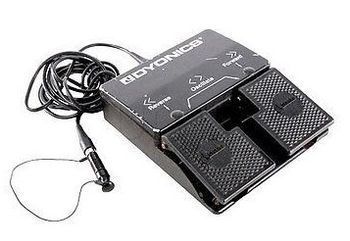
Smith and Nephew Dyonics POWER Footswitch
Smith and Nephew · Model Dyonics POWER Footswitch
Forward Reverse Oscillate.
Key tips
- ·When no category-specific guidance fits, default to the manufacturer's own service manual and the general troubleshooting method in the Engineer's Guide.
- ·Run an incoming and annual electrical safety test regardless of how niche the device is.
PM Checklist
Preventive-maintenance tasks typical of this equipment class. Perform to the manufacturer's procedure and your facility's policy - this is general reference, not a schedule for this specific unit.
- ·Follow the manufacturer's PM schedule
- ·Perform incoming and annual electrical safety testing per facility biomedical program
Technical Specs
- Weight
- 10 lbs
Typical Location
Where this class of equipment is typically deployed - general reference, not this unit's own placement record.
- Varies by device - check the unit's own manual for facility placement guidance
Documents & Manuals
No documents available for this device yet.
Safety & Recalls
Synced live from the FDA openFDA API.
- RECALL
Complaint received indicating that a package contained a LGN OX CONSTRAINED FEM 3 LT implant instead of a LGN OX CONSTRAINED FEM 4 LT as described on the product label.
- RECALL
Complaint received indicating that a package contained a LEGION NARROW PS OXIN SZ 5N RIGHT implant instead of a GENESIS II POSTERIOR STABILIZED FEMORAL SIZE 5 LEFT as described on the product label.
- RECALL
Packaging contained the incorrect size of femoral head from what was displayed on the label.
- RECALL
The firm conducting a recall due to a complaint received indicating that a package contained a LEGION NARROW PS OXIN SZ 4N LT implant instead of a LEGION NARROW PSvOXIN SZ 5N LT as described on the product label.
- RECALL
Recent complaint data indicates that the revision rate may be trending higher than corresponding similar devices in global joint replacement registries. The data identifies a potential signal that the performance is an outlier versus the state of the art with respect to the risk for revision.
- RECALL
Testing vendor notified Smith & Nephew that previous MRI scanning conditions provided in Exponents reports were erroneous. Erroneous data from the reports was incorporated in the released IFU 81110294 EVOS Large Fragment Plating System.
- RECALL
The labels on the packages of screws were switched.
- RECALL
The nail head may become detached during surgery.
- RECALL
The T-Fix sterile package contains only one sleeve instead of two, The device will not perform as intended for the second bone tunnel due to the absence of thesleeve
- RECALL
A manufacturing error resulted in out of specification R3 Acetabular Shells
- RECALL
Space between the device and the packaging permits excessive movement which could potentially lead to the displacement of the anchors tip protector allowing the tip of the anchor to create a sterile breach.
- RECALL
There is a a potential failure mode associated with the use of the mallet, wherein the poly tip of the mallet may become loose and/or come off during use. If the potential failure mode occurs, particles generated in the poly thread potentially could enter the surgical field or a delay in surgery could occur if the tip disengages during the use of the mallet.
- RECALL
Complaints were received indicating that the outer label incorrectly identified the product as size "1" instead of "-1". The product contained within the package is size "-1"
- RECALL
One lot of the Legion AP femoral cutting block, size 6, was manufactured with an oversized spring.
- RECALL
One lot of GENESIS II 13 mm tibial punches are 2 mm smaller than specification.
- RECALL
Three lots of Anthology HO Porous size 7 stems were manufactured with an undersized taper length. The device taper length was incorrectly manufactured as 0.393mm opposed to 0.442 mm.
- RECALL
A single lot of GENESIS II FEMORAL FIVE DEGREE VALGUS BUSHING due to a laser mark labeling error. The left valgus bushing was incorrectly laser marked as right and vice versa.
- RECALL
The affected products were inadvertently packaged with the inner packaging pouch being sealed together with the outer pouch.
- RECALL
One lot of D-RAD Self-Taping Locking Screws used with the Distal Radius Fracture Kit were machined out of specification. Screws measured over tolerance within the head thread form by 0.002-0.003 inch.
- RECALL
The screws package with devices within lot 14AAP6352A were 5 MM instead of 10MM and are too short to be used with the Legion HK Distal Wedge Size 5.
- RECALL
Packaging design is insufficient to prevent potential sterile barrier breach (pin hole) in Tyvek film of pouch. A limited number of previously recalled devices were inadvertently redistributed.
- RECALL
A single lot of INTERTAN 10S 10 MM X 18 CM 130 D was manufactured with the screw inserted upside down.
- RECALL
The Legion Screw-on Wedge Size 4 contained 5MM screws instead of the required 10MM screw.
- RECALL
This lot of left plates were laser etched and packaged as right plates.
- RECALL
Potential for the cutting blade to detach from the device and/or the distal drill head to fracture during retrograde reaming
- RECALL
The single use devices are provided sterile and do not have an expiration date on the label.
- RECALL
The firm received complaints of cracks in the weld on the head of the mallet. In the reported cases, some of the lead beads and particles escaped from the mallet into the surgical wound.
- RECALL
Lack of 510k clearance for design modification.
- RECALL
Sterility compromised due to breach in sterile packaging
- RECALL
The labels correctly state that the product should be a 25mm screw, but the box contained a longer, 35mm screw.
- RECALL
The device could be subject to breaches of its sterile packaging.
- RECALL
The Affected Devices may contain a dimensional deviation that could potentially result in the surgeon being unable to seat the polyethylene (PE) Insert on the affected VKS tibial base plate during surgery.
- RECALL
One lot of 35 mm patella implants is labeled as 32 mm. These implants have pegs which are spaced proportionally; therefore the mismatch prevents the pegs from properly aligning with pre-drilled holes during implantation.
- RECALL
The devices were packaged and laser marked anatomically incorrect. The Left plates were laser marked and packaged as Right plates and the Right plates were laser marked and packaged as Left plates.
- RECALL
Sterility of device is compromised due to breach in the packaging
- RECALL
The firm observed that the BIRMINGHAM HIP(TM) Resurfacing (BHR) System had revision rates which were higher than established benchmarks.
- RECALL
The stem taper on this device is undersized; the gauge point is not deep enough.
- RECALL
There was an error in manufacturing which resulted in the proximal lag screw hole being positioned incorrectly in several batches of TRIGEN(R); INTERTAN(TM); NAILS.
- RECALL
A manufacturing error resulted in the set screw being inserted too deep in the affected nails.
- RECALL
Inner spherical radius of the shell is undersized.
- RECALL
Reports of wound fluid and /or blood that were not evacuated from beneath the wound dressing and the pump blockage alarm did not activate has been associated with inadequate Soft Port sealing at the wound site or improper positioning of the Soft Port orifice over the wound contact dressing drape. Inadequate sealing can result in air leaks and contribute to inefficient fluid evacuation from the wo
- RECALL
One batch of the Reflection(TM) Polyethylene Acetabular Liners may be out of tolerance causing the liner not to fully seat into the shell.
- RECALL
The Tyvek(TM) lid on one, or both, of the two trays that form a double barrier around the insert may not have been adequately sealed.
- RECALL
One batch of 4.5 mm diameter Trigen Low-Profile Bone Screws were incorrectly anodized with a gold coating (indicating a 5 mm diameter) instead of a gray coating (indicating a 4.5 mm diameter).
- RECALL
75 mm screws were packaged and labeled using an 80 mm screw outer box and label, while 80 mm screws were packaged and labeled using a 75 mm screw outer box and label.
- RECALL
Modular necks were manufactured out of specification by a vendor; the taper provide is undersized.
- RECALL
Devices labeled with an expiry period of 48 months instead of 36 months; an additional 12 months for which product and package reliability has not been validated.
- RECALL
Distal part of the anchor may break on insertion into bone during surgery
- RECALL
Plastic trays which encase these products have burrs on the hinged packaging which can puncture the single barrier sterile pouch, voiding sterility.
- RECALL
Mislabeled: The device was labeled as a standard thread screw (P/N 72201772) on pouch and box, however the device contained in the packaging is a reverse thread screw (P/N 72201773).
- RECALL
Manufacturing issue: The distal tip of the outer sheath (return electrode) may detach and become loose in the joint during use.
- RECALL
SPIDER2 may unlock (loss of traction) resulting in potential movement of the patient when the device is within close proximity to an RF source. Loss of traction can potentially result in the unintended repositioning of the extremity and potential for tissue or cartilage damage
- RECALL
Product has insufficient weld between the shaft tube and tip, could result in the tip separating from the shaft tube during use.
- RECALL
On 12/14/2010, Smith & Nephew, Inc. Wound Management Division in St. Petersburg, FL recalled their RENASYS PORT product code number 66800694 due to small holes in the primary pouch of some of the packaged units of which constituted a breach of the sterile barrier.
- RECALL
Targeting software has been found to provide erroneous targeting when used with the 13 mm TAN/FAN Left nails.
- RECALL
FasT-Fix 360 Needle Delivery System may not allow the T-2 (anchor) to advance for implantation.
- RECALL
The firm received reports of a femoral head popping out of the liner intraoperatively.
- RECALL
Inner packaging of sterile product was not sealed. Lack of sterility assurance.
- RECALL
Plastic trays which encase these products have burrs on the hinged packaging which can puncture the single barrier sterile pouch, compromising sterility.
- RECALL
Endofemoral Aimer tip may separate due to failure of the soldered joint
- RECALL
Smith&Nephew Inc., Advance Wound Management, St Petersburg, FL is recalling their Ezcare Negative Pressure Wound Therapy pumps manufactured by BlueSky Medical Group Inc., between July 17, 2007 and December 13, 2007 and distributed by Smith&Nephew between July 18, 2007 and January 14, 2010. Affected products codes are 66800187, 66800322, 66800323, 66800324, and 66800325 with Serial Numbers startin
- RECALL
Firm received complaints of Inclination Set Screws fracturing.
- RECALL
Problems with transducer may result in a reduced ultrasound output.
- RECALL
The sterility of the device cannot be assured
- RECALL
Product sterility is compromised due to breach in the sterile packaging.
- RECALL
Radius at the end of the taper of the femoral implant is smaller than specification. This error could result in the tapers not locking fully or properly on femoral stems or in causing impingement and/or increased wear debris. The deficiency may not be noticed by the user. Impingement and/or wear debris may lead to revision.
- RECALL
The firm has received complaints of the base plates breaking in situ. If a breakage occurs, the broken baseplate must be revised and/or changed. If left unrevised a broken base could lead to instability and premature wear of the construct.
- RECALL
Hinge failure: The product is cracking or breaking during use.
- RECALL
Products were mispackaged.
- RECALL
46 mm Femoral head was mismarked and packaged as being 45 mm
- RECALL
External battery chargers used with the Version 29 VISTA Negative Pressure Wound Therapy pumps are failing to properly charge the pump's battery.
- RECALL
Integrity of the remote control bag may not be sufficient to prevent tearing or opening of the bag during use.
- RECALL
Product contained a syringe whose package seal integrity can be adversely affected when the product is exposed to low atmospheric pressure. This may occur during shipping.
- RECALL
Sterility (package integrity) compromised: Distribution of product that did not meet specifications; open seals.
- RECALL
Patient Reaction: Post operative condition sterile fluid pocket has been identified, including the potential for graft failure and premature material degradation.
- RECALL
The carton label may not reflect the correct size of the acetabular cup.
- RECALL
Several units were manufactured using a power supply that contains a 1 amp fuse where a 5 amp fuse is required. When the unit's power supply draws more that 1A, the fuse will fail causing the light to cease operating. The problem can occur anytime: from the initial turning on (powering up), to anytime during use.
- RECALL
The carton label reads BHR Acetabular Cup 60mm contained a 58mm cup.
- RECALL
Product is labeled as reusable but there is a potential that the cannulated handle of the product cannot be cleaned adequately following use.
- RECALL
Sterility seal of the package tray may have gaps/voids compromising the sterility of the device.
- RECALL
The Perineal Post may crack or break and the Universal Hip Distractor (carriage) may not maintain adequate traction for the duration of the procedure
- RECALL
Drill does not contain laser etched depth marks to assure proper depth of inserted device
- RECALL
Cupped Grasper Handle marked incorrectly as Duckbill Upbiter
- RECALL
Build-up of static charge in Pneumatic Footswitch tubing may cause control unit to reset to default settings in the operating room during surgery.
- RECALL
Hardware of the camera coupler may rust and result in an ineffective sterilization/cleaning process.
- RECALL
Product may not meet the established stability specification before the end of labeled expiry date.
- RECALL
Potential for non sterility as package tray does not contain aeration holes for ETO processing.
Troubleshoot this device with Bio
Describe a symptom or error code. Bio answers from this device's own documented error codes, failure modes, parts, and guides.
Ask Bio