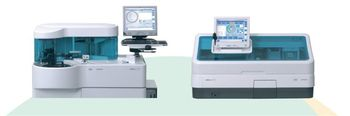
Roche Cobas 4000
 Roche · Model Cobas 4000
Uses convenient cobas c reagent packs with liquid, easy to test reagent Growing test menu with more than 90 reagents 3- to 10-minute test duration times Combined photometric and ISE throughput up to 300 tests/hour Clot and liquid level detection Ultrasonic mixing of reagents and samples minimized cross-contamination from carryover Real-time, remote troubleshooting service and support through cobas e-services Ability to run third-party reagents.
Key tips
- ·Run QC controls before trusting any repair - an analyzer that passes self-test can still report clinically wrong results.
- ·Rule out a reagent lot change before opening the instrument - it can look exactly like a hardware fault.
- ·Centrifuge rotors have a hard retirement age/cycle limit regardless of visible condition - don't eyeball it.
Typical Failure Modes
Compiled for this model from its own documentation and established engineering knowledge for this equipment class - not from a verified service record. Confirm against the manufacturer's service manual.
QC / calibration failure on an assay
HighSymptoms: Controls out of range, calibration fails, flagged results on one or more assays.
Root cause: Reagent pack issue, a probe / dispense fault, incubation-temperature drift, or a detector / optics fault.
Sample / reagent probe or pipettor fault
MediumSymptoms: Short aspiration, no dispense, clot / level-sense errors, carryover.
Root cause: Clogged or bent probe, a syringe / pump fault, or a level-sense fault.
Wash / aspiration station fault
MediumSymptoms: High background / noise, poor precision, elevated blanks.
Root cause: Blocked wash-station nozzles or a wash-pump / vacuum fault.
Incubator temperature fault
MediumSymptoms: Assay drift or bias, incubation-temperature alarm.
Root cause: Incubator heater or temperature-sensor fault.
Detector / luminometer / photometer fault
MediumSymptoms: Low signal, high CV, detector-error message.
Root cause: PMT / detector ageing or an optics fault.
Serviceable Parts & Consumables
Serviceable items for this model, compiled from its documentation and engineering knowledge for this equipment class. Service class and relative cost are estimates, not manufacturer figures; no part numbers are given. Confirm intervals and pricing against the manufacturer.
Sample / reagent probe
Class Periodic replacementRel. cost $$R&R Moderate
Syringe / dispense pump
Class Periodic replacementRel. cost $$R&R Moderate
Wash-station nozzles / pump tubing
Class Frequent wear itemRel. cost $R&R Moderate
Incubator heater / temperature sensor
Class Major service partRel. cost $$R&R Moderate
Detector / PMT module
Class Major service partRel. cost $$$R&R Difficult
| Part | Service class | Relative cost | R&R difficulty |
|---|---|---|---|
| Sample / reagent probe | Periodic replacement | $$ | Moderate |
| Syringe / dispense pump | Periodic replacement | $$ | Moderate |
| Wash-station nozzles / pump tubing | Frequent wear item | $ | Moderate |
| Incubator heater / temperature sensor | Major service part | $$ | Moderate |
| Detector / PMT module | Major service part | $$$ | Difficult |
Relative cost: $ lowest · $$$$ highest service-part cost for this equipment class. Not a price.
PM Checklist
Preventive-maintenance tasks typical of this equipment class. Perform to the manufacturer's procedure and your facility's policy - this is general reference, not a schedule for this specific unit.
- ·Daily QC controls run and reviewed
- ·Calibration verification per assay
- ·Routine cleaning and decontamination
- ·Scheduled reagent-path and pump-tubing maintenance
Troubleshooting Approach
A starting sequence for this model, compiled from its documentation and engineering knowledge for this equipment class. Follow the manufacturer's service documentation for the actual procedure.
Symptom: QC or calibration failure
- Run fresh controls and recalibrate the affected assay.
- Confirm the reagent pack is in date, mixed and correctly loaded.
- Clean the probes and wash stations.
- Check the incubator temperature against a reference.
- Escalate a detector / optics fault to the OEM.
Symptom: Probe or pipettor fault
- Inspect the probe for a bend or clog and clear it.
- Run the fluidics prime.
- Check the syringe / pump and tubing for leaks or air.
- Verify level sensing and probe position.
- Replace the probe or syringe as found and re-run QC.
Typical Location
Where this class of equipment is typically deployed - general reference, not this unit's own placement record.
- Central / core laboratory
- Point-of-care testing stations
- Blood bank
- Microbiology lab
Documents & Manuals
No documents available for this device yet.
Safety & Recalls
Synced live from the FDA openFDA API.
- RECALL
Software defect, which allows the system to accept erroneous, non-monotonous calibrations for Spline-type assays. Cobas pro integrated solutions is an automated analyzer, intended for running qualitative, semi-quantitative and quantitative clinical chemistry and immunochemistry assays, as well as ion-selective measurements. When an erroneous calibration is active, the instrument fails to calculate new values and instead repeats the last successfully calculated result from any Spline-type assay for all subsequent measurements, leading to identical and erroneous patient and QC results. The defect could lead to patients receiving erroneous lab results, which could result in a remote risk of serious adverse health consequences. The following assays use spline type calibration and are affected by this issue: Cystatin C Gen.2, Ferritin Gen.4, Lipoprotein (a) Gen. 2, Lipoprotein (a) molarity, V
- RECALL
Abnormal calibration signals and control recovery issues on the Homocysteine Enzymatic (HCYS) Assay can produce erroneous patient results (positive or negative bias)
- RECALL
The firm received customer complaints regarding false negative Influenza A (Flu A) results and late Flu A Target Ct values. A false negative influenza A result may lead to additional testing, psychological distress, and delays to targeted therapy for influenza as well as true diagnosis.
- RECALL
A complaint investigation revealed that an incorrect behavior relating to the rejection of orders capability of the Host Connectivity Agent (HCA) could occur where the order received from the Laboratory Information System (LIS) is created with an Internal ID rather than the External ID sent from the LIS. The erroneous event occurs under rare circumstances where the date in the sample's barcode does not match the order date sent from the LIS, and can lead to the order being mismatched to an another patient's sample ID rather than the subject patient's sample ID. The software bug impacts multiple cobas infinity central lab software (versions 2.5.x , 3.01.x, 3.02.x, and 3.03.x) and occurs when the afflicted software has been configured with specific pre-conditions.
- RECALL
Reported false positive and invalid results on the affected devices due to anomalous baselines. This may lead to erroneous or delayed diagnoses.
- RECALL
Software issue resulting in signals and sample test results of Pre-Wash tests being impacted. The following assays are considered impacted by the issue: Anti-HAV2, Anti-HBc IgM, IGF-1, Myogloin, Rubella IgG, and Toxo IgG.
- RECALL
Roche has identified a small number of cobas Liat analyzer units that have consistently high noise levels (background signal) originating from the amber detector (used for Influenza B detection). This noise increases the probability of false positive Influenza B results.
- RECALL
A potential risk for false negative nitrite results exists when endogenous creatinine levels are 15,000 mg/L and above. No interference of Nitrite results was observed at creatinine levels up to 9,000 mg/L.
- RECALL
False Mutation Detected results for the exon 20 insertion (Ex20Ins) mutation when using the cobas EGFR Mutation Test v2, may lead to inappropriate treatment
- RECALL
Customers have reported an increased number of false positive SARS-CoV-2 results.
- RECALL
Under specific circumstances created by the user, the cobas e flow test results could be replaced by an automatic result sent to the lab LIS. This automatic result could be released and interpreted by your Laboratory Information System (LIS) as a false positive or negative result. It should be noted that the "correct" result would still be available on the instrument.
- RECALL
Invalid or false positive results for one or more targets (SARS-CoV-2/Influenza A/Influenza B) using the cobas SARS-CoV-2 & Influenza A/B assay for use under emergency use authorization on the cobas Liat analyzer, showed abnormal PCR growth curves
- RECALL
During the subsequent pipetting (1st or 2nd measurement), the residual reagent can sporadically be transferred from the conus into the reaction cuvette and lead to inaccurately low results for the affected TDMs (Therapeutic Drug Monitoring).
- RECALL
Dirty Lens May Cause Invalid or False Positive Results
- RECALL
Potential Incorrect Validation of Results Due to an Erroneous QC Status When Using Status Expiration Control Rule
- RECALL
Alarm flags that have a "<" symbol in front of them are not displayed on the cobas infinity Validation screen. This issue affects only customers that are doing manual validation on the cobas infinity Validation screen.
- RECALL
Cobasinfinity laboratory solution Version 2.4.1 through Version 2.5.4 Using a CommServer Driver - Incorrect Alarm Mapping
- RECALL
Homocysteine Reagent, Calibration Failures and Quality Control Recovery Issues on cobas c 701 and 702 modules
- RECALL
There is a potential for the tray input flap on the post analytical units to become loose, potentially detaching from the instrument.
- RECALL
The reagent lot is exhibiting calibration failures, QC imprecision, and elevated QC recovery due to elevated pH level causing higher absorbance values.
- RECALL
The firm has confirmed complaints regarding signal drops on the cobas e 801 module after a ProCell II M bottle changeover, which may lead to incorrect medical decisions with respect to diagnostics and patient treatment.
- RECALL
Using the following versions of cobas infinity software (2.0 thorough 2.5), there is a potential where the results from the first sample subsequent to the bottle change, (when using the Standby bottle function), does not display a quality control (QC) alarm when one should be present. If the QC is out of range on the stand-by bottle and it is not removed from the system, there is a potential that when the status of the Standby bottle changes from the Standby bottle to the Current bottle status, QC alarms will not be displayed next to the sample result.
- RECALL
New endogenous interference claims have been established for the following assays used on the cobas c 311 analyzer and the cobas c 501, 502, 701, 702, and Modular Analytics P/D modules which may have potential medical risk. ***Update: Cobas c111 and COBAS INTEGRA 400 plus analyzers are also impacted for BILT3 and LACT2 assays***
- RECALL
Sample material may potentially come in contact with the pipetting nozzle during operation of cobas p 612 pre-analytical system (63x) (LCP1) with non-filter tips. The possible presence of biological material on the nozzle may cause contamination resulting in potential false positive results, depending on the sensitivity of the analytical technology.
- RECALL
Discrepant results have been reported in patients with severe microcytic anemia (e.g.iron deficiency, thalassemia) and the following parameters are affected: RBC (red blood cell count), HGB (hemoglobin concentration), MCH (mean corpuscular hemoglobin), HCT (hematocrit), and MCV (mean corpuscular volume).
- RECALL
Complaints have been received concerning questionable results on analyzers due to customers utilizing 13 sample tubes without tube adapters.
- RECALL
a gap between the conveyor belt and the rack tray table (plastic part) may cause vibration of the 5 position racks during the transport. This issue can pose a potential risk to involved operators and can also lead to potential cross contamination of samples in the affected racks.
- RECALL
"Roche Diagnostics Corp. initiated a voluntary correction because a rack crash may occur on the Cobas 8100 bi-directional reformatter (BRF) and uni-directional reformatter (URF) modules with software version 02-xx, only when rack buffering is activated and the rack buffer is completely full. This issue can lead to sample spillage, posing a potential risk to operators / laboratory staff due to exposure to potentially infectious material, cross-contamination of samples in the affected racks and erroneous results due to sample carry-over."
- RECALL
On 12/27/2016, URGENT MEDICAL DEVICE CORRECTION notifications were sent to the affected Consignees via courier fax or email. The recall notifications included a description of the reason for the recall, affected product, consignee responsibilities, and instructions for responding to the formal recall notification. The cobas p 612 pre-analytical system (63x) software is being revised to correct the aspiration process. We anticipate this new version (2.0.4) to be available during Quarter 1 2017. For now, discontinue using disposable non-filter tips for Aliquotting on your cobas p 612 pre-analytical system (63x). You will be contacted by a Roche Field Engineering Specialist (FES) about modifying your system to allow for the use of disposable filter tips. Filter tips will be provided at the time of service. Actions Required " Immediately discontinue using disposable non-filter tips for
- RECALL
Kit labeled with the incorrect expiration date.
- RECALL
Device was released with default pcal/gain settings for photometers instead of the pcal/gain settings that are required for release. The default settings can potentially lead to the generation of erroneous or invalid results.
- RECALL
During internal studies using contrived plasma specimens, several mutations (L8568R, Exon 19 deletion, T790M) inconsistently generated "No Mutation Detected" (ie False Negative ) result with the cobas EGFR mutation Text V2.0 when utilizing the cobas cfDNA Sample Preparation kit.
- RECALL
An error was found within the Hungarian translations of the cobas EGFR Mutation Test v2 Instructions for Use (M/N 07340761001-01HU, Doc Rev. 1.0, Dated 08/2015) and the cobas cfDNA Sample Preparation Kit Instructions for Use (M/N 07573758001-01HU, Doc. Rev. 1.0, Dated 05/2015).
- RECALL
Due to a false triggering or detection of the lifting gripper READY signal, sample tubes are not correctly placed back in the Rack Tube Transport (RTT) after the decapping process. Therefore, open sample tubes can be dropped in the cobas p 512, spilling the sample material.
- RECALL
Possible for sample tubes in the loader to be opened and contaminate the system as well as adjacent samples during processing.
- RECALL
under specific settings, an issue may occur during simultaneous Sensor Cartridge and Fluid Pack change on the cobas b 123 <2> POC system and cobas b 123 <4> POC system. The issue occurs when the software function [AutoQC as follow-up] is configured to run all three levels of AutoQC only after a Fluid Pack change, but not after a Sensor Cartridge change. When both are changed simultaneously, starting with the Sensor Cartridge and followed by the Fluid Pack, the analyzer carries out only the follow-up actions associated with the Sensor Cartridge change after completing the change workflow. As a result, no follow-up AutoQC is performed and the three expected AutoQC measurements for the Fluid Pack change are not carried out. Without running quality control, there is a remote possibility that system issues would not be detected and wrong results would not be excluded on all parameters: pH, PO
- RECALL
Due to a supplier issue, the incorrect green and amber LED components were used in the manufacture of the LED printed circuit board assemblies (PCBA) in certain cobas Liat Analyzers.
- RECALL
Low PO2 results. QC failures of the PO2 parameter, affecting primarily Levels 1 and 2, caused by a calibration issue with the PO2 parameter. This issue may not be detected since QC results can be below mean values, but still within 2 standard deviations (SD) limits. Potential for erroneously low PO2 results in patient samples, especially in blood samples with PO2 values below 50 mmHg
- RECALL
False positive results for Exon 20 insertion mutations are being detected with the cobas EGFR Mutation Test, kit batch T08661.
- RECALL
cobas KRAS Mutation Kit T10786 is generating invalid results for the Mutant Control and/or KRAS Calibrator.
- RECALL
The default references for normal values are inconsistent between cobas b 221 and other blood gas instruments. In addition, the reference ranges are different when comparing with corresponding ranges listed in the Instructions for Use for the analyzer and the reference literature source.
- RECALL
Potential that test results would be assigned to the wrong Patient ID if cobas IT 1000 receives an ADT ADMIT, TRANSFER or MERGE event message that contains a genuine Patient ID (e.g. 999999), which is the same as what has been configured as the Generic Patient ID (999999 by default).
- RECALL
Numerous complaints have been filed that leaking cobas PCR media 4.3 mL IVD have been received from different lots of the cobas PCR Urine kits, cobas PCR Female Swab kits, and cobas PCR media kits.
- RECALL
During an internal investigation, a formulation error that occurred was identified during the manufacture of the cobas 4800 HPV Master Mix reagent that was packaged in four (4) cobas 4800 AMP/DET kits, US- and CE-IVD (240 and 960 test kit configurations). Examination of the batch production record of the material revealed there was an error in the tare weight used for the carboy during the fina
- RECALL
In rare instances, channel shifted results have been generated with cobas 4800 assays run on v1.1.1 of the cobas 4800 system. Raw data review indicates that, in these cases, all signals are shifted by one channel: channel 1 results report as channel 2, channel 2 results report as channel 3, channel 3 results report as channel 4, and channel 4 results report as channel 1. In the reported
- RECALL
Certain lots of Reagent reservoirs, may not have a separation in the lower part of the reservoir. As a consequence, pipetting errors can occur due to uneven distribution of reagent. These pipetting errors may lead to delayed results and wasted reagent.
- RECALL
The COBAS TaqMan MTB Test Definition Files (TDF) v3.0, for both CE-IVD and JPN-IVD tests, being used with AMPLILINK software version 3.3 series and COBAS TaqMan MTB Test Kits, both CE-IVD and JPN-IVD, have an incorrect Target Elbow Max cutoff value of 48 creating the potential for false negative results to be generated for patient samples with Target Elbows in the range of 48 to 50.
- RECALL
It has been determined that cobas b 123 Fluid Pack COOX cuvettes for lot numbers 21426121 and 21426171, exhibit a significant increase in the out-of-box failure rate caused by a change in the thickness in the cuvette layer. Internal investigations found the altered thickness of the cuvette was due to production equipment settings. Cuvettes were produced within specifications, but within the upper
- RECALL
Certain COBAS AmpliPrep instruments using AMPILINK software v.3.3.4 had the sample clot detection flagging feature disabled during quality control release resulting in samples that may not be flagged as having clots.
- RECALL
It was identified that BRAF controls dispositioned as "Internal Use Only" were incorrectly packaged into cobas 4800 BRAF V600 Mutation Test CE-IVD kit lot R03607 and released for distribution. Two control batches manufactured during two process validation studies are involved: PV7711: BRAF Mutant (MUT) Control PV0853: BRAF Wild Type (WT) Control
- RECALL
Roche Molecular Systems, Inc. has become aware of a device-associated diagnostic software issue.
- RECALL
When using a Laboratory Information system (LIS) with automated systems utilizing AMPLILINK software v3.2 series (AL v3.2) there is a potential for wrong results to be assigned to an order.
- RECALL
During the real-time stability testing for the cobas KRAS Mutation Test on the commercial lot PO6778, it was identified that the kit was just within specifications for the codon 61 peak height ratio, and that the kit has trended towards the upper specification limit at the 6 month time point but did passed the 6 month stability testing. The kit is labeled for 9 months shelf life stability. The d
- RECALL
Certain lots of COBAS AmpliPrep (CAP) S-tube Input (Box of 12 bags 12x24 S-tube and 12x24 S-clip) can cause the sample input tubes to stick in the barcode clips. As a consequence, the CAP instrument will lift both the sample input tube together with the barcode clip from the sample rack, resulting in an aborted run. No erroneous results would be produced if the issue occurs, but samples in proce
- RECALL
The COBAS Ampliprep/COBAS TaqMan HCV Test has been shown to under-quantitate a subset of genotype 4 patient specimens by approximately 1.0-1.5 log 10 in the absence of any sequence mismatches.
- RECALL
There is an issue regarding liquid level detection of the CS1 Magnetic Glass Particles (MGP) Reagent Cassette of the COBAS AmpliPrep /COBAS TaqMan HBV v2.0 Test on the COBAS AmpliPrep instrument.
- RECALL
Software bug: A unique series of events involving the COBAS AmpliPrep instrument running AMPLILINK software version 3.2.2 that results in specimens being amplified and detected with the wrong parameters. The error can occur on either COBAS AmpliPrep/COBAS TaqMan 48, COBAS AmpliPrep/COBAS TaqMan (docked) or cobas s 201 system (docked) running Amplilink Software versions 3.1 or 3.2 series up to and
- RECALL
Test results, low: Sodium, potassium and chloride results on the cobas 6000 ISE unit may exhibit a downward drift in controls and patient samples within the recommended calibration interval of 24 hours. For further information, please contact Roche Diagnostics Corporation by telephone at 800-428-2336.
- RECALL
For select COBAS AMPLICOR Tests run on the COBAS AMPLICOR Analyzer in conjunction with AMPLILINK software, a discrepancy has been identified between the onboard working reagent stability information reported by AMPLILINK Software (versions 1.1, 1.3, 1.4 and 2.41) and the stability information provided in the test kit package inserts/method manual.
- RECALL
Probe Wash: Reported results may have a positive bias because inadequate analyzer probe wash instructions may result in carry-over from the following assays: Creatinine Kinase L and Creatine Kinase-MBL.
- RECALL
Improper seating of a fiber optic cable which may cause pixel cross-talk leading to falsely elevated test results or cases of misalignment to sample-to-result mismatch.
- RECALL
The Roche COBAS interface driver for the Tecan software may assign sample results to the wrong patient.
- RECALL
A false positive result may be reported.
Troubleshoot this device with Bio
Describe a symptom or error code. Bio answers from this device's own documented error codes, failure modes, parts, and guides.
Ask Bio