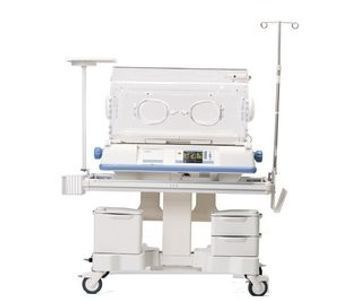
Draeger Isolette C2000
 Dräger · Model Isolette C2000
Infant Incubator An advanced thermoregulation system, controlled by Dräger’s elaborate PID algorithm, keeps the baby in a stable environment. Very low velocity is used to create a calm zone that surrounds the neonate, inhibiting convective heat loss, while dual air curtains and preemptive regulation mechanisms maintain practically stable conditions during access to the infant. The servo-controlled humidifier provides optimal comfort levels and helps to prevent the excessive transepidermal water and concomitant evaporative heat loss common to the first days of neonatal life. The double wall design further maximizes heat conservation. The superior thermoregulation features found in the Isolette® C2000 help infants thrive. Thriving infants are more likely to mature faster, to better outcomes and reduced costs.
Key tips
- ·Never skip temperature-accuracy verification to save time - it's the one check that directly prevents burns.
- ·Hose/blanket connector wear is the most common real fault and the easiest to miss on a quick visual check.
Typical Failure Modes
Compiled for this model from its own documentation and established engineering knowledge for this equipment class - not from a verified service record. Confirm against the manufacturer's service manual.
Air- or radiant-heater control fault
HighSymptoms: Chamber / patient will not reach or hold the set temperature, temperature alarm, self-test / "Check" fault.
Root cause: Heater element / infrared rod, the air- or skin-temperature sensor, the fan (incubator), or a control-board fault.
Skin-temperature (servo) control fault
HighSymptoms: Servo mode does not regulate to the skin probe, deviation alarm, probe-fault alarm.
Root cause: Damaged skin temperature probe or its connector, or the servo-control circuit.
Alarm / audible / power-fail-alarm fault
MediumSymptoms: No or quiet audible alarm, alarm lamp does not light on the self-test.
Root cause: Buzzer / speaker or the alarm board - a safety-critical failure.
Humidity / airflow fault (incubator)
MediumSymptoms: Set humidity not reached, uneven chamber temperature, airflow alarm.
Root cause: Humidifier reservoir / heater, or a worn circulation fan / blocked air filter.
Mattress / weigh-scale / tilt / access-port fault
LowSymptoms: In-bed scale inaccurate, tilt mechanism stiff, port latches or iris sleeves worn.
Root cause: Load cell, tilt actuator, or worn access-port hardware.
Serviceable Parts & Consumables
Serviceable items for this model, compiled from its documentation and engineering knowledge for this equipment class. Service class and relative cost are estimates, not manufacturer figures; no part numbers are given. Confirm intervals and pricing against the manufacturer.
Air / skin temperature sensors
Class Frequent wear itemRel. cost $$R&R Fairly easy
Heater element / infrared rod
Class Major service partRel. cost $$R&R Difficult
Circulation fan (incubator)
Class Major service partRel. cost $$R&R Moderate
Humidifier heater / reservoir (incubator)
Class Periodic replacementRel. cost $$R&R Moderate
Buzzer / alarm board
Class Major service partRel. cost $R&R Moderate
| Part | Service class | Relative cost | R&R difficulty |
|---|---|---|---|
| Air / skin temperature sensors | Frequent wear item | $$ | Fairly easy |
| Heater element / infrared rod | Major service part | $$ | Difficult |
| Circulation fan (incubator) | Major service part | $$ | Moderate |
| Humidifier heater / reservoir (incubator) | Periodic replacement | $$ | Moderate |
| Buzzer / alarm board | Major service part | $ | Moderate |
Relative cost: $ lowest · $$$$ highest service-part cost for this equipment class. Not a price.
PM Checklist
Preventive-maintenance tasks typical of this equipment class. Perform to the manufacturer's procedure and your facility's policy - this is general reference, not a schedule for this specific unit.
- ·Hose / blanket connector inspection
- ·Temperature-accuracy verification
- ·Annual electrical safety test
Error Codes
Extracted directly from this unit's own service manual.
High Air TemperatureThe alarm message appears, an alarm sounds, and the Alarm indicators flash to indicate that the incubator air temperature is 1.5 °C above the air set temperature.
Go to RAP 2.39 on page 2-105.
Low Skin TemperatureThe alarm message appears, an alarm sounds, and the Alarm indicators flash to indicate that the Skin 1 Probe reports that the baby's skin temperature is 1 °F (or 0.5 °C) below the skin set temperature.
Go to RAP 2.3 on page 2-54.
High Temperature Cut OutThe alarm message appears, an alarm sounds, and the steady Alarm indicators illuminate to indicate that incubator air temperature has reached 99.5 °F (37.5 °C) ± 0.5 °C for set temperatures up to 98.6 °F (37.0 °C) and 103.1 °F (39.5 °C) for set temperatures greater than 98.6 °F (37.0 °C).
Go to RAP 2.39 on page 2-105.
Remove Skin 2 ProbeThe alarm message appears, an alarm sounds, and the Alarm indicators flash to indicate one of the following: A second skin probe is connected to the sensor module during Skin Mode. A second skin probe is connected to the sensor module during Air Mode, and an attempt to enter Skin Mode was made.
Go to RAP 2.46 on page 2-115.
Skin 1 Probe FailureThe alarm message appears, an alarm sounds, and the Alarm indicators flash to indicate that the Skin 1 Probe malfunctioned. To silence this alarm for 5 min, press the Silence/Reset key.
Go to RAP 2.42 on page 2-109.
Skin Probe DisconnectThe alarm message appears, an alarm sounds, and the Alarm indicators flash to indicate that Skin 1 Probe is disconnected from the sensor module during Skin Mode.
Go to RAP 2.42 on page 2-109.
Connect Skin 1 ProbeThe alarm message appears, an alarm sounds, and the Alarm indicators flash to indicate that the Skin 1 Probe was disconnected from the sensor module during Air Mode and an attempt has been made to enter Skin Mode.
Go to RAP 2.42 on page 2-109.
Low HumidityThe alarm message appears with an audible alarm and flashing alarm indicator to indicate that the humidity tray is empty.
Go to RAP 2.40 on page 2-106.
Humidity Heater FailureThe alarm message appears to inform the user that the humidity system malfunctioned.
Go to RAP 2.40 on page 2-106.
Low Oxygen %The alarm message appears, an alarm sounds, and the Alarm indicators flash to indicate that the oxygen concentration within the hood environment is below the oxygen setpoint.
Go to RAP 2.4 on page 2-56.
High Oxygen %The alarm message appears, an alarm sounds, and the Alarm indicators flash to indicate that the oxygen concentration within the hood environment is above the oxygen setpoint.
Go to RAP 2.5 on page 2-58.
Oxygen Calibration RequiredThe alarm message appears, an alarm sounds, and the Alarm indicators flash to indicate that the oxygen control system requires calibration.
Go to RAP 2.43 on page 2-112.
Oxygen Cell DifferentThe alarm message appears, an alarm sounds, and the Alarm indicators flash to indicate that the oxygen cell readings differ by greater than 3%.
Go to RAP 2.43 on page 2-112.
Oxygen Solenoid FailThis message informs the user that the oxygen solenoid has failed.
Go to RAP 2.43 on page 2-112.
Too Much WeightThe alarm message appears with an audible alarm and flashing alarm indicators to indicate that the weight on the mattress is in excess of 15 lb (7 kg), or when zeroing, this message appears if a weight in excess of 2 lb (1 kg), or with software version 2.05 or higher, 7.7 lb (3.5 kg) is on the mattress.
Go to RAP 2.47 on page 2-116.
Scale DisconnectedThe alarm message appears if the cable between the scale and the sensor module is disconnected.
Go to RAP 2.47 on page 2-116.
Clear MattressThe alarm message appears if extraneous objects are on the mattress.
Go to RAP 2.47 on page 2-116.
Power-On Test in ProgressThis message indicates that the controller is performing the power-up test.
No action required.
21% CalThis message indicates that the oxygen control system is performing the 21% calibration procedure.
No action required.
100% CalThis message indicates that the oxygen control system is performing the 100% calibration procedure.
No action required.
Cal PassThis message indicates that the oxygen control system is successfully calibrated.
No action required.
Cal FailThis message indicates that the oxygen control system has failed to calibrate.
Go to RAP 2.48 on page 2-119.
Procedural SilenceThis message indicates that the 5-minute Procedural Silence is active. During this time, Low Skin/Air Temperature alarms automatically silence for 15 minutes, and the Low Oxygen % alarm automatically silences for 4 minutes.
No action required.
Not InstalledThis message informs the user that the humidity or oxygen systems are not activated or installed.
Install the humidity system (refer to procedure 7.3 on page 7-15). or Install the oxygen system (refer to procedure 7.2 on page...
Troubleshooting Approach
A starting sequence for this model, compiled from its documentation and engineering knowledge for this equipment class. Follow the manufacturer's service documentation for the actual procedure.
Symptom: Chamber or patient temperature will not reach / hold the setpoint
- Run the readiness / self-test and confirm the alarm lamp and buzzer.
- Set a target and confirm the unit reaches it; compare to an independent calibrated reference.
- Check the circulation fan runs and the air filter is clean (incubator).
- Verify the heater element / infrared rod draws current.
- Replace the air / skin temperature sensor, the heater element or the infrared rod as isolated.
Symptom: Skin (servo) control does not regulate / probe-fault alarm
- Fit a known-good skin temperature probe with good skin contact.
- Check the probe connector and cable.
- Verify the servo regulates to the probe with a warm reference.
- Replace the probe.
- Refer the servo-control circuit if it still will not regulate.
Symptom: No or quiet audible alarm / alarm lamp fails the self-test
- Run the self-test / check function and watch the alarm lamp and listen for the buzzer.
- Check the buzzer / speaker and its connector.
- Check the alarm board.
- Replace the buzzer or alarm board - a failed alarm is a safety fault.
- Confirm all alarm conditions annunciate before returning to service.
Symptom: Humidity not reached / uneven chamber temperature (incubator)
- Check the humidifier reservoir level and the humidifier heater.
- Confirm the circulation fan runs and the air filter is clean.
- Check for a chamber / access-port seal leak.
- Verify humidity with an independent reference.
- Replace the humidifier heater or the circulation fan as isolated.
Typical Location
Where this class of equipment is typically deployed - general reference, not this unit's own placement record.
- Operating Room
- PACU
- Emergency Department
- Labor & Delivery
- NICU
Documents & Manuals
Troubleshoot this device with Bio
Describe a symptom or error code. Bio answers from this device's own documented error codes, failure modes, parts, and guides.
Ask Bio